

The Supreme Court has clarified that merely using abusive or vulgar language during an altercation does not automatically constitute the offence of obscenity under the Indian Penal Code (IPC). While partly allowing an appeal filed by Mani @ Subramaniyam, the Court set aside his conviction under Sections 294(b) and 506(ii) IPC but upheld his conviction for voluntarily causing grievous hurt with a dangerous weapon under Section 326 IPC. The judgment was delivered on July 17, 2026.
Background of the Case
The dispute stemmed from a long-running disagreement over land. According to the prosecution, an altercation first took place on August 22, 2017. Two days later, the appellant allegedly confronted the complainant's family, used abusive language, and assaulted the complainant with a billhook, causing multiple injuries, including a fractured nasal bone.
The trial court convicted the appellant under several IPC provisions as well as the Scheduled Castes and Scheduled Tribes (Prevention of Atrocities) Act. The Madras High Court later acquitted him of the offences under the SC/ST Act but maintained his convictions under Sections 294(b), 326 and 506(ii) IPC, while reducing the sentence. The appellant then approached the Supreme Court.
Court's Observations
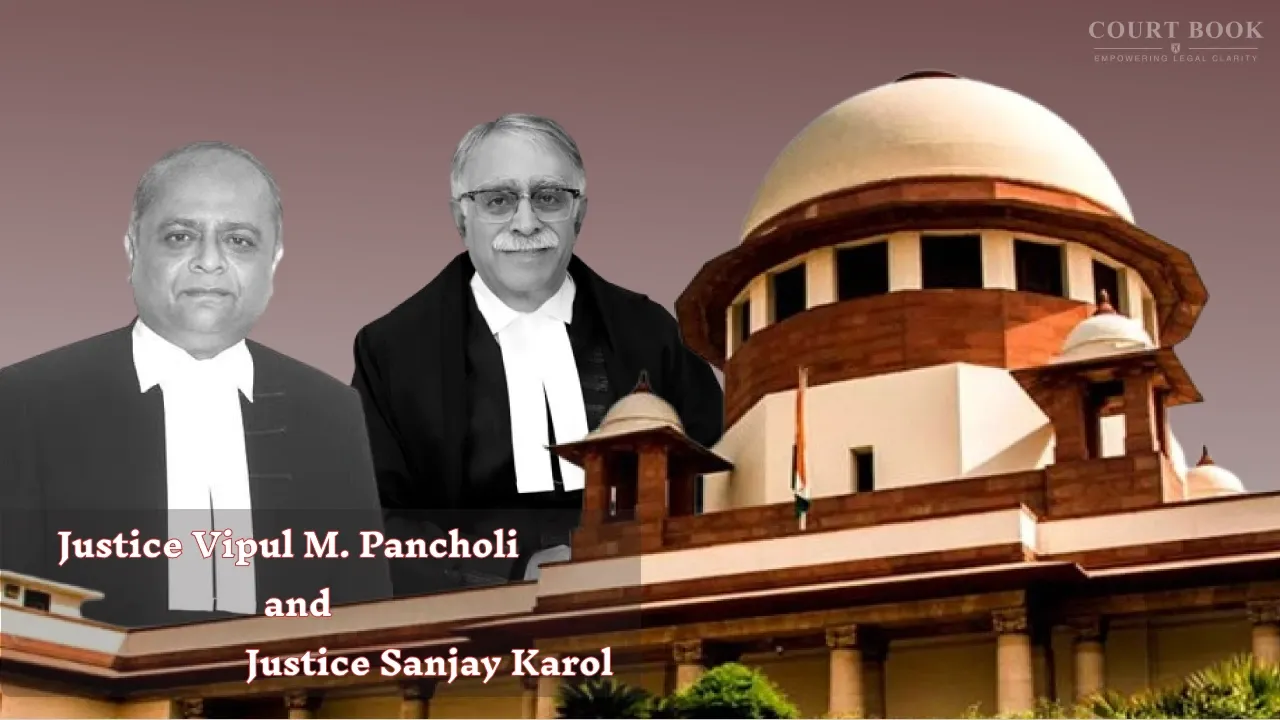
A Bench of Justice Sanjay Karol and Justice Vipul M. Pancholi examined whether the convictions under Sections 294(b) and 506(ii) IPC could legally stand.
The Court explained that there is a clear legal distinction between obscene words and abusive or vulgar language. It observed that for an offence under Section 294(b), the prosecution must prove that the words were obscene in law, meaning they were capable of arousing sexual thoughts, appealing to prurient interests, or tending to deprave and corrupt those exposed to them. The prosecution must also establish that such conduct caused annoyance to others in a public place.
The bench observed,
"Use of mere swear words, profanities and vulgar expletives, however distasteful or uncivil they may be, cannot be equated with obscenity."
Examining the facts, the Court found that although the language allegedly used by the appellant was abusive and offensive, it did not satisfy the legal ingredients of obscenity under Section 294(b) IPC.
The Court also found insufficient evidence to sustain the conviction for criminal intimidation under Section 506(ii) IPC. It held that merely uttering threatening words during a quarrel, without proof that they were intended to cause alarm or compel the complainant to act in a particular manner, would not attract the offence.
Conviction for Grievous Hurt Upheld
The Supreme Court, however, found no reason to interfere with the conviction under Section 326 IPC.
Medical evidence showed that the complainant suffered multiple injuries, including a fractured nasal bone, after being struck with a billhook. The Bench held that a fractured bone clearly falls within the definition of "grievous hurt" under the IPC and that the prosecution evidence consistently established the assault.
The bench observed that the medical evidence fully supported the eyewitness accounts and justified maintaining the conviction for causing grievous hurt with a dangerous weapon.
Decision
Considering that the incident arose from a land dispute and taking note of the appellant's age of about 70 years and his health condition, the Supreme Court modified the sentence.
Instead of the imprisonment awarded earlier, the Court directed that the appellant undergo imprisonment till the rising of the Court on a date fixed by the concerned court and pay a fine of ₹50,000 within two months.
The convictions under Sections 294(b) and 506(ii) IPC were set aside, while the conviction under Section 326 IPC was affirmed.
Case Details
Case Title: Mani @ Subramaniyam v. State Rep. by the Deputy Superintendent of Police
Case Number: Criminal Appeal of 2026 (Arising out of SLP (Crl.) No. 4516 of 2025)
Judge: Justice Sanjay Karol and Justice Vipul M. Pancholi
Decision Date: July 17, 2026


