

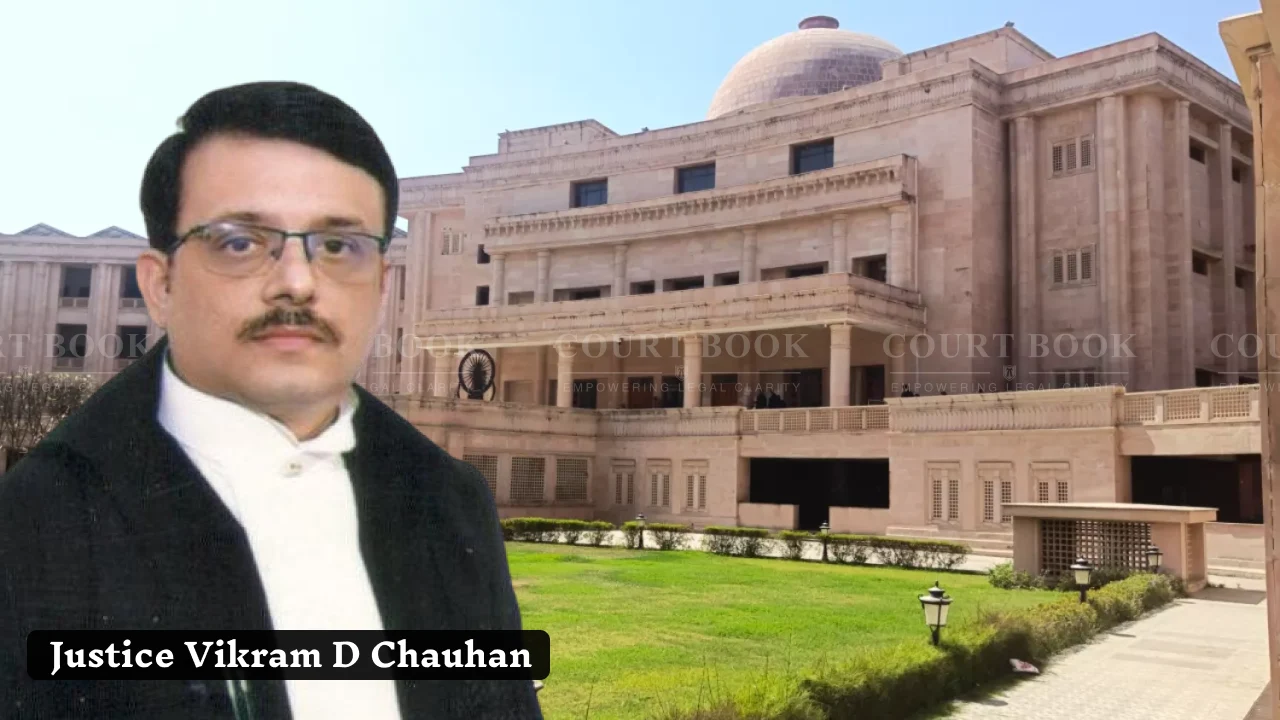
The Allahabad High Court has granted bail to Sanjay Kumar alias Sanjay Dhiman in a money laundering case registered by the Directorate of Enforcement (ED), holding that the prosecution's case under the Prevention of Money Laundering Act (PMLA) rested primarily on predicate FIRs from Himachal Pradesh that had culminated in closure reports. The Court also noted that no assets of the applicant had been attached by the ED and that no proceeds of crime had been identified in respect of him in Uttar Pradesh.
Background of the Case
The bail application arose from Special Case No. 01/2025 relating to ECIR/HQ/01/2024 registered under Sections 3 and 4 of the Prevention of Money Laundering Act, 2002.
According to the Enforcement Directorate, illegal mining activities carried out through Jai Maa Jwala Stone Crusher in Himachal Pradesh generated proceeds of crime, part of which was allegedly used to purchase Garhwal Stone Crusher in Saharanpur, Uttar Pradesh, for ₹4.70 crore. The agency alleged that ₹1.60 crore of the purchase consideration was paid in cash generated from illegal mining, while the applicant allegedly contributed ₹20 lakh in cash.
The ED further alleged that Garhwal Stone Crusher was itself involved in the purchase and sale of illegally mined riverbed material and that excess mineral stock and other irregularities were detected during searches conducted in September 2024. Based on these findings, a fresh FIR was registered in Uttar Pradesh on 7 November 2024 and later added as a scheduled offence to the ECIR.
The applicant, however, argued that he was never named in any of the six FIRs registered in Himachal Pradesh. He also pointed out that he was not the owner or a partner of Jai Maa Jwala Stone Crusher, though he held a 9% partnership in Garhwal Stone Crusher. His counsel further submitted that the investigations in the six Himachal Pradesh FIRs had resulted in closure reports, four of which had already been accepted by the competent courts, while closure reports had also been filed in the remaining two cases.
Court's Observations
Justice Vikram D. Chauhan examined the requirement under the PMLA that "proceeds of crime" must arise from criminal activity relating to a scheduled offence.
The Court noted that the six FIRs registered in Himachal Pradesh formed the original basis of the ECIR. However, by the time the ECIR was registered, four cancellation reports had already been accepted by the competent courts, while cancellation reports had been filed in the remaining two cases.
Recording this finding, the Court observed:
"The foundation of ECIR being schedule offence was not in existence on the date when the ECIR was registered."
The bench further observed that since the investigating agencies had not found any scheduled offence in the six Himachal Pradesh FIRs, the alleged income generated from the mining activities there could not automatically be treated as "proceeds of crime" arising from a scheduled offence under the PMLA.
The Court also reiterated that the applicant was neither the owner nor a partner of Jai Maa Jwala Stone Crusher, the entity alleged to have undertaken illegal mining in Himachal Pradesh.
The High Court then examined the allegations relating to Garhwal Stone Crusher.
While the ED alleged that the crusher had purchased and sold illegally mined minerals, the Court held that the complaint did not identify any specific property or asset derived from those alleged criminal activities as proceeds of crime attributable to the applicant.
The bench observed:
"The sale and purchase of illegally mined material may be an offence in itself, however, the proceeds of crime are required to be identified by identification of assets obtained or derived by the criminal activity in respect of schedule offence."
The Court further noted that no assets belonging to the applicant had been attached by the Enforcement Directorate, and no proceeds of crime had been identified in respect of the applicant in Uttar Pradesh. It observed that the existence of assets from an unexplained source could not, by itself, justify presuming that those assets constituted proceeds of crime under the PMLA.
Long Incarceration and Bail Principles
The Court also considered that the applicant had remained in judicial custody since 18 November 2024, amounting to more than 18 months by the time the order was delivered on 1 July 2026. It noted that the investigation had already been completed, the prosecution complaint had been filed, and the trial was unlikely to conclude in the near future.
Justice Chauhan relied on several Supreme Court decisions, including Ramkripal Meena v. Directorate of Enforcement, Union of India v. K.A. Najeeb, Javed Gulam Nabi Shaikh v. State of Maharashtra, Manish Sisodia v. Directorate of Enforcement, Kalvakuntla Kavitha v. Directorate of Enforcement, and Prem Prakash v. Union of India, reiterating that prolonged incarceration and the constitutional guarantee of a speedy trial remain relevant considerations even in PMLA cases.
The Court further observed that there was no material to suggest that the applicant would flee from justice, tamper with evidence, intimidate witnesses, or otherwise obstruct the trial if released on bail. It also took note of the fact that co-accused Gian Chand had already been granted bail.
Decision
Considering the status of the predicate offences, the absence of identified proceeds of crime attributable to the applicant, the completion of investigation, the applicant's continued incarceration since 18 November 2024, and the likelihood of a prolonged trial, the Allahabad High Court held that the applicant had made out a case for bail.
Accordingly, the Court directed that Sanjay Kumar alias Sanjay Dhiman be released on bail upon furnishing the required personal bond and two sureties, subject to conditions including cooperation with the trial, non-tampering with evidence, non-intimidation of witnesses, appearance before the trial court as required, and not leaving India without prior permission of the court. The Court also clarified that its observations were confined to deciding the bail application and would not influence the merits of the trial.
Case Details:
Case Title: Sanjay Kumar @ Sanjay Dhiman v. Directorate of Enforcement
Case Number: Criminal Misc. Bail Application No. 38900 of 2025
Judge: Justice Vikram D. Chauhan
Decision Date: 1 July 2026


