

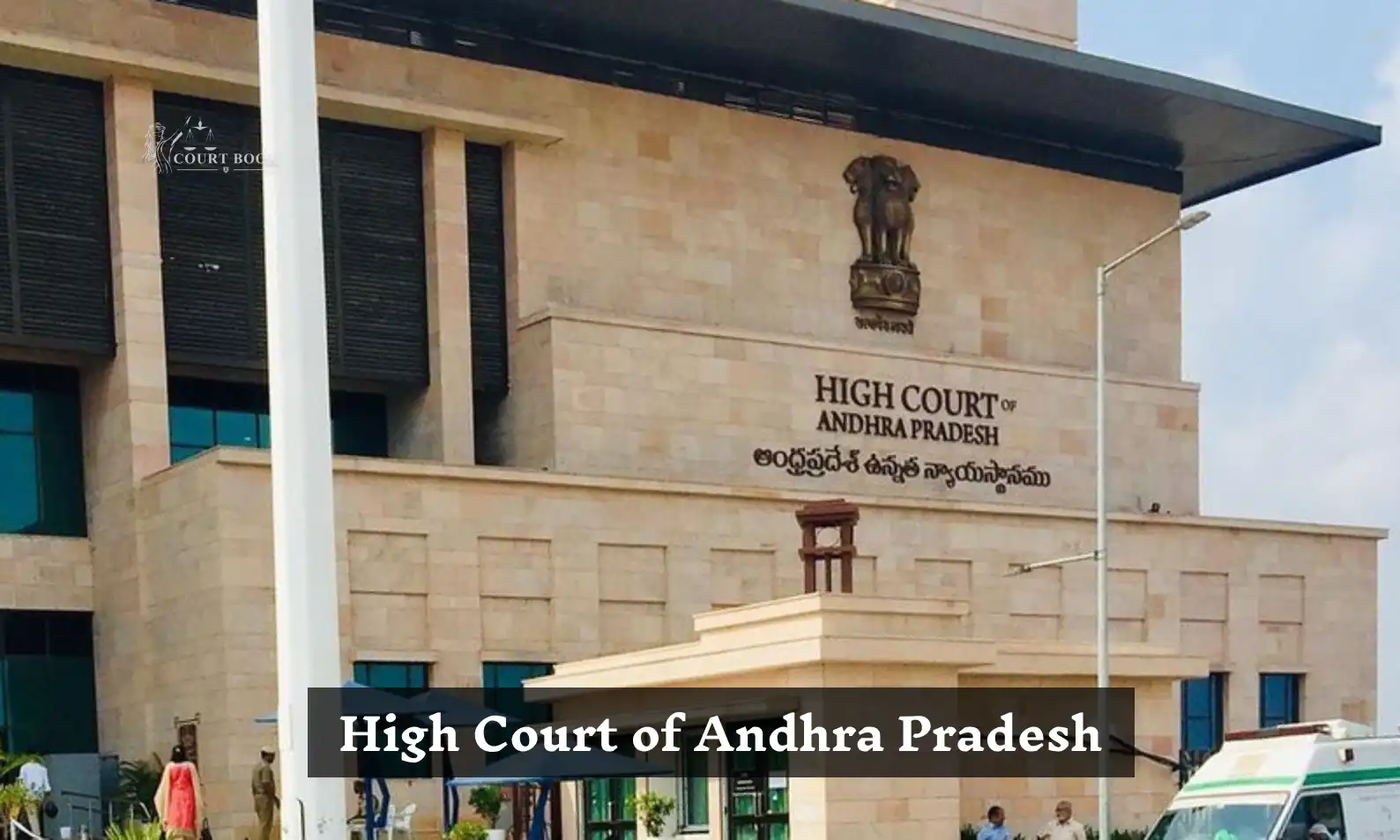
The Andhra Pradesh High Court has upheld a first appellate court judgment declaring the heirs of a deceased beneficiary as the rightful owners of a disputed property in Kakinada, after finding that a registered Will executed in 1990 was validly proved while a later unregistered Will relied upon by the opposing side failed to withstand judicial scrutiny.
Justice V. Gopala Krishna Rao dismissed a second appeal filed by the defendants, concluding that no substantial question of law arose for consideration.
Background of the Case
The dispute revolved around a residential property originally owned by Pamarthi Subbayamma. The plaintiffs claimed title through a registered Will dated August 31, 1990, under which Subbayamma bequeathed the property to her brother Hanumantha Rao.
After the deaths of both Subbayamma and Hanumantha Rao, his legal heirs approached the civil court seeking a declaration of title, recovery of possession, and damages.
The defendants contested the claim. They relied primarily on an unregistered Will dated December 29, 1991, allegedly executed by Subbayamma in favour of members of their branch of the family. They also raised alternative pleas, including claims of benami ownership and adverse possession.
The trial court dismissed the suit. However, the first appellate court reversed that decision and ruled in favour of the plaintiffs, leading to the present second appeal before the High Court.
Court's Examination of the Wills
The High Court closely examined both documents.
The plaintiffs produced attesting witnesses to prove the registered 1990 Will. The Court noted that one of the attesting witnesses gave a detailed account of its execution, registration, and the testatrix's mental condition at the time.
In contrast, the Court found several suspicious circumstances surrounding the 1991 unregistered Will relied upon by the defendants.
The judgment records that the alleged Will was said to have been executed at the residence of one of its beneficiaries and in the presence of persons connected to the beneficiaries. The Court also noted evidence showing long-standing disputes between Subbayamma and the defendants' family.
Court Observations
Justice Rao observed that the defendants failed to remove doubts surrounding the later Will.
The Court noted,
“There are several suspicious circumstances surrounding Ex.B-1 alleged unregistered Will,”
and held that the document had not been proved in accordance with law.
The Court further found it significant that the defendants had not referred to the alleged 1991 Will in earlier proceedings where such a claim would naturally have been expected.
On the registered 1990 Will, the Court found no suspicious circumstances. It accepted evidence showing that Subbayamma had been using thumb impressions instead of signatures due to old age and that the document had been properly attested and registered.
The Court also reiterated the settled legal principle that when multiple wills exist, a valid later testament prevails over earlier ones.
Decision
After reviewing the evidence and the findings of the appellate court, the High Court held that the plaintiffs had successfully established their title through the registered Will dated August 31, 1990.
The Court concluded that the defendants failed to prove the alleged unregistered Will, failed to establish benami ownership, and also failed to substantiate their plea of adverse possession.
Accordingly, the High Court dismissed the second appeal and confirmed the judgment and decree passed by the first appellate court, while directing that each party bear its own costs.
Case Details:
Case Title: S. Annapoorna (Died) & Others v. S. Satyanarayana Murthy & Others
Case Number: Second Appeal No. 494 of 2016
Judge: Justice V. Gopala Krishna Rao
Decision Date: June 15, 2026


