

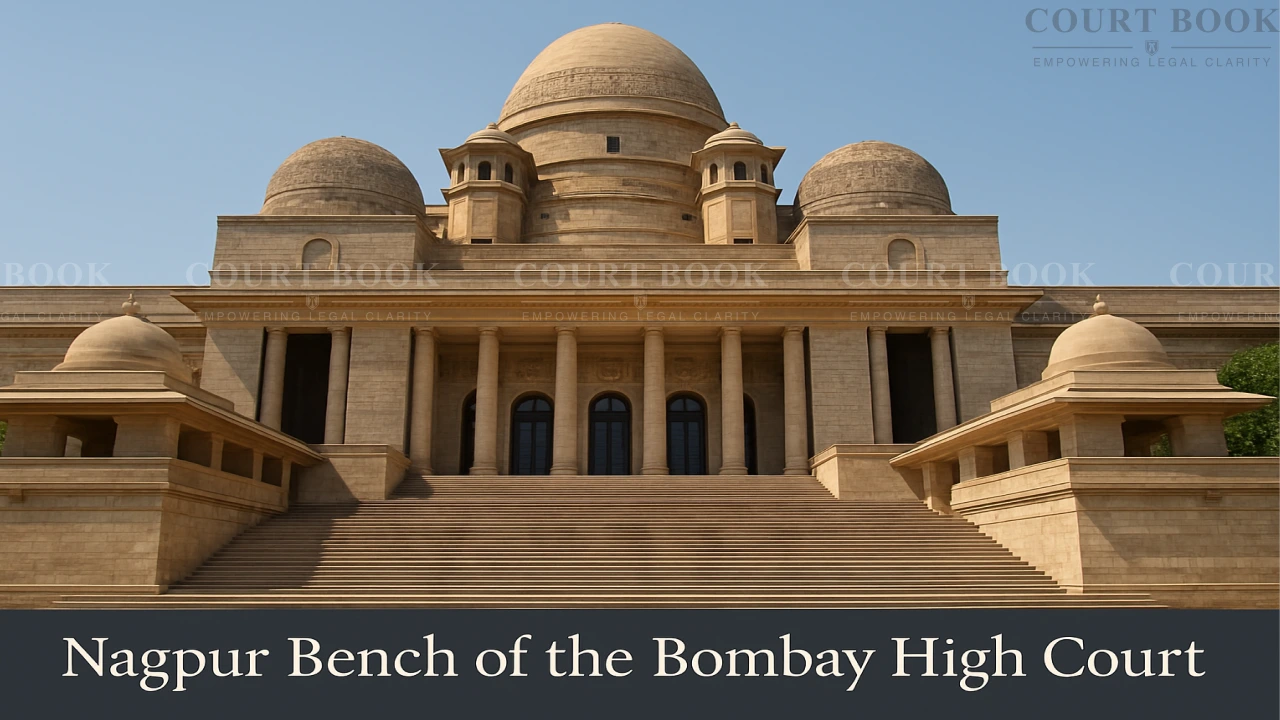
The Bombay High Court's Nagpur Bench has ruled that the Assistant Charity Commissioner does not have the authority under Section 41A of the Maharashtra Public Trusts Act, 1950, to stop or cancel an election process once it has already begun.
Setting aside an order passed by the Assistant Charity Commissioner, the Division Bench clarified that disputes relating to elections of a public trust must be addressed through the legal mechanism specifically provided under the Act and cannot be brought within the scope of administrative powers meant for trust management.
Background of the Case
The dispute arose from the affairs of Shree Durga Mandir Sarvajanik Devasthan Vishwasta Mandal, Nagpur.
Two trustees approached the Assistant Charity Commissioner by filing an application under Section 41A of the Maharashtra Public Trusts Act. They challenged an election notice issued on March 29, 2026, for elections scheduled on April 24, 2026.
According to them, the elections were being conducted contrary to the approved scheme governing the trust. They also argued that the legality of the existing managing committee was under question because several change reports relating to previous elections were either rejected or pending adjudication.
The applicants sought cancellation of the election notice and requested that the trust be managed by caretakers until the issues were resolved.
Assistant Charity Commissioner's Order
After hearing the parties, the Assistant Charity Commissioner set aside the election notice and directed that fresh elections be conducted within 90 days in accordance with the approved scheme.
The authority also allowed the existing committee to continue as a caretaker body for day-to-day administration but restrained it from taking major policy decisions or creating third-party rights.
Aggrieved by this decision, the office-bearers of the trust approached the High Court.
Court's Observations
The High Court examined the scope of Section 41A, which empowers the Charity Commissioner to issue directions for the proper administration of a public trust.
The Bench observed that the provision is intended to ensure proper management of trust affairs, protection of trust property, maintenance of records, accounting of income, and application of funds for the trust's objectives.
According to the Court, election disputes stand on a different footing.
The Bench noted that questions relating to the legality of a managing committee, validity of elections, voter lists, or authority to conduct elections are matters that can be examined in proceedings concerning change reports under Section 22 of the Act after a proper inquiry.
“The power conferred by Section 41A of the Act of 1950 is thus an administrative power which is to be exercised in the interest of the management of the trust and its finances,” the Court observed.
The judges further held that the expression “properly administered” cannot be interpreted so broadly as to permit interference in an election process that has already commenced.
The Court also pointed out an inconsistency in the Assistant Charity Commissioner's reasoning. While doubting the legality of the existing managing committee, the authority had simultaneously directed the same committee to conduct fresh elections and continue as caretaker administrators.
Decision
Allowing the writ petition, the Bombay High Court held that the Assistant Charity Commissioner had exceeded the jurisdiction conferred under Section 41A of the Maharashtra Public Trusts Act by cancelling the election notice.
The Bench concluded that interference with an ongoing election process could not be justified as a measure for the proper administration of the trust.
Accordingly, the Court quashed and set aside the order dated April 24, 2026, passed by the Assistant Charity Commissioner-II, Nagpur, and restored the position existing before that order.
The writ petition was allowed, and the rule was made absolute.
Case Details
Case Title: Shri Shyam Vasant Kale & Anr. v. The Assistant Charity Commissioner-II, Nagpur & Ors.
Case Number: Writ Petition No. 4116 of 2026
Judges: Justice Anil S. Kilor and Justice Raj D. Wakode
Decision Date: June 10, 2026


