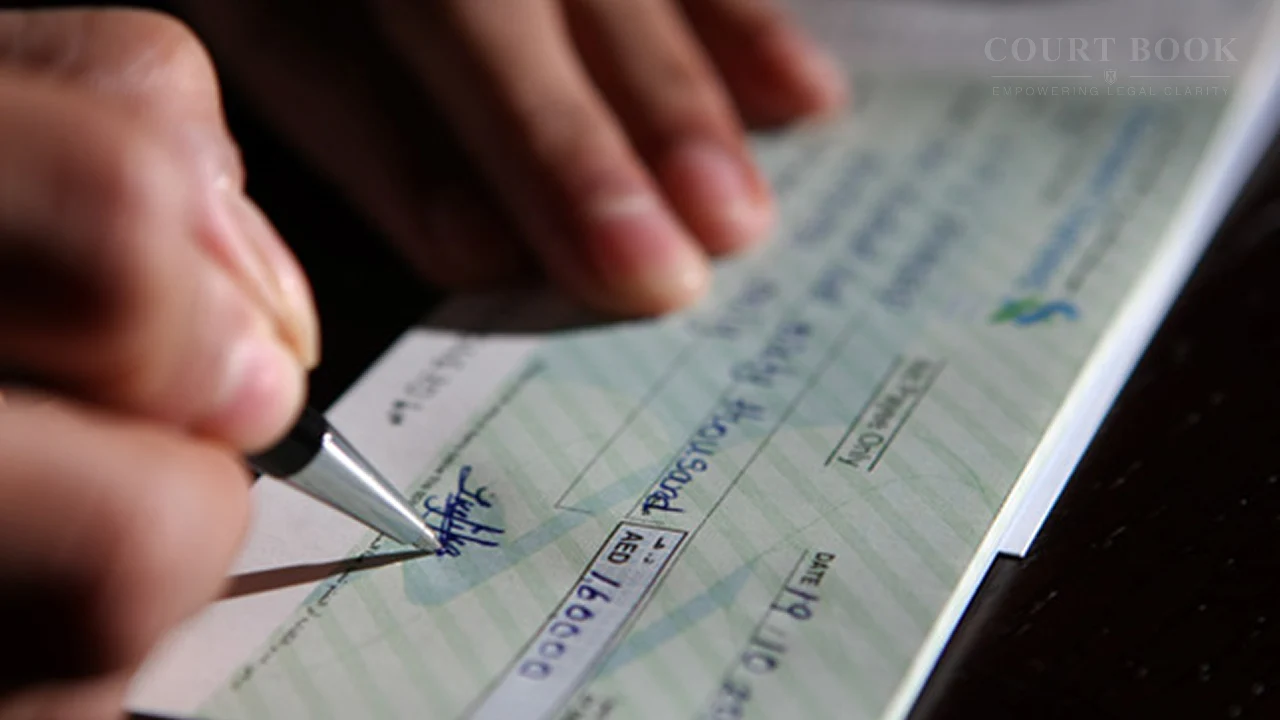
The Kerala High Court has ruled that a demand notice issued in a cheque dishonour case must specifically mention the amount claimed under the cheque. Holding that omission of the cheque amount makes the notice legally defective, the Court dismissed an appeal challenging the acquittal of an accused in a cheque bounce prosecution.
Justice A. Badharudeen delivered the judgment on May 26, 2026, in Criminal Appeal No. 212 of 2013.
Background of the Case
The case arose from the dishonour of a cheque worth ₹95,000. The complainant had initiated proceedings under Section 138 of the Negotiable Instruments Act, alleging that the accused failed to honour the cheque issued towards a legally enforceable liability.
After trial, the Judicial First Class Magistrate Court-II, Perambra, acquitted the accused in November 2012. The complainant then approached the High Court, arguing that all ingredients of the offence had been proved and that the trial court had erred in treating the statutory notice as invalid merely because it did not mention the cheque amount.
The appellant contended that there was only one financial transaction between the parties and, therefore, the accused was fully aware of the amount involved. It was argued that mentioning the cheque number and date in the notice should have been sufficient compliance with the statutory requirement.
The High Court disagreed with the appellant's submissions and examined the requirements of Section 138 of the Negotiable Instruments Act.
The Court noted that the statute requires the payee to make a demand for payment of “the said amount of money” through a written notice after dishonour of the cheque. According to the Court, this language leaves no room for ambiguity.
“The notice should specifically state the amount to be paid consequential to the dishonour of the cheque,” the Court observed.
Justice Badharudeen further explained that only when the exact amount is mentioned can the recipient make payment within the statutory period and avoid criminal consequences. The Court rejected the argument that the amount could be inferred from surrounding circumstances or from the fact that there was only one transaction between the parties.
The judgment emphasized that in the absence of a specific demand for the cheque amount, the legal requirement under Section 138 is not fulfilled and the offence cannot be said to have been completed.
Finding no error in the Magistrate's reasoning, the High Court held that a notice which does not mention the actual amount due is incomplete and cannot be treated as a valid statutory notice under Section 138 of the Negotiable Instruments Act.
Accordingly, the Court confirmed the acquittal of the accused and dismissed the complainant's appeal.
Case Details
Case Title: Rajesh K. v. Asokan P.K. & State of Kerala
Case Number: Criminal Appeal No. 212 of 2013
Judge: Justice A. Badharudeen
Decision Date: 26 May 2026