

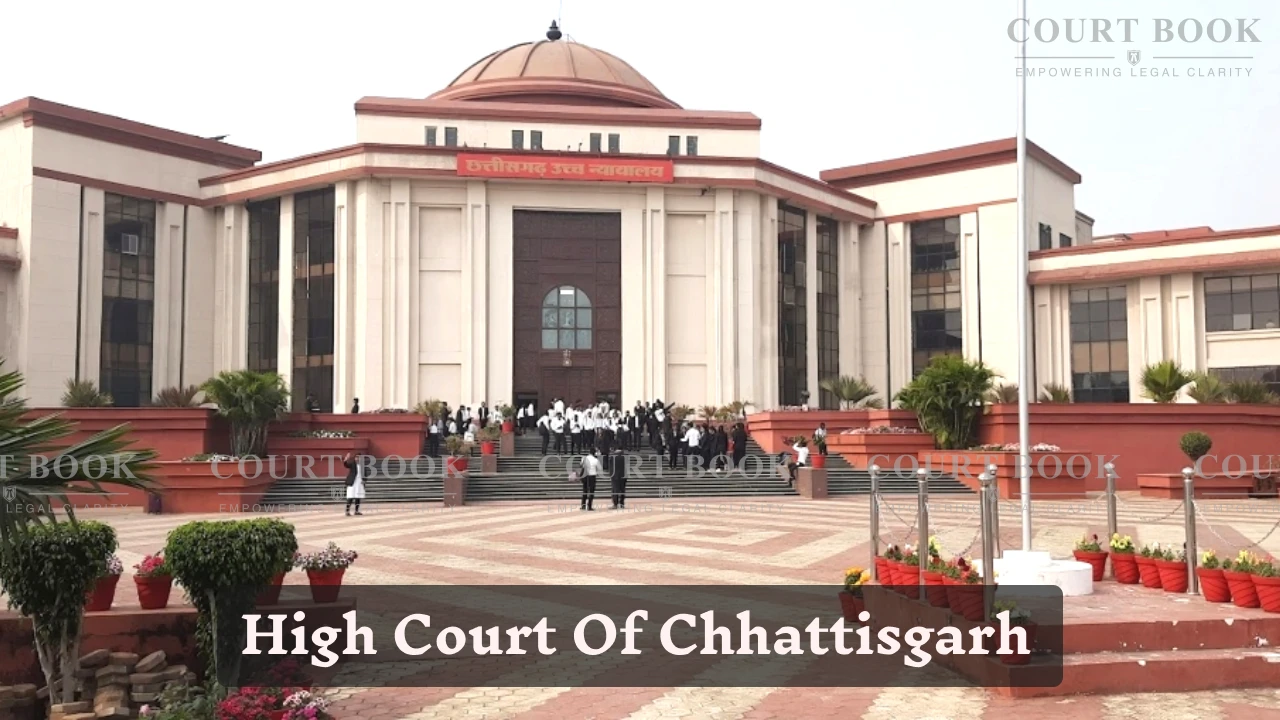
In a somewhat tense courtroom on 28 October 2025, a Division Bench of the Chhattisgarh High Court delivered a judgment that visibly brought relief to petitioner M.L. Yadav, a former Chief Station Manager who had been fighting since 2016 to undo his voluntary retirement. The Bench-Justices Sanjay K. Agrawal and Radhakishan Agrawal-held that Yadav’s request to withdraw his voluntary retirement (VRS) was indeed submitted in time, even though the Railways had already processed his retirement order.
हिंदी में पढ़ें
Background
The dispute began in February 2016 when Yadav submitted a VRS application citing personal reasons. A month later, he clarified that his retirement should only be processed after the implementation of the 7th Pay Commission. However, as the court later noted, he changed his mind again and filed a withdrawal request on 12 May 2016-just days before his retirement was scheduled to take effect. The Railways, though, accepted his VRS on 16 May and issued the retirement order the same day.
The CAT (Central Administrative Tribunal), in February 2025, sided with the Railways and dismissed Yadav’s challenge, saying he had shown “no valid reason” for withdrawing his retirement request. That dismissal pushed him to the High Court.
Court’s Observations
In its detailed analysis, the High Court revisited Rule 67 of the Railway Services (Pension) Rules, 1993, particularly the provision allowing an employee to withdraw a VRS notice any time before the “intended date of retirement.”
The Bench observed, “The intended date of retirement in this case was 17 May 2016. The petitioner’s withdrawal request, received on 16 May, was clearly within time.” The judges drew support from landmark Supreme Court precedents, including Balram Gupta and J.N. Srivastava, which emphasise that an employee retains the right to step back from voluntary retirement until it becomes effective.
A key moment came when the court pointed out that the Railways’ refusal had no reasonable justification. “There was no change in administrative arrangement or adverse impact that could justify denying withdrawal,” the Bench remarked.
However, the matter wasn’t so straightforward. After his VRS was accepted, Yadav had applied to work as an ATVM (Automatic Ticket Vending Machine) facilitator-a role open only to retired railway staff. The Railways argued this showed he accepted his retired status. The court agreed partially, noting that he did benefit from a post-retirement engagement. “The petitioner cannot blow hot and cold at the same time,” the order noted, hinting at the equitable principle of estoppel.
Decision
Ultimately, the High Court struck down both the CAT’s order and the Railways’ rejection of Yadav’s withdrawal application. It held that his VRS had not come into effect since his withdrawal was timely. Yet, the court declined to grant any consequential financial benefits, a limitation arising entirely from his own conduct in taking up the ATVM role.
The judgment ended firmly: Yadav is deemed not retired, but he cannot claim back wages or service benefits for the intervening period.
Case Title: M.L. Yadav vs. Union of India & Others
Case No.: WPS No. 2078 of 2025
Case Type: Writ Petition (Service – Voluntary Retirement Withdrawal)
Decision Date: 28 October 2025
Download Judgment

