

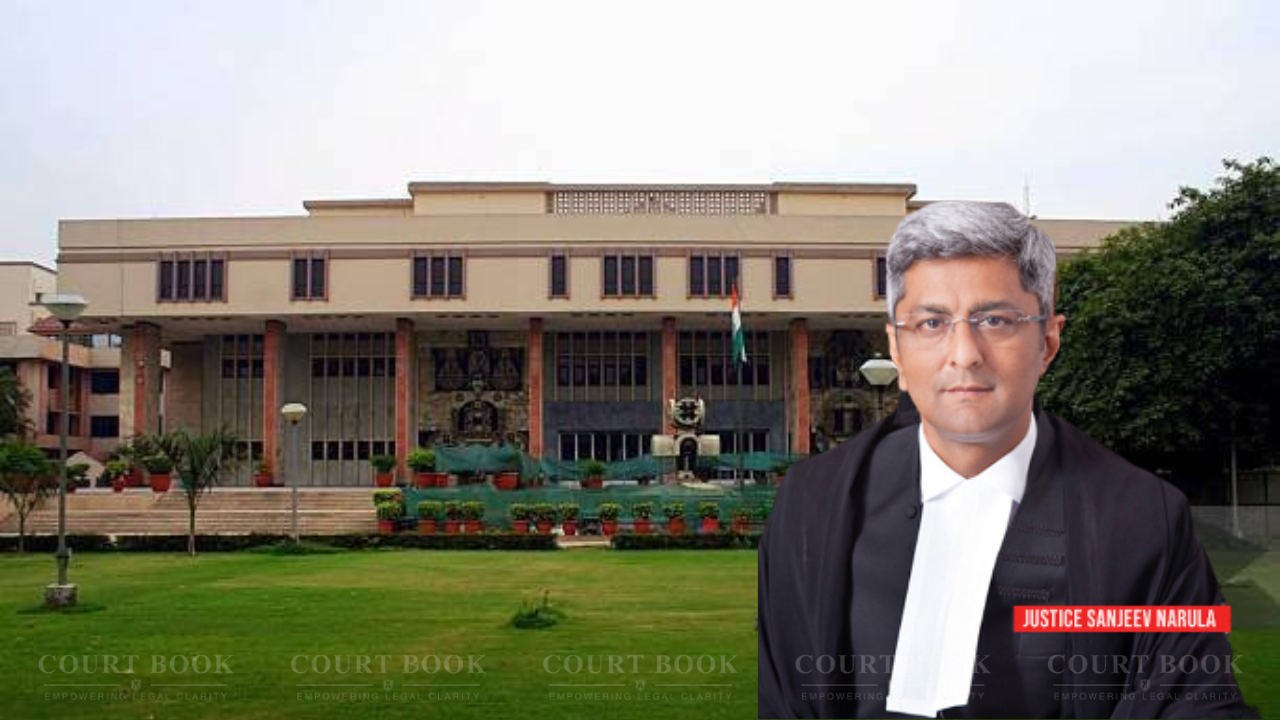
The Delhi High Court has ruled that courts cannot expand eligibility criteria in a public recruitment process by treating an unlisted educational qualification as equivalent to the one specifically prescribed in the recruitment advertisement. The Court dismissed a writ petition challenging the rejection of a candidate for the post of Senior Trainee (Marketing) in the National Seeds Corporation (NSC), holding that The employer was entitled to apply the eligibility criteria exactly as notified in the recruitment advertisement..
Background of the Case
The petitioner had applied for the post of Senior Trainee (Marketing) under Advertisement No. RECTT/1/18/NSC/2018. He belonged to the Scheduled Caste category and was a person with hearing impairment. He possessed a B.Sc. (Agricultural Business Management) degree along with an MBA (Agriculture).
Although he cleared the written examination and was called for document verification, NSC found that he did not hold a B.Sc. (Agriculture), which was the qualification expressly prescribed in the recruitment advertisement. His candidature was therefore not processed further. The petitioner approached the High Court, arguing that his degree had been recognised as equivalent to B.Sc. (Agriculture) by authorities in Maharashtra and that rejecting him merely because of the degree's title was arbitrary.
Court's Observations
Justice Sanjeev Narula observed that public recruitment must strictly follow the qualifications notified in the advertisement and that courts cannot rewrite recruitment conditions after the selection process has begun.
The Court said,
"The Court cannot read the words 'or equivalent' into the advertisement when the employer chose not to include them. That would not amount to interpretation; it would be rewriting the advertisement's terms."
The Court further explained that determining whether one educational qualification is equivalent to another falls within the employer's domain and not that of the judiciary. It noted that accepting State-specific equivalence certificates or university opinions after the recruitment process had commenced would undermine uniform standards in all-India recruitment.
The bench also emphasised that reservation benefits cannot replace the requirement of possessing the prescribed educational qualification.
It observed,
"Reservation cannot create eligibility where the essential qualification itself is absent."
Addressing the petitioner's grievance regarding the absence of a written rejection, the Court remarked that although public recruiting agencies should ordinarily communicate reasons in writing, such an omission did not affect the legality of the decision in the present case because the reason for rejection was clear and had been fully examined during the proceedings.
Decision
Holding that the recruitment advertisement specifically required a B.Sc. (Agriculture) degree and did not recognise any equivalent qualification, the Delhi High Court concluded that the petitioner could not be considered eligible on the basis of a B.Sc. (Agricultural Business Management).
The writ petition was accordingly dismissed, along with all pending applications.
Case Details
Case Title: Bhagat Prashant Haribhau v. National Seeds Corporation Limited & Others
Case Number: W.P.(C) 10079/2018
Judge: Justice Sanjeev Narula
Decision Date: 2 July 2026


