The Delhi High Court has dismissed an election petition challenging the 2020 Assembly election victory of Aam Aadmi Party leader Manish Sisodia from the Patparganj constituency. The court held that the petition lacked material facts and failed to meet the strict legal standards required under election law, reaffirming that election results cannot be lightly interfered with.
Background of the Case
The petition was filed by Pratap Chandra, a candidate who contested the 2020 Delhi Assembly elections from Patparganj. He challenged Sisodia’s election under the Representation of the People Act, 1951, alleging two major violations.
First, the petitioner claimed that election campaigning continued during the prohibited 48-hour silence period before polling day, in violation of Section 126 of the Act. According to him, hoardings, banners, and advertisements were visible even on the day of polling, giving an unfair advantage to rival candidates.
Second, he alleged that Sisodia had suppressed material information in his nomination affidavit by not disclosing an FIR registered in 2013 under the Prevention of Insult to National Honour Act.
Based on these claims, the petitioner sought to have the election declared void and requested fresh elections in the constituency.
Arguments by the Petitioner
Appearing in person, the petitioner argued that he had strictly followed the election rules and stopped campaigning within the prescribed time. He claimed that other political parties continued displaying election material, despite repeated complaints to election authorities.
He also alleged that the non-disclosure of an FIR amounted to concealment of material facts, which, according to him, misled voters and violated the statutory duty of transparency imposed on candidates.
“The continued display of campaign material during the silence period vitiated the entire election process,” the petitioner argued before the court.
Stand of the Respondent
Senior Advocate representing Manish Sisodia opposed the petition, arguing that it did not disclose any legally sustainable cause of action. He pointed out that:
• The petition did not specify how the alleged campaigning materially affected the election result.
• The hoardings referred to were generic party advertisements and did not mention the candidate.
• There was no proof that the respondent had authorised or consented to any such display.
• The FIR cited by the petitioner had not resulted in charges or cognizance by a court, making its disclosure legally unnecessary.
The defence also pointed out that the petition failed to comply with mandatory requirements under the Representation of the People Act, including proper pleading of material facts.
Court’s Observations
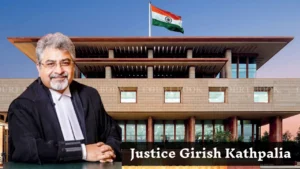
Justice Jasmeet Singh, while analysing the case, emphasised that election petitions are serious matters and must strictly comply with statutory requirements.
The court observed that mere allegations are not enough. An election can be set aside only when it is clearly shown that:
• The law was violated, and
• Such violation materially affected the election result.
“The right to challenge an election is statutory and must be exercised strictly in accordance with the law,” the court noted.
On the issue of campaigning during the silence period, the court found that the petition failed to establish any direct link between the alleged advertisements and the respondent. The court also held that general party hoardings, without reference to a candidate, do not automatically amount to a violation of Section 126.
Regarding the FIR, the court clarified that disclosure is mandatory only when charges have been framed or cognizance has been taken by a court. Since neither had happened in this case, there was no legal requirement for disclosure.
The judge further observed, “Mere registration of an FIR does not amount to a criminal case requiring disclosure under election law.”
Decision of the Court
After examining the pleadings and legal position, the Delhi High Court dismissed the election petition.
The court held that:
• The petition lacked material facts.
• No evidence was shown to prove that the election result was materially affected.
• There was no legal violation in the non-disclosure of the FIR.
• The petition failed to meet the mandatory requirements of election law.
Accordingly, the application seeking dismissal of the petition was allowed, and the election petition was rejected in its entirety.
Case Title: Pratap Chandra v. Manish Sisodia
Case No.: EL.PET. 1/2020
Decision Date: January 17, 2026
Download Order