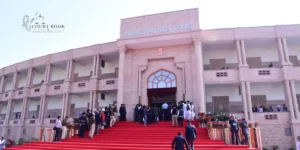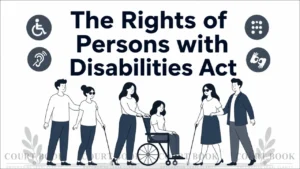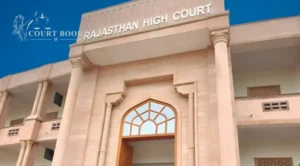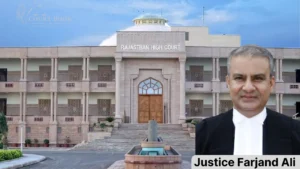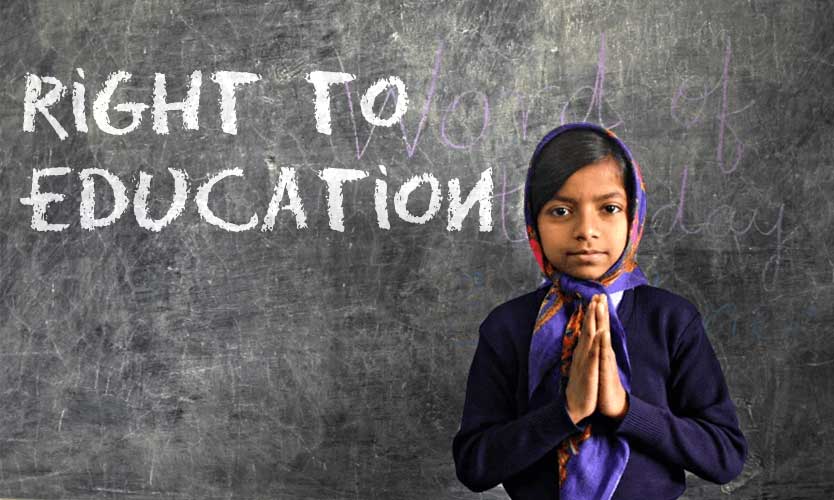
In a significant ruling affecting thousands of children from economically weaker sections, the Rajasthan High Court has held that private unaided schools offering pre-school education cannot avoid admitting students under the Right to Education (RTE) Act at the pre-primary stage. The Division Bench made it clear that the State Government cannot narrow the scope of the law through executive guidelines.
The judgment, delivered on January 8, 2026, settles a long-running dispute over whether the mandatory 25% reservation under the RTE Act applies only at Class I or also at pre-school levels.
Background of the Case
The case arose from a batch of public interest litigations and special appeals filed by social organisations, the State of Rajasthan, and several private schools.
At the centre of the dispute was the State Government’s admission guidelines for various academic sessions, which restricted RTE admissions largely to Class I. These guidelines allowed private unaided non-minority schools to admit fee-paying students at pre-school levels, while children from weaker sections were pushed to wait until Class I.
Social organisations working in the education sector challenged this approach, arguing that it defeated the very purpose of the RTE Act, which flows from Article 21A of the Constitution and guarantees free and compulsory education to children.
The petitioners told the court that Section 12(1)(c) of the RTE Act clearly mandates a 25% reservation for children from weaker sections and disadvantaged groups.
They stressed that the proviso to Section 12(1)(c) specifically applies this obligation to pre-school education wherever such education is provided by a school.
Read also:- Gadag Murder Case: Supreme Court Reverses High Court, Orders Release of Accused
“The State has no authority to dilute a fundamental right through yearly guidelines,” one of the submissions noted. According to the petitioners, the government’s policy created an unfair divide where privileged children accessed early education, while poorer children were denied the same start.
The State Government and several schools defended the guidelines by arguing that the RTE Act primarily covers “elementary education” and that pre-school education depends on reimbursement arrangements.
Schools also raised concerns about financial burden, pointing out delays and uncertainty in reimbursements for RTE admissions.
Court’s Observations
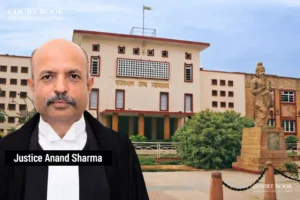
The Division Bench, led by Acting Chief Justice Sanjeev Prakash Sharma and Justice Baljinder Singh Sandhu, rejected the narrow reading of the law.
The court observed that the RTE Act does not give the State Government the power to decide or limit “entry levels” for RTE admissions.
“The proviso to Section 12(1)(c) leaves no ambiguity,” the bench noted, adding that where a school imparts pre-school education, the 25% reservation must apply at that level as well.
The judges emphasised that executive guidelines cannot override or rewrite a statute passed by Parliament. Any such attempt, the court said, would be unconstitutional and beyond the State’s authority.
Importantly, the court also flagged the equality issue, stating that denying pre-school access to disadvantaged children while allowing fee-paying admissions was an unreasonable classification under Article 14 of the Constitution.
The court examined the earlier Single Judge decision, which had allowed admissions at both pre-school and Class I levels but upheld the State’s power to issue admission guidelines.
Read also:- Supreme Court Rules Against Service Tax on Speaker Fees, Clears HT Media in Event Management Dispute
While agreeing that schools must admit students at multiple entry levels, the Division Bench clarified that the State’s role is limited to implementing the Act, not reshaping it.
Final Decision
The Rajasthan High Court ultimately held that:
• The 25% RTE reservation under Section 12(1)(c) applies to pre-school education wherever such education is offered by a school.
• The State Government has no legal authority to restrict RTE admissions only to Class I through executive guidelines.
• Private unaided non-minority schools cannot bypass their statutory obligation by citing reimbursement issues.
With this, the court disposed of the batch of petitions and appeals, reaffirming that the RTE Act must be applied in its full spirit from the earliest stage of schooling.
Case Title:- Rukmani Birla Modern High School & Ors. vs State of Rajasthan & Ors.
Download Judgment