

The Delhi High Court has dismissed an appeal filed by Competition Commission of India (CCI) Deputy Director (Law) Vijay Bishnoi, allowing disciplinary proceedings against him to continue over an allegation concerning the recording and signing of witness statements during an investigation into alleged bid rigging in ONGC’s oil well cement tenders.
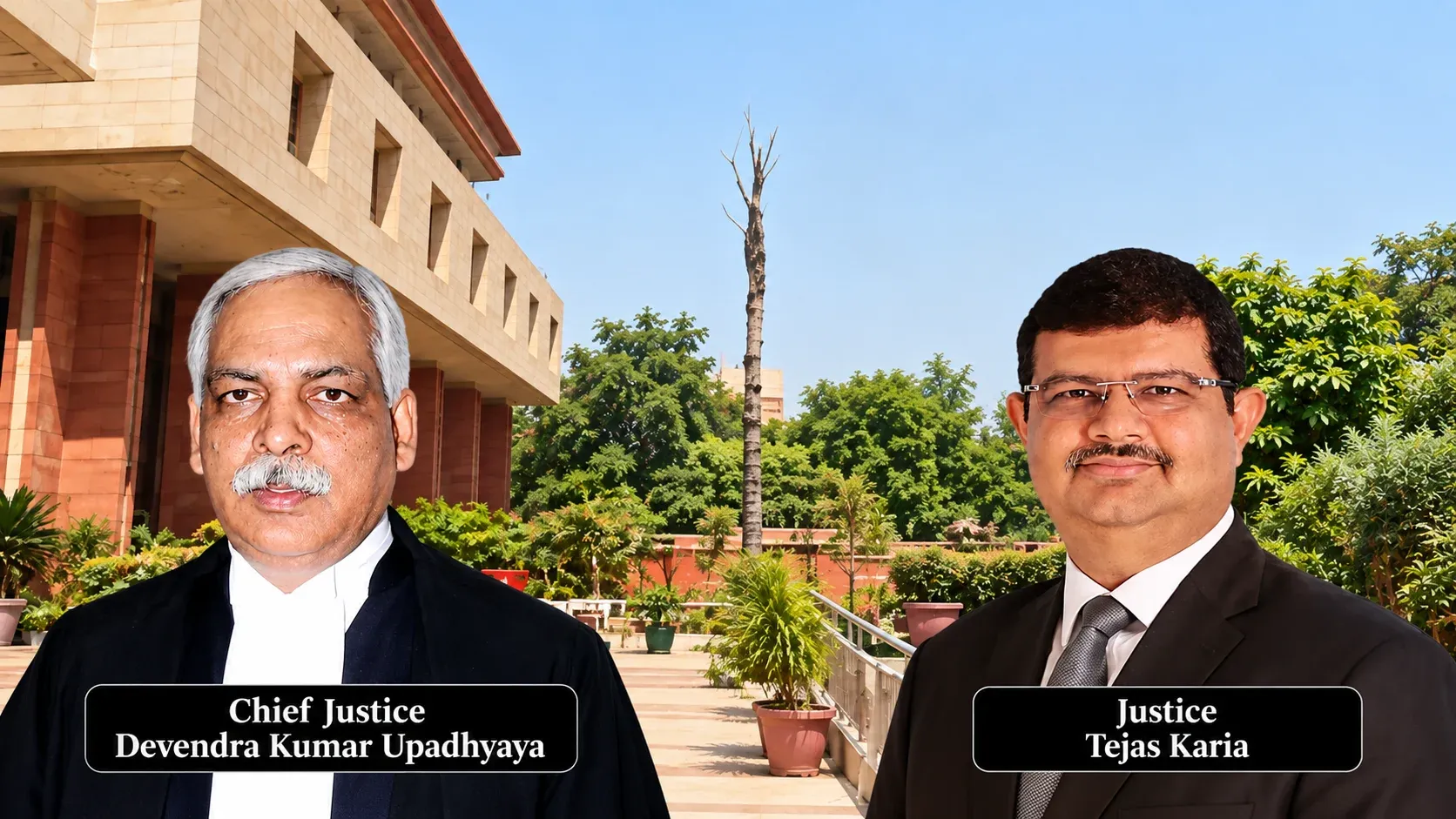
A Division Bench comprising Chief Justice Devendra Kumar Upadhyaya and Justice Tejas Karia delivered the judgment on September 30, 2026, and directed that the disciplinary inquiry be completed within six months.
Background
The matter arose after ONGC approached the CCI in July 2020 alleging bid rigging and anti-competitive practices in tenders for “Oil Well Cement”. The CCI registered the case and ordered an investigation.
Search and seizure operations were conducted at several cement companies in December 2022. During the operation at India Cement Limited’s Chennai premises, statements of two company officials, Swaminathan and Parthasarathy, were recorded and signed before being deposited with the CCI.
In April 2023, CCI officials reported an allegation that Bishnoi had admitted to tampering with the statements. A preliminary inquiry followed, and Bishnoi was suspended in May 2023. The CCI subsequently approved major penalty proceedings and a draft chargesheet, while the Central Vigilance Commission (CVC) concurred with the proposal.
Bishnoi challenged the disciplinary proceedings, mainly arguing that the final charge memorandum had not received the required approval from the CCI acting as the disciplinary authority.
The Division Bench examined the departmental record produced during the appeal and found that the CCI had approved the draft chargesheet on August 4, 2023. The Court held that the draft and the charge memorandum subsequently issued were the same document and that the requirements of Rule 14(3) of the Central Civil Services Rules had therefore been met.
The Court also held that the list of witnesses did not require fresh approval because it had already formed part of the draft chargesheet. A later corrigendum was treated as a clerical correction that did not alter the substance of the allegations.
Importantly, the Bench did not decide whether Bishnoi actually tampered with the statements. The Court said:
“The charge concerns the manner in which the statements of Mr. Swaminathan and Mr. Parthasarathy came to be recorded and signed.”
The Court held that whether the allegation is ultimately established is a matter of evidence for the Inquiring Authority. It also permitted Bishnoi to place relevant material before that authority.
The Delhi High Court affirmed the Single Judge’s judgment, dismissed the appeal and directed that the disciplinary proceedings resume from the stage at which they had stopped.
The Inquiring Authority was directed to complete the inquiry and the Disciplinary Authority to pass the final order within six months from the judgment.


