

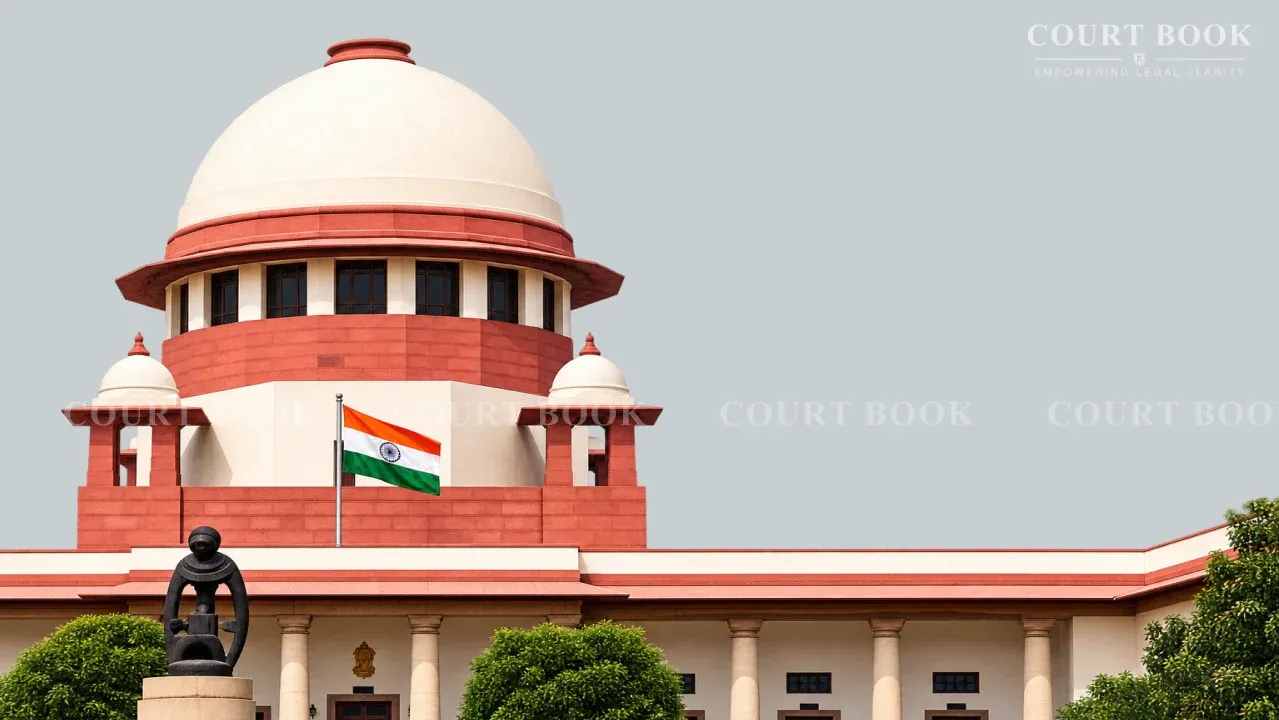
The Supreme Court on October 1, dismissed an appeal filed by the State of Himachal Pradesh against the acquittal of a woman accused of murdering her stepmother and minor stepbrother. A Bench of Justice Manoj Misra and Justice Vijay Bishnoi held that the prosecution had not proved its case beyond reasonable doubt, and refused to disturb the Himachal Pradesh High Court's judgment.
Background
The matter began on September 7, 2011, when Bhagi Ram (PW-1) told the police that his daughter had been missing for six to seven days and that a foul smell was coming from her locked house. The police broke open the lock and found the bodies of the woman and her young son. The autopsy said they were strangled, and that death could have occurred five to seven days earlier.
The prosecution alleged that the respondent, Anchla alias Chanchla, the woman's stepdaughter, was behind the killings. It claimed she visited the house on August 31, 2011, took a taxi back to Chamba after midnight with a bleeding thumb, and later led the police to a bunch of keys and the deceased's mobile phone. A DNA profile from her blood was also said to match dried blood found on a trunk in the house. The Sessions Court at Chamba convicted her under Section 302 of the Indian Penal Code, which deals with murder. The High Court reversed that verdict in 2014, and the State came to the Supreme Court.
The Bench began by noting the limited scope of an appeal against acquittal. It said the Court would interfere only when the view taken is perverse or when cogent evidence has been discarded on unsustainable grounds.
On the "last seen" evidence, the Court found that PW-1 had improved his version in court, claiming he saw the accused talking to the child, something missing from his earlier police statement. His delay of six to seven days in reporting the matter also failed to inspire confidence.
The taxi driver (PW-4) and the hotel worker (PW-18) were also doubted. The Court said it was unclear what led the investigating officer to record their statements, and he could not give the dates.
The Bench observed:
"It is well settled that the role of the investigating officer is to collect evidence and not to create one. Where there is no occasion for the investigating officer to record statement of a person, or for that person to impart information to the police, yet, the police proceeds to record his statement without narrating the circumstance in which it was considered necessary to record his statement, a serious doubt arises as to whether that witness has been set up to create evidence."
The Court also flagged that tower locations were not collected with the call records, and that the deceased's call record was never exhibited. It called this a serious investigational lapse.
On the lock, witnesses did not clearly establish that the lock produced in court was the one broken to enter the house. The recovery of keys was therefore held to be inconsequential. The recovery of the mobile phone was also found doubtful.
As for the DNA match, the Court accepted the forensic report but noted the other blood samples had degraded while one survived.
It held:
"Presence of blood of the accused in the room at best indicates that at some point in time the accused was present there. This does not indicate that the accused was present on 31.08.2011 or for that matter on any given date."
The Court added that she was a regular visitor to the house, and her blood was not found on the victims' clothes or on any material used for strangulation. The motive, an alleged bequest of property to the child, was also not backed by evidence.
Summing up, the Bench held that the circumstances were neither proved beyond reasonable doubt nor formed a complete chain excluding every hypothesis consistent with the accused's innocence.
Finding no reason to interfere with the High Court's decision, the Supreme Court dismissed the appeal.
Case Details:
Case Title: The State of Himachal Pradesh v. Anchla @ Chanchla
Case Number: Criminal Appeal No. 166 of 2019
Judge: Justice Manoj Misra and Justice Vijay Bishnoi
Decision Date: October 1, 2026


