

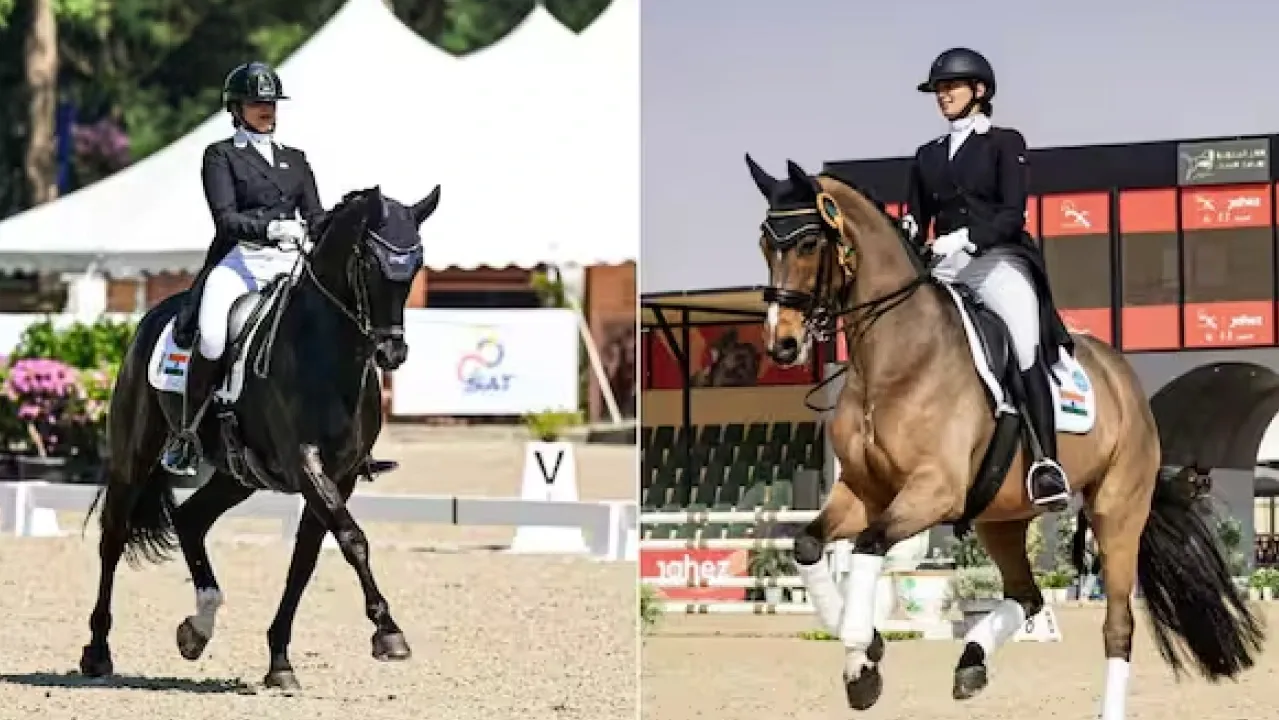
The Delhi High Court has refused to interfere with the selection of India's Dressage team for the 2026 Asian Games, holding that although the Equestrian Federation of India (EFI) did not comply with certain procedural requirements under its published Selection Criteria, there was no infirmity in the preparation of the list of Probables. The Division Bench observed that, considering the limited time before the final nomination deadline, it was not practically possible to conduct the remaining selection process, and judicial interference at that stage could adversely affect India's participation in the Games.
Background of the Case
The appeals arose after two international Dressage riders challenged the selection list issued by the Ad-Hoc Committee governing EFI. Both riders were placed on the reserve list instead of being included among the final four competitors selected for the Asian Games.
They argued that the federation departed from its published selection criteria by not issuing a provisional merit list, by adopting an undisclosed evaluation method, and by failing to conduct competitions during the training period before finalising the team. They also questioned the transparency of the selection process.
EFI, on the other hand, maintained that the selection committee had followed the published criteria. It submitted that riders who had secured Individual Minimum Eligibility Requirements (MERs) ranked above those with only Team MERs and that comparative merit among riders in the same category was determined through aggregate scores across all three prescribed Dressage tests.
Court's Observations
The Bench reiterated that courts ordinarily do not re-evaluate the sporting merit of athletes or substitute the opinion of expert selection committees. Judicial review, it said, is limited to examining whether the selection process is arbitrary, irrational or contrary to the governing rules.
The Court observed:
"Courts do not sit in appeal over the decisions of selection committees, nor do they reassess the relative merits of candidates."
While examining the record, the Court held that EFI had correctly prepared the list of Probables under Clause 13 of the Selection Criteria. However, it found that the federation did not comply with Clauses 15(a) and 15(b), which required a further review of the selected Probables and competitions during the training period before the final team was confirmed. The Court also noted that EFI did not publish the Provisional Merit List of six Probables as contemplated under Clause 8(f) of the Selection Criteria.
The Bench also remarked that EFI appeared to have acted in undue haste by uploading the definitive entries well before the submission deadline without completing the entire process contemplated under its own rules. However, it noted that EFI had not amended those provisions despite having the power to do so in compelling circumstances.
Why the Court Did Not Change the Team
Despite finding procedural non-compliance, the Court declined to set aside the selection. It observed that the qualifying window had already closed and that there was insufficient time to conduct the competitions contemplated under Clause 15(b). The Bench noted that organising another competition at that stage was not practically possible because the riders and horses were spread across different parts of the world.
The judges noted that the qualifying window had already closed, riders and horses were located in different parts of the world, and transporting them for another competition before the nomination deadline was logistically impossible. Any interference at such a late stage, the Court said, could negatively affect India's participation in the Asian Games.
The Bench also rejected the challenges to the comparative ranking of the selected riders. It held that the Selection Committee correctly applied the published criteria by giving preference to riders who had achieved Individual MERs and by using aggregate scores to determine merit among riders with the same category of MERs. The Court further declined to accept the argument that only PSG scores should determine team selection or that scores from different competitions could be combined to create a valid MER.
Decision
The Delhi High Court declined to interfere with the judgment of the Single Judge and dismissed both appeals. While holding that EFI had not complied with the procedural requirements contained in Clauses 15(a) and 15(b) of the Selection Criteria, the Court concluded that it was logistically impracticable to conduct further competitions before the nomination deadline.
Considering the larger interest of the sport and the limited time available before the Asian Games, the Bench refrained from disturbing the existing selection and directed EFI to strictly comply with its Selection Criteria in future selection exercises.
Case Title: Anush Agarwalla v. Ad-Hoc Committee for Governance of Equestrian Federation of India & Ors. and connected matter
Case Number: LPA 458/2026 & LPA 459/2026
Judge: Chief Justice Devendra Kumar Upadhyaya and Justice Tejas Karia
Decision Date: July 6, 2026


