

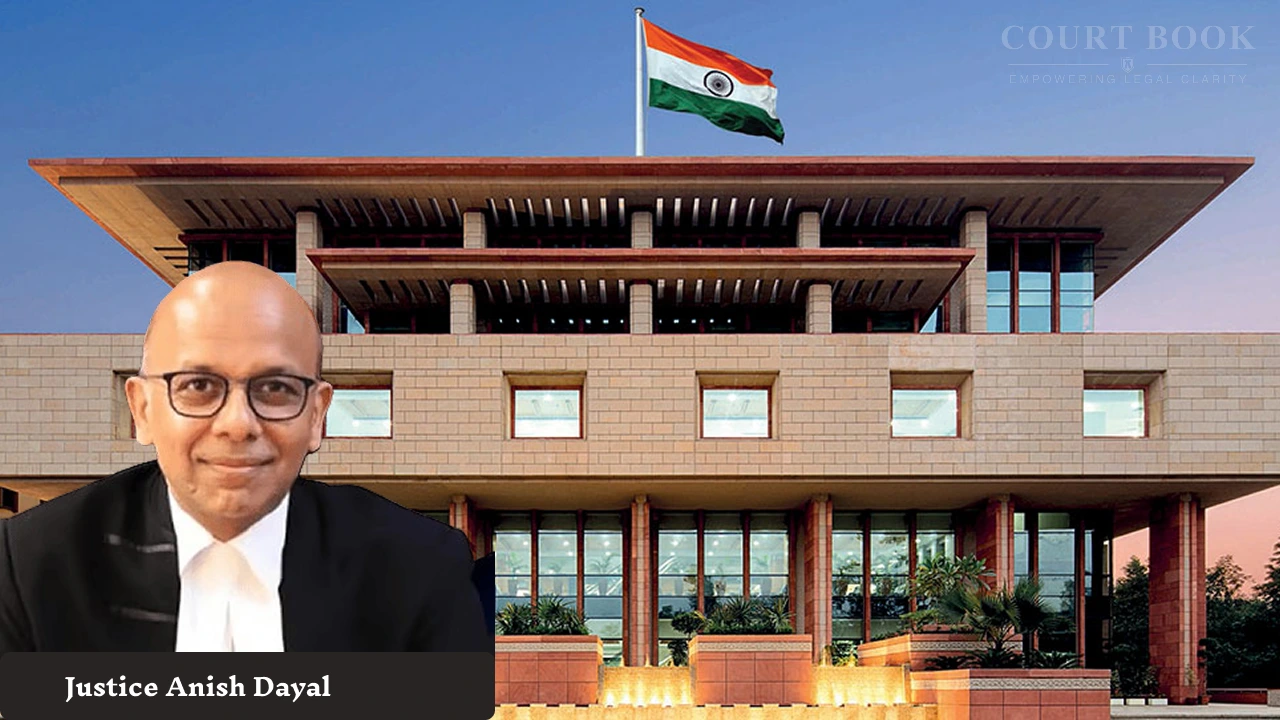
The Delhi High Court has held that a claim based on the personal accident cover available under a comprehensive motor insurance policy cannot be decided by the Motor Accident Claims Tribunal (MACT), as such claims arise out of a contractual insurance arrangement rather than statutory liability under the Motor Vehicles Act.
Justice Anish Dayal dismissed an appeal filed by the mother of a deceased driver, holding that while the claimants may pursue their remedies under the insurance contract, they cannot seek compensation before the MACT under Section 166 of the Motor Vehicles Act in the facts of the case.
Background of the Case
The appeal challenged a Motor Accident Claims Tribunal order dated April 19, 2025, which had dismissed the claimant's petition.
The deceased, Udey Singh alias Uday Jit Singh, was driving an insured Toyota Innova owned by his father, Amarjit Singh. According to the case, an unidentified truck allegedly hit the Innova from behind after overtaking it at high speed. The impact caused the vehicle to collide with another car before crashing into a roadside wall. Udey Singh died in the accident, while the truck remained untraced, making it a hit-and-run case.
Since the offending vehicle could not be identified, the deceased's mother sought compensation from the insurer of the Innova, arguing that her son should be treated as an occupant or third party under the comprehensive/package insurance policy.
Arguments Before the Court
The appellant contended that the vehicle was covered under a comprehensive/package policy, which extended coverage beyond a basic statutory policy. It was argued that because the owner had paid an additional premium, the deceased driver should receive the benefit of the personal accident cover and be treated as an occupant covered under the policy.
The insurance company, however, argued that the personal accident cover applied only according to the contractual terms of the insurance policy. It maintained that disputes relating to contractual insurance benefits could not be adjudicated by the MACT and must instead be pursued before the appropriate forum.
An amicus curiae appointed by the Court also assisted on the legal distinction between statutory liability under the Motor Vehicles Act and contractual liability arising from insurance policies.
Court's Observations
Justice Anish Dayal observed that a claim under Section 166 of the Motor Vehicles Act necessarily requires proof of negligence against a tortfeasor.
The Court examined whether, in the absence of a traceable offending vehicle, compensation could be sought from the insurer of the deceased's own vehicle by invoking the personal accident cover before the MACT.
The Bench observed:
"A claim made under Section 166 of MV Act involves proof of negligence against driver of the vehicle, which, in this case, was the deceased himself."
The Court further clarified that the personal accident cover forms part of a contractual insurance arrangement and is distinct from statutory third-party liability under the Motor Vehicles Act.
Emphasising this distinction, the Court said:
"The claim, if made under the personal accident cover of the insurance policy, would be tested on the terms and conditions of the insurance contract and, therefore, would not be within the remit of MACT."
Justice Dayal also cautioned against expanding the jurisdiction of the Motor Accident Claims Tribunal beyond what the statute contemplates, observing that doing so would unnecessarily enlarge the scope of motor accident jurisprudence.
Decision
The Delhi High Court upheld the MACT's decision and dismissed the appeal. However, it clarified that the claimants remain free to approach the insurer under the personal accident cover provided by the insurance policy. If such a claim is rejected, they may pursue appropriate remedies before the consumer forum or any other competent forum.
Case Details:
Case Title: Simbal Singh v. Amarjit Singh & Anr.
Case Number: MAC.APP. 532/2025
Judge: Justice Anish Dayal
Decision Date: July 1, 2026


