

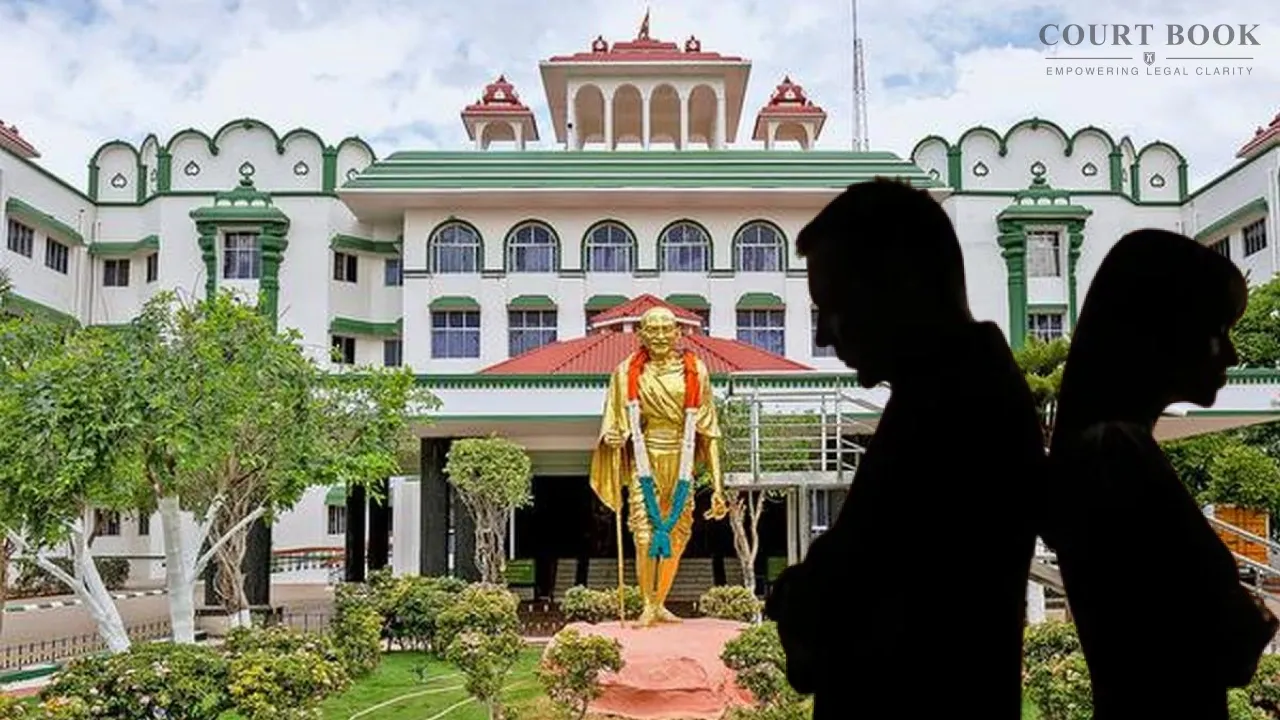
The Madurai Bench of the Madras High Court has dismissed two appeals filed by a husband seeking dissolution of his marriage on the grounds of cruelty and desertion. A Division Bench comprising Justice G.R. Swaminathan and Justice M.D. Sumathi held that ordinary matrimonial disagreements, family friction and isolated quarrels, by themselves, do not satisfy the legal threshold required for granting divorce.
Background
The couple married on September 9, 2015, and had a daughter born in September 2016. The husband later sought divorce under Section 13(1)(ia) and (ib) of the Hindu Marriage Act, alleging cruelty and desertion. Separately, the wife filed proceedings under Section 9 seeking restitution of conjugal rights, which means restoration of matrimonial cohabitation.
The Family Court at Tirunelveli dismissed the husband's divorce petition but allowed the wife's petition for restitution of conjugal rights. The husband challenged both findings before the High Court.
The allegations included disputes over household matters, travelling by car or bus, communication with the husband's parents, the child's naming and disagreements concerning family functions. The wife denied the allegations and maintained that she was willing to resume matrimonial life.
The Bench examined whether the allegations established cruelty or the legal requirements of desertion. Referring to Supreme Court precedents, the Court noted that matrimonial cruelty must be assessed from the relationship as a whole rather than by magnifying isolated incidents.
The Court observed,
"Applying the above principles to the present case, the allegations concerning washing clothes, forcing to drive car during the first Deepavali, telephone communication with parents, the naming of the child and the disagreement regarding the presence at family functions cannot, either individually or cumulatively on the evidence available, be treated as grave and weighty matrimonial cruelty."
The Bench also noted that the parties had lived together in Bangalore for about seven months and their matrimonial life during that period was substantially peaceful. It further found that much of the friction centred around the husband's parents and the wife's relationship with them.
On desertion, the Court explained that physical separation alone is insufficient. Desertion requires separation accompanied by the necessary intention to permanently end cohabitation without reasonable cause. The evidence showed continued communication, attempts at reconciliation and the wife's stated willingness to return to matrimonial life.
The High Court held that the husband had failed to establish either cruelty or desertion. It found no material illegality or perversity in the Family Court's findings and declined to interfere with its order.
Accordingly, C.M.A.(MD) Nos. 993 and 994 of 2022 were dismissed. The Common Order dated August 8, 2022, of the Family Court, Tirunelveli, was confirmed, including the decree granting restitution of conjugal rights in favour of the wife.
No costs were imposed, and the connected miscellaneous petitions were closed.
Case Details:
Case Title: R and R
Case Number: C.M.A.(MD) Nos. 993 & 994 of 2022
Judge: Justice G.R. Swaminathan and Justice M.D. Sumathi
Decision Date: September 25, 2026


