

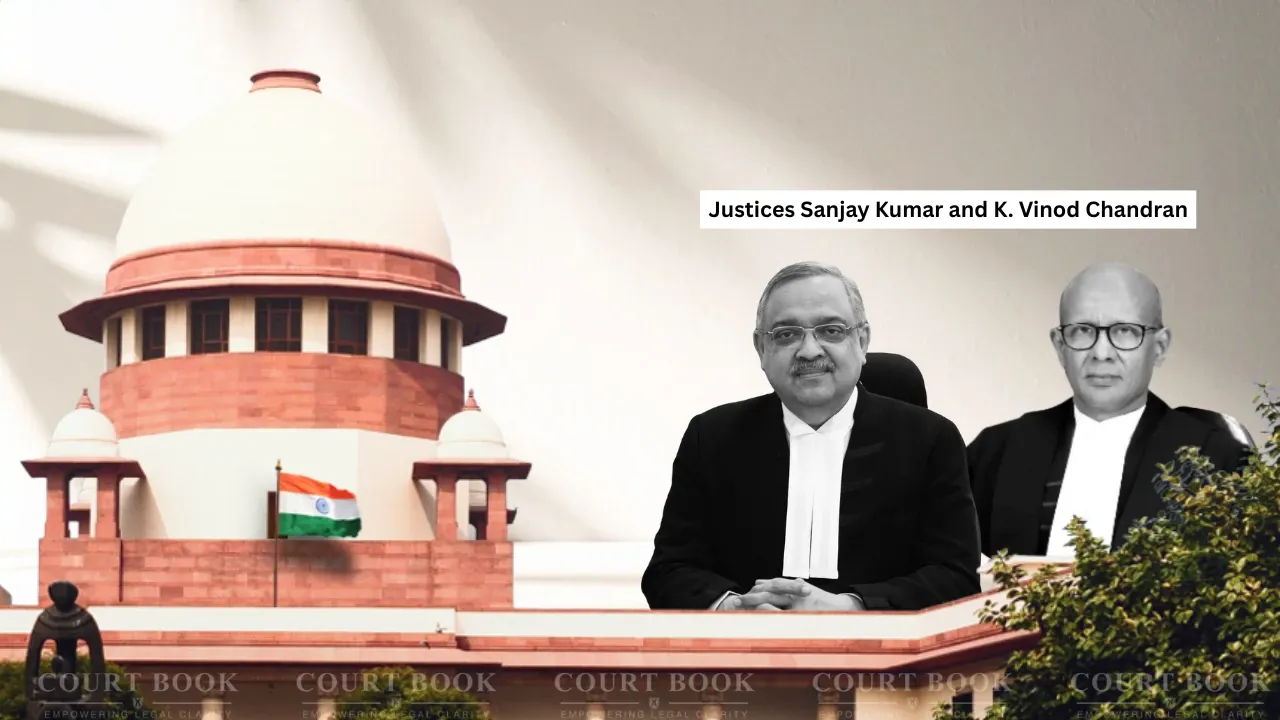
In a significant ruling on village common lands, the Supreme Court has restored more than 436 bighas of land in Gurugram to the Gram Panchayat, holding that the land formed part of the village's shamilat deh (common land) and validly vested in the Panchayat under the Haryana common lands law. The Court overturned the Punjab and Haryana High Court's 2007 judgment, concluding that the High Court had incorrectly treated the land as privately owned despite clear revenue records describing it as village common land.
Background of the Case
The dispute concerned 436 bighas and 18 biswas of land situated in Haiderpur, an uninhabited village near present-day Gurugram. The land was mutated in favour of Gram Panchayat, Wazirabad in 1955 following the enactment of the Punjab Village Common Lands law.
Nearly three decades later, a group of claimants approached the revenue authorities under Section 13A of the Haryana Common Lands Act, arguing that the land belonged to different village pattis (shares of proprietors) and never formed part of the village's common land. They also claimed that the land was not being used for common village purposes.
The matter travelled through several rounds of proceedings before revenue authorities, the Commissioner, the Punjab and Haryana High Court, and ultimately reached the Supreme Court through multiple civil appeals.
Court's Observations
Writing the judgment, Justice Sanjay Kumar, with Justice K. Vinod Chandran concurring, undertook an extensive examination of the historical concept of shamilat deh, tracing its development through customary law, revenue records and statutory changes.
The Bench observed:
"The system of having a 'village commons' or common property as a resource, collectively managed and used by the entire village community, was widely prevalent in our country since ages past."
The Court explained that shamilat deh refers to land reserved for common village use, including grazing grounds, ponds, roads and other shared resources. After the enactment of the village common lands legislation, such land automatically vested in the Gram Panchayat, leaving no continuing ownership rights with the earlier proprietors.
The Bench also disagreed with the High Court's finding that mutation in favour of the Panchayat was invalid because the proprietors had not been given notice.
According to the Court:
"There was no question of notice or hearing being given to any proprietor... as the mandate of those Acts was absolute and permitted no exemption."
Why the Supreme Court Disagreed with the High Court
The Supreme Court found that the claimants had failed to establish how they derived title from the original pattis. The judgment notes that neither genealogy records nor other evidence linking the numerous claimants to the original proprietors had been properly produced or verified during the proceedings.
The Bench further noted that although the claimants argued the land was shamilat patti (land reserved for a particular group), the revenue records consistently described it as shamilat deh. The Court observed that the cultivation entries stating "makbuja malkan" merely reflected joint possession by the proprietary body and did not establish exclusive individual ownership.
Importantly, the Court held that there was no evidence that the land had been partitioned before 26 January 1950, which was necessary for individual proprietors to claim exclusion from village common land under the applicable law.
Supreme Court's Decision
Allowing all the civil appeals, the Supreme Court held that the disputed land remained shamilat deh and validly vested in the Gram Panchayat.
The Bench concluded:
"The plaintiffs... failed to make out any tenable grounds to interfere with the mutation effected on 13.09.1955 in favour of the Gram Panchayat, Wazirabad."
Setting aside the Punjab and Haryana High Court's judgment dated 24 August 2007, the Court confirmed the 1955 mutation in favour of Gram Panchayat, Wazirabad, observing that its rights would now enure to its successor, the Municipal Corporation, Gurugram.
The Court also dismissed all pending intervention applications while directing each party to bear its own costs.
Case Details
Case Title: Suraj Bhan and Others v. Ashvarya Estate Pvt. Ltd. and Others (with connected civil appeals)
Case Number: Civil Appeal No. 244 of 2011 (with Civil Appeal Nos. 536, 539, 540 & 541 of 2011)
Judges: Justice Sanjay Kumar and Justice K. Vinod Chandran
Decision Date: 3 August 2026


