The Supreme Court has restored an eviction order passed in favour of a landlord, holding that the Punjab and Haryana High Court exceeded its limited revisional jurisdiction by reappreciating evidence and overturning concurrent findings of the Rent Controller and the Appellate Authority. The Court also explained the scope of a landlord's bona fide requirement, saying it must reflect a genuine need rather than a mere wish.
Background of the Case
The dispute arose from an eviction petition filed by Kamla Devi against her tenant under the East Punjab Urban Rent Restriction Act, 1949. The eviction was sought on two grounds non-payment of rent and the landlord's bona fide requirement of the shop for herself and her son, Madan Mohan.
The Rent Controller ruled in favour of the landlord and directed the tenant to vacate the premises. The Appellate Authority later affirmed that decision, observing that although Kamla Devi had passed away during the proceedings, the requirement relating to her son continued to survive.
However, the High Court reversed both orders. It held that the landlady had concealed the existence of another shop and had therefore not approached the court with clean hands.
Court's Observations
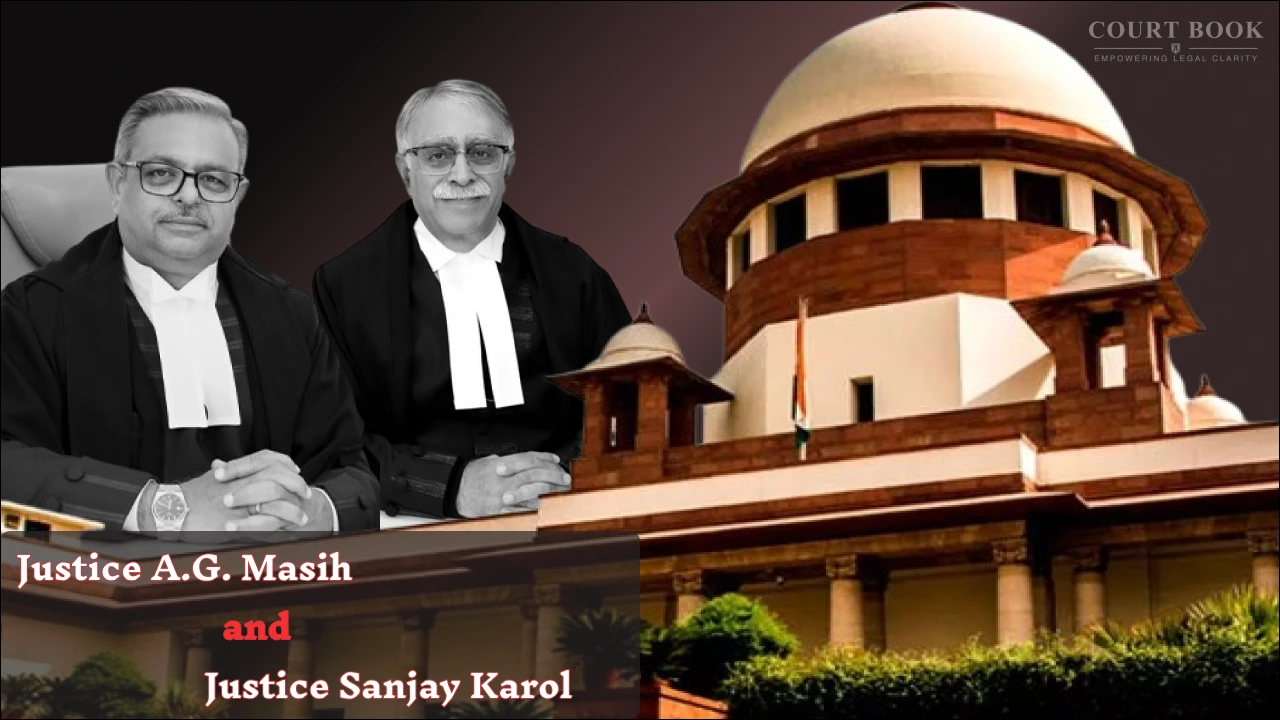
A Bench of Justice Sanjay Karol and Justice Augustine George Masih found that the High Court had wrongly interfered with concurrent findings of fact.
Referring to earlier decisions on rent laws, the Bench explained that bona fide requirement means a sincere and genuine need supported by objective circumstances. It is not enough for a landlord to simply express a desire to recover possession of the property.
The Court noted that both the Rent Controller and the Appellate Authority had already concluded that the third shop referred to by the tenant was being used as a storage space. The Bench said there was no justification for the High Court to reassess that evidence while exercising revisional powers.
The Bench observed, “The old saying is, ‘one man's trash is another man's treasure’. So, even if the statement is accepted as it is, we fail to see what is wrong with it.”
The Supreme Court further reiterated that under Section 115 of the Code of Civil Procedure, a High Court cannot reappreciate evidence or substitute its own view merely because another interpretation is possible. Revisional jurisdiction is confined to correcting jurisdictional or procedural errors.
Decision
Allowing the appeal, the Supreme Court set aside the Punjab and Haryana High Court's judgment and restored the concurrent orders of the Rent Controller, Nabha, and the Appellate Authority, Patiala.
It directed the tenant to hand over vacant and peaceful possession of the shop to the landlords within two months from the date of the judgment.
Case Details
Case Title: Madan Mohan (Dead) Through LRs. v. Thakar Dass (Dead) Through LRs.
Case Number: Civil Appeal No. … of 2026 (@ Special Leave Petition (Civil) No. 12435 of 2019)
Judges: Justice Sanjay Karol and Justice Augustine George Masih
Decision Date: July 21, 2026



-300x169.webp)





-300x169.webp)