

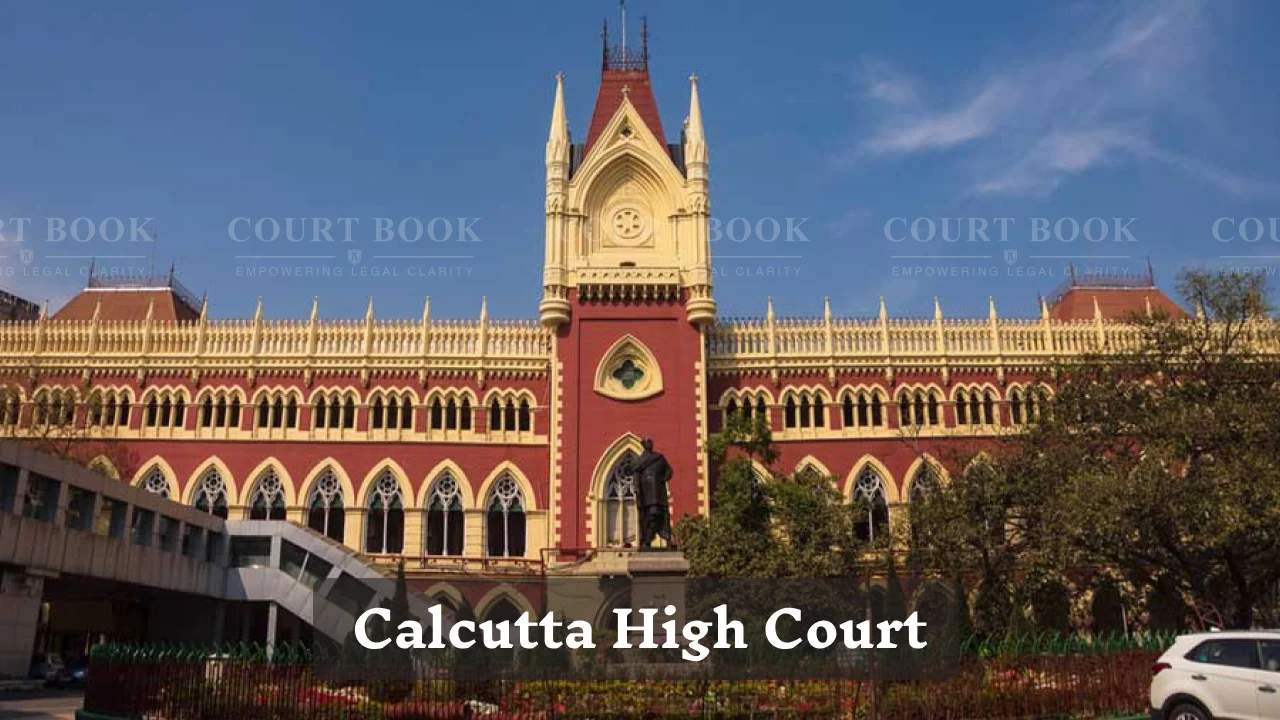
The Calcutta High Court on Monday declined to interfere with an Armed Forces Tribunal (AFT) order granting invalid pension for life to a former Defence Service Corps (DSC) personnel, pushing aside the Union of India’s objections based on a later-issued government circular. The court was clear that administrative instructions cannot undo rights that had already accrued.
हिंदी में पढ़ें
Background
The case arose from a writ petition filed by the Union of India and others against a March 1, 2024 order of the AFT’s Kolkata Bench. The respondent, Gandeti Vasudeva Rao, was initially enrolled in the Indian Army as a Sepoy in October 1985 and retired in September 2009 after completing his term, drawing pension thereafter.
He was later re-enrolled in the Defence Service Corps for a ten-year tenure. During service, he was diagnosed with primary hypertension and later with Tourette’s disorder and moderate depressive disorder. These medical conditions eventually led to his discharge on medical grounds in December 2019, after he had served a little over eight years in DSC.
When departmental remedies failed, Rao approached the Tribunal seeking invalid pension - a benefit given when a soldier is forced to leave service due to medical reasons. The Tribunal ruled in his favour, directing payment of invalid pension from the day following his discharge.
Court’s Observations
Before the High Court, government counsel argued that Rao was declared unfit only for Armed Forces duties, not for civil employment, and therefore did not qualify for invalid pension. Heavy reliance was placed on a Ministry circular dated July 16, 2020, which, according to the petitioners, required such a finding.
The bench, however, was not impressed. Reading out from the Tribunal’s order, the court noted that the AFT had relied on settled Supreme Court rulings, including P.A. Thomas and Ex-Rect Mithilesh Kumar, where it was held that length of service is irrelevant if discharge is on medical grounds.
“The Tribunal candidly recorded that the ratio laid down by the Supreme Court covered the case in hand,” the bench observed, adding that an employee discharged due to medical disability cannot be denied invalid pension merely because he did not complete ten years.
Crucially, the judges pointed out that the 2020 circular came after Rao’s discharge. “An administrative instruction by no stretch of imagination can operate retrospectively,” the court remarked, quoting recent Supreme Court rulings which make it clear that executive orders cannot take away vested rights unless the law expressly allows it.
Decision
Holding that the Tribunal had taken a “plausible view” based on binding Supreme Court precedents, the High Court refused to admit the government’s petition and dismissed the case. The AFT’s direction to grant invalid pension to Rao from December 1, 2019, for life was allowed to stand, bringing the litigation to a close at that stage.
Case Title: Union of India & Others vs. Gandeti Vasudeva Rao (Ex Sep No. 1396744-H)
Case No.: WPCT 152 of 2025
Case Type: Writ Petition (Service / Military Pension Matter)
Decision Date: 09 December 2025
Download Judgment

