

The Supreme Court has held that a High Court cannot interfere with factual findings recorded by a civil appellate court while exercising its certiorari jurisdiction under Article 226 of the Constitution unless there is a clear jurisdictional error or a patent legal defect. The Court also ruled that setting aside findings affecting a party's rights without hearing them violates the principles of natural justice.
Background of the Case
The dispute arose from a partition suit filed in 1999 over agricultural properties in Karnataka. The plaintiffs claimed a share in the family properties, arguing that despite mutation entries being made in favour of a male family member, they continued to have rights over the land.
The Trial Court dismissed the suit, holding that the plaintiffs failed to establish their claim. The First Appellate Court also dismissed the appeal but made certain observations regarding the validity of sale deeds executed in favour of subsequent purchasers and recorded findings concerning ownership and possession of some of the properties.
One of the purchasers challenged only those observations before the Karnataka High Court. The High Court set aside Paragraph 24 of the appellate judgment while leaving the remainder of the decision intact. The original owner and another affected party then approached the Supreme Court.
Court's Observations
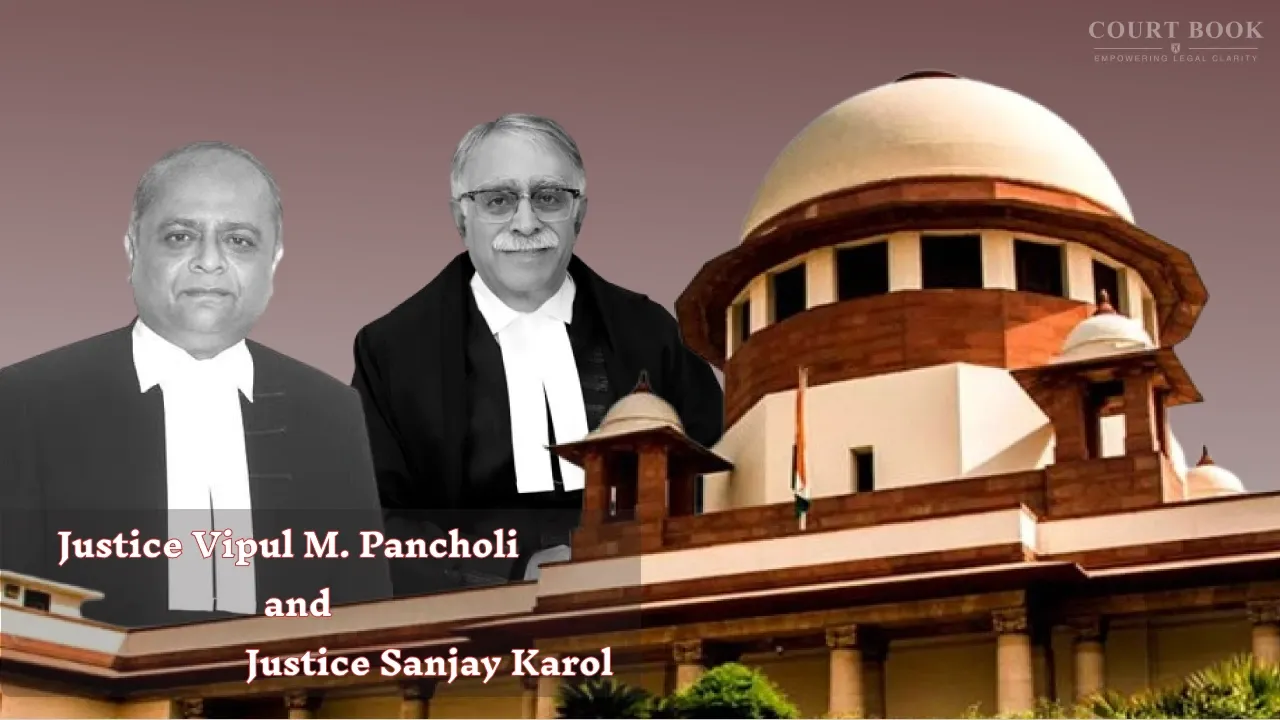
A Bench comprising Justice Sanjay Karol and Justice Vipul M. Pancholi observed that the High Court exceeded the limited scope of certiorari jurisdiction by reassessing findings that had been reached after appreciation of oral and documentary evidence.
The bench observed:
"The High Court clearly transgressed the limited contours of the certiorari jurisdiction under Article 226 of the Constitution while setting aside the findings recorded by the First Appellate Court."
The Court reiterated that a writ of certiorari is supervisory in nature and is not intended to function as an appellate remedy for re-evaluating evidence or factual conclusions reached by competent civil courts.
The judges noted that the First Appellate Court had examined pleadings, mutation records, sale deeds and other evidence before recording its findings. Therefore, those findings could not be discarded merely because the High Court took a different view.
Violation of Natural Justice
The Supreme Court also found fault with the manner in which the High Court decided the writ petition without issuing notice to the present appellants, even though the challenged findings directly affected their ownership and possession rights.
The bench observed:
"The least expectation that a litigant is entitled to have from a Court, much less a constitutional Court, is that they would be heard before being condemned."
According to the Court, denying an opportunity of hearing in such circumstances amounted to a breach of the audi alteram partem principle, a fundamental component of natural justice.
Supreme Court's Decision
Allowing the appeal, the Supreme Court set aside the Karnataka High Court's judgment dated 22 February 2023 and restored the First Appellate Court's judgment in its entirety.
The Court clarified that it was not expressing any opinion on the merits of the underlying property dispute and left it open to the respondents to pursue any other remedies available under law within the prescribed period.
Case Details
Case Title: Basamma & Anr. v. Goparappa & Ors.
Case Number: Civil Appeal No. … of 2026 (@ Special Leave Petition (Civil) No. 10183 of 2024)
Judge: Justice Sanjay Karol and Justice Vipul M. Pancholi
Decision Date: 16 July 2026


