

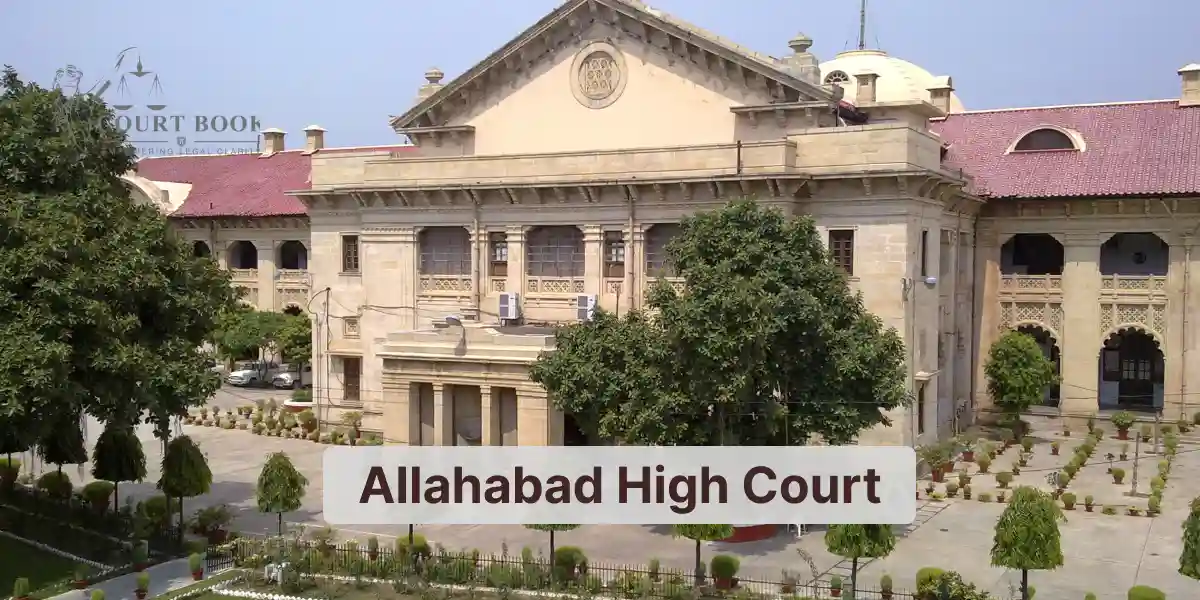
The Allahabad High Court has dismissed a criminal appeal filed by Razzak, upholding his conviction under Section 326 of the Indian Penal Code for causing grievous injuries to his father by pouring acid on him during a domestic dispute. While the Court observed that the evidence could have justified a conviction for culpable homicide, it declined to alter the conviction because the State had not challenged the trial court's judgment.
Background of the Case
The case arose from an incident that took place on 5 September 1981 in Gorakhpur. According to the prosecution, an argument broke out between Razzak and his father, Gulam Husain, inside their home. During the altercation, acid was poured on Gulam Husain, causing extensive burn injuries.
He remained under treatment for nearly three weeks before succumbing to complications caused by the burns. The trial court had originally framed a charge under Section 302 IPC but eventually convicted Razzak under Section 326 IPC and sentenced him to three years' rigorous imprisonment.
Challenging that conviction, the appellant argued before the High Court that the incident was accidental, that he had himself suffered minor burn injuries while trying to rescue his father, and that he deserved the benefit of probation considering his age and the long pendency of the appeal.
Court's Observations
Justice Santosh Rai closely examined the medical evidence, witness testimonies and the statement made by the deceased during the investigation.
The Court noted that the appellant had only superficial acid burns, whereas the deceased suffered nearly 60 percent corrosive burns that ultimately led to septicaemia and exhaustion.
The bench also treated the deceased's statement to the investigating officer as admissible under Section 32(1) of the Indian Evidence Act because it related directly to the cause of his death.
Rejecting the defence version, the Court observed:
"The evidence available on record clearly establishes the involvement of the appellant."
The Court further held:
"Acid is a substance whose corrosive and dangerous nature is a matter of common knowledge. Its deliberate use on another person is sufficient to attribute knowledge that such an act is likely to cause death."
Justice Rai also expressed serious concern over the manner in which the Sessions Court had dealt with the trial. The High Court observed that the evidence appeared sufficient to consider an offence under Section 304 IPC and criticised the trial court for imposing only three years' imprisonment under Section 326 IPC without imposing the mandatory fine required by law.
However, the Court clarified that since the appeal had been filed only by the accused and the State had neither appealed nor sought enhancement of sentence, it could not convert the conviction into a more serious offence or increase the punishment.
Court Refuses Probation
The High Court also rejected the appellant's request for release on probation.
The bench held that the offence was committed against the appellant's own father inside their shared residence and resulted in his death after prolonged suffering. In such circumstances, the Court found no legal basis to extend the benefit of probation.
Decision
Dismissing the appeal, the Allahabad High Court upheld Razzak's conviction under Section 326 IPC and left the sentence awarded by the trial court unchanged despite identifying legal errors in the sentencing process.
The Court directed the appellant to surrender within two weeks to serve the remaining sentence, failing which the trial court was instructed to take coercive steps, including issuing a non-bailable warrant.
Case Details
Case Title: Razzak v. State of U.P.
Case Number: Criminal Appeal No. 2810 of 1983
Judge: Justice Santosh Rai
Decision Date: 15 July 2026


