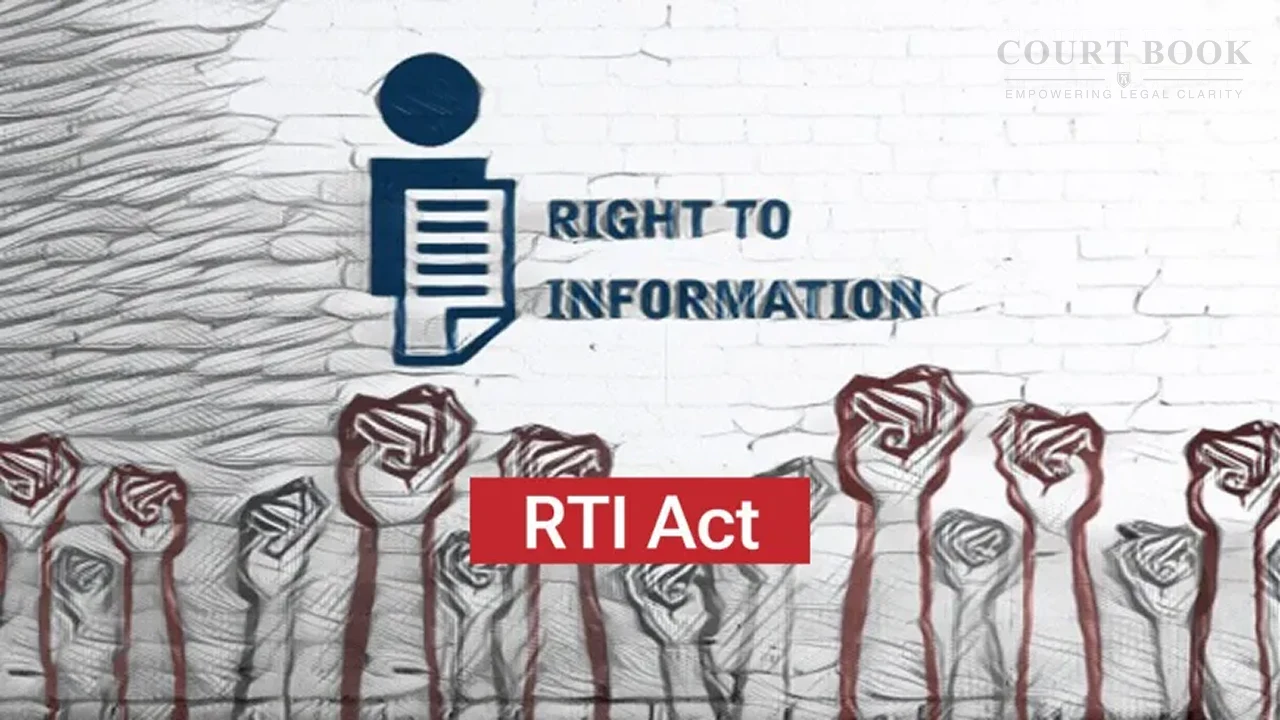
The Lucknow Bench of the Allahabad High Court has quashed a ₹25,000 penalty imposed by the Uttar Pradesh State Information Commission on a Block Education Officer serving as a Public Information Officer (PIO), holding that the Commission failed to follow the mandatory procedure under Section 20(1) of the Right to Information (RTI) Act, 2005. The Court held that before imposing a penalty, the PIO must be given a reasonable opportunity of hearing and allowed to explain the circumstances leading to the alleged delay.
Background of the Case
Amarnath, a Block Education Officer and Public Information Officer, approached the High Court challenging the State Information Commission's order dated September 6, 2023, imposing the maximum penalty of ₹25,000 under Section 20 of the RTI Act. He also challenged the order dated February 22, 2024, by which the Commission dismissed his review application.
The petitioner contended that the delay in furnishing information occurred due to lapses by subordinate staff and other administrative reasons. He further stated that the requested information had ultimately been supplied to the RTI applicant on January 12, 2024. Most importantly, he argued that the penalty was imposed without any notice, show-cause proceedings, or opportunity to explain his position.
Court's Observations
After examining Section 20(1) of the RTI Act, the Division Bench of Justice Shekhar B. Saraf and Justice Abdhesh Kumar Chaudhary observed that the Information Commission can impose a penalty only after forming an opinion, based on material available on record, that the Public Information Officer acted without reasonable cause.
The Court explained that the second proviso to Section 20(1) places the burden on the PIO to prove that he acted reasonably and diligently. However, this statutory burden can arise only when the officer is first given an opportunity to submit documents, explanations and other material in his defence. The first proviso further requires the Commission to provide a reasonable opportunity of hearing before imposing any penalty.
Referring to the facts of the case,
the Bench observed, "The whole mechanism for imposition of penalty to the petitioner has been given a complete go by in the present case."
It noted that neither a show-cause notice nor an opportunity to file a reply or participate in a hearing had been provided before the penalty was imposed. The Court also relied on Supreme Court decisions, including State of Orissa v. Dr. (Miss) Binapani Dei and Manohar v. State of Maharashtra, reiterating that administrative decisions resulting in civil consequences must comply with the principles of natural justice.
Decision
Holding that the mandatory safeguards under Section 20(1) of the RTI Act had not been followed, the High Court declared the penalty order dated September 6, 2023, legally unsustainable and quashed it for violating the principles of natural justice.
The Court further observed that once the original penalty order was set aside, the order rejecting the review application lost its significance. For the sake of clarity, it also quashed the review order dated February 22, 2024. The writ petition was accordingly allowed, with no order as to costs.
Case Details:
Case Title: Amarnath v. State Information Commission U.P. Lucknow Through Chief Information Commissioner and Another
Case Number: Writ – C No. 4718 of 2026
Judge: Justice Shekhar B. Saraf and Justice Abdhesh Kumar Chaudhary
Decision Date: 6 July 2026








 Act (UAPA)-300x169.webp)