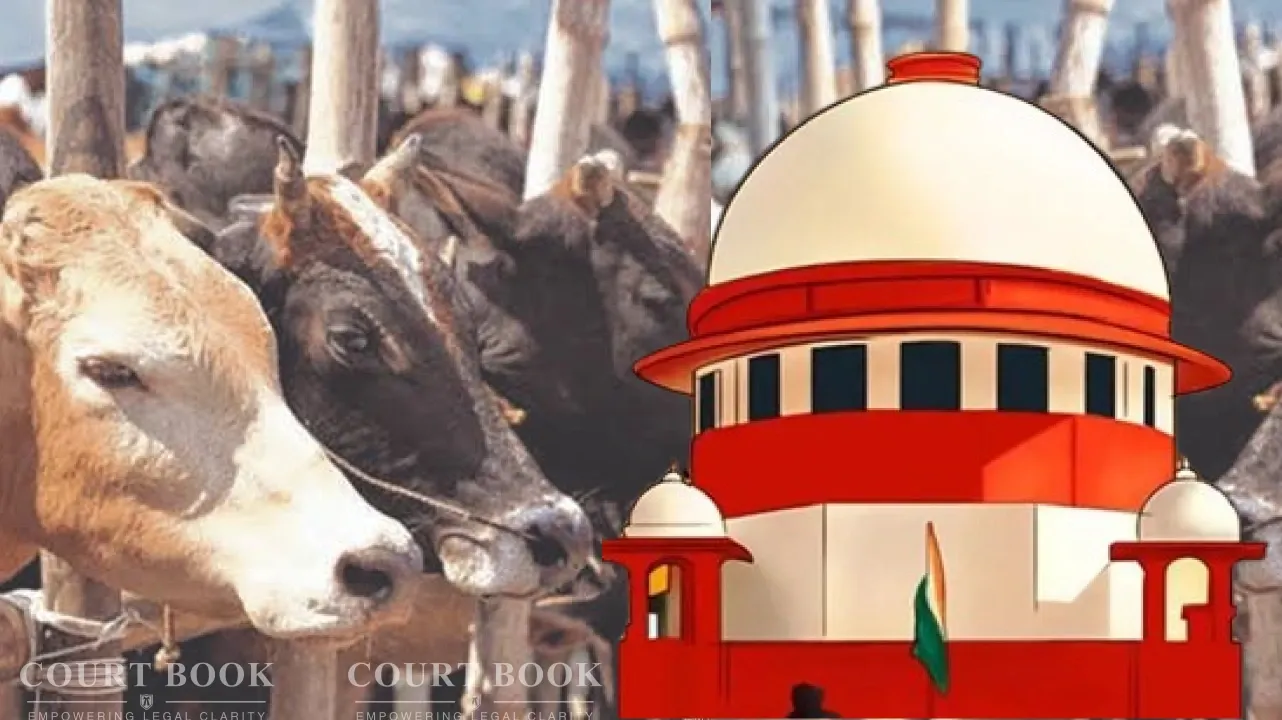
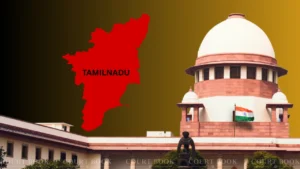
The Supreme Court on Monday (13 July) stayed the operation of the Madras High Court's direction that had effectively prohibited the slaughter of cows and calves across Tamil Nadu, including on the eve of Bakrid and on any other day. The interim relief came while the top court considered a challenge filed by the Tamil Nadu government against the High Court's May 27 judgment.
A Bench of Justice Vikram Nath and Justice Sandeep Mehta issued notice on the State's Special Leave Petition (SLP) and suspended the operation of the impugned direction until further hearing.
Background of the Case
The controversy began with a public interest litigation filed before the Madras High Court by Coimbatore resident K. Surya alias K. Surya Prasanth. The petitioner sought directions to prevent the alleged slaughter of cows in public places ahead of Bakrid celebrations and asked authorities to strictly enforce the existing legal framework governing animal slaughter.
On May 27, a Division Bench of Justice G.R. Swaminathan and Justice V. Lakshminarayanan directed the Tamil Nadu government to ensure that
"no cow or calf is slaughtered on the eve of Bakrid or on any other day."
The High Court also observed that slaughter of animals could take place only in authorised slaughterhouses and referred to Article 48 of the Constitution, which encourages the State to preserve cattle. It further relied on earlier Supreme Court decisions while holding that cow slaughter is not an essential religious practice in Islam.
Tamil Nadu Government's Challenge
Questioning the High Court's ruling, the Tamil Nadu government argued before the Supreme Court that the Division Bench had gone beyond the scope of the original petition.
According to the State, the PIL only sought implementation of existing laws and prevention of slaughter in public places. It did not seek a complete prohibition on cow slaughter throughout Tamil Nadu.
The government also submitted that authorities had already taken preventive measures by increasing surveillance, identifying authorised slaughterhouses, conducting inspections and ensuring that slaughter did not take place in public areas.
The State contended that existing laws, including the Tamil Nadu Animal Preservation Act, 1958, regulate the circumstances in which cattle may be slaughtered and do not impose a total ban. It argued that the High Court's direction effectively replaced the statutory framework with a judicial prohibition.
The petition further objected to the High Court's reliance on a 1976 Government Order relating to cattle preservation, contending that the order could not override the governing statutes and that its applicability was never in issue before the High Court.
The State also argued that the High Court unnecessarily examined whether cow sacrifice constitutes an essential religious practice in Islam, even though the issue had not been raised by either party.
Supreme Court's Observation
During the hearing, the Bench of Justice Vikram Nath and Justice Sandeep Mehta granted interim protection to the Tamil Nadu government by staying the operation of the High Court's direction.
The Bench also indicated that the last portion of the High Court's order, which imposed the State-wide prohibition, "prima facie required correction."
Senior Advocate Dr. A.M. Singhvi, along with Additional Advocate General Prashanto Sen, appeared for the Tamil Nadu government. The Special Leave Petition was filed through Advocate Jayasree Narasimhan.
Decision
After hearing the State, the Supreme Court issued notice on the petition and stayed the operation of the Madras High Court's direction that required Tamil Nadu to ensure that no cow or calf was slaughtered anywhere in the State on Bakrid or on any other day.
As a result, the blanket prohibition directed by the High Court will remain inoperative until the Supreme Court decides the matter.



 chief. Eknath Shinde – Shiv Sena leader-300x169.webp)
-300x169.webp)
-300x169.webp)
-300x169.webp)
 Act (UAPA)-300x169.webp)