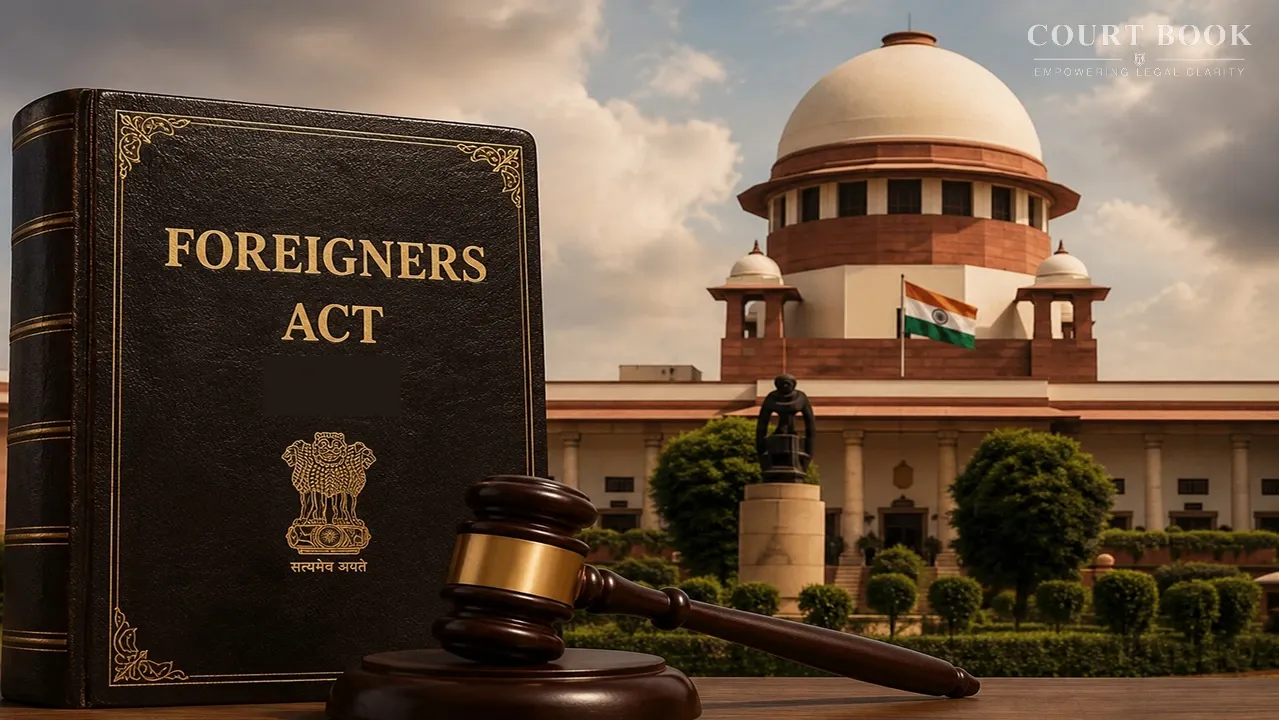
Emphasising that citizenship disputes involve serious constitutional rights, the Supreme Court has held that no individual can be declared a foreigner unless the decision is reached through a process that is fair, lawful and reasonable. Setting aside judgments of the Gauhati High Court and the corresponding opinions of the Foreigners Tribunals, the Court directed fresh adjudication of 27 connected matters.
The bench ruled that while the State has a legitimate interest in preventing unlawful claims to Indian citizenship, procedural safeguards cannot be compromised.
Background of the Case
The appeals arose from orders of the Gauhati High Court affirming decisions of various Foreigners Tribunals that had declared the appellants to be foreigners. In the lead case, the High Court had refused to interfere with an ex parte order after observing that the concerned persons had failed to appear before the Tribunal despite service of notice and had challenged the order after a long delay.
The High Court had relied on Section 9 of the Foreigners Act, 1946, which places the burden of proving Indian citizenship on the person concerned. Since no written statement, evidence or supporting documents had been produced before the Tribunal, the High Court found no reason to interfere with the declaration.
Court's Observations
The bench of Justice Vikram Nath and Justice Sandeep Mehta observed that proceedings relating to citizenship cannot be treated like ordinary civil disputes because of their far-reaching legal and constitutional consequences.
Reading out the operative part of the judgment, the Bench observed,
"Citizenship and foreigner status occupy a field of high constitutional and legal significance."
The Court acknowledged that the government has a legitimate interest in preventing persons who are not entitled to Indian citizenship from obtaining such status through false claims or misuse of legal procedures. However, it stressed that this objective must be pursued within the framework of due process.
The Bench stated,
"The determination of such status must be made through a process which is fair, lawful and reasonable. The statutory burden under Section 9 of the Foreigners Act, 1946 remains fully applicable."
The Court also clarified that it had not examined whether the appellants are Indian citizens or assessed the authenticity of the documents they rely upon.
"We have not examined the merits of the claims of citizenship by the appellants... Those questions must be decided by the concerned Tribunal independently," the Bench observed.
Fresh Hearing Ordered
The Supreme Court made it clear that remanding the matters should not be understood as granting any advantage or presumption in favour of the appellants. Instead, the purpose of the exercise is to ensure that such serious determinations are made only after compliance with the statutory procedure and constitutional principles of fairness.
Accordingly, the Court set aside the Gauhati High Court judgments and the related opinions of the Foreigners Tribunals in all 27 matters.
Directing fresh consideration, the Bench observed,
"The concerned Tribunals shall decide the cases afresh and uninfluenced by any of the observations made by the High Court or by the Tribunals in the earlier opinions."
The Court further directed the Tribunals to conclude the fresh proceedings as expeditiously as possible, preferably within six months.
Case Details
Case Title: Sabitri Dey @ Swasthi Dey v. Union of India & Connected Cases
Case Number: Civil Appeal No. 2820 of 2024 and Connected Cases
Bench: Justice Vikram Nath and Justice Sandeep Mehta
Decision Date: 13 July 2026






 chief. Eknath Shinde – Shiv Sena leader-300x169.webp)
-300x169.webp)

-300x169.webp)
-300x169.webp)

 Act (UAPA)-300x169.webp)