

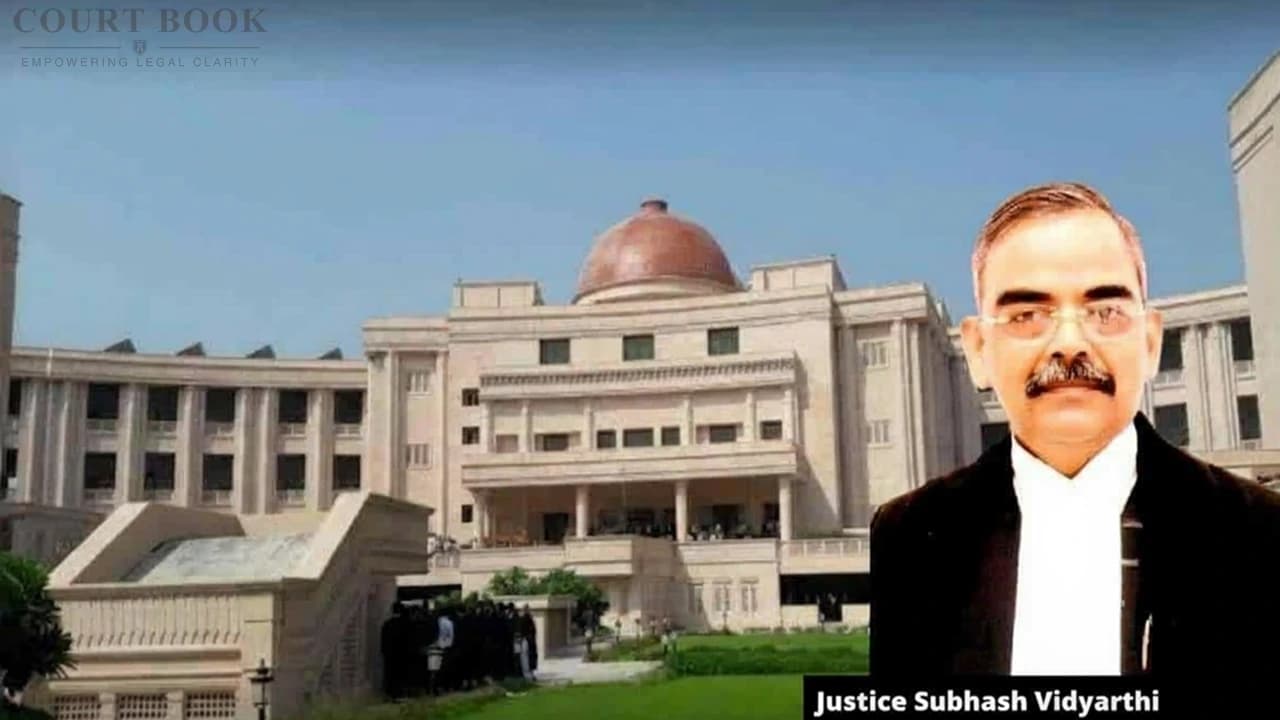
The Allahabad High Court, Lucknow Bench, has set aside orders declaring a person a "Goonda" under the Uttar Pradesh Control of Goondas Act, 1970, holding that mere involvement in two criminal cases does not automatically establish that a person is a habitual offender. The Court emphasized that the law is preventive in nature and must be invoked only in exceptional cases supported by clear material.
Background of the Case
The matter arose after the Additional District Magistrate, Finance and Revenue, Amethi, passed an order under Sections 3 and 4 of the U.P. Control of Goondas Act, 1970, declaring the petitioner a "Goonda." The order was based on his alleged involvement in two criminal cases registered in 2021 and 2025, along with certain beat information reports and a prohibitory report.
The petitioner challenged the order before the Commissioner, Ayodhya Division, but the appeal was dismissed. He then approached the Allahabad High Court seeking judicial review of both orders.
Court's Observations
Justice Subhash Vidyarthi examined the statutory definition of "Goonda" and several earlier decisions interpreting the expression "habitually commits."


The Court observed that the term "habitually" requires repeated and continuous criminal conduct. It cannot be inferred merely because a person is involved in one or two criminal cases.
The Bench noted:
"One or two acts of the accused will not be sufficient to hold that he is habitually involved in commission of offences referred to in the Act."
The Court further observed that proceedings under the Goondas Act are preventive and not punitive. Therefore, authorities must demonstrate that a person's conduct poses a genuine threat to public order and that ordinary criminal law is insufficient to deal with the situation.
The judgment also held that beat reports, in the absence of any complaint, investigation or opportunity to rebut the allegations, cannot by themselves justify branding a person as a "Goonda."
According to the Court, there was nothing on record to indicate that the petitioner was a habitual offender or that his conduct endangered public order. The prosecution in the pending criminal cases was already continuing under ordinary criminal law.
Court's Decision
Finding that the statutory requirements of the Goondas Act had not been satisfied, the High Court held that the authorities had wrongly invoked the legislation.
Accordingly, the Court allowed the writ petition and quashed both the order dated 25 February 2026 passed by the Additional District Magistrate, Finance and Revenue, Amethi, and the appellate order dated 6 May 2026 passed by the Commissioner, Ayodhya Division, affirming the declaration under the Goondas Act.
Case Details
Case Title: Rahul @ Rahul Saroj v. State of U.P. through Principal Secretary, Home, Lucknow and Others
Case Number: Criminal Misc. Writ Petition No. 5363 of 2026
Judge: Justice Subhash Vidyarthi
Decision Date: 8 July 2026



