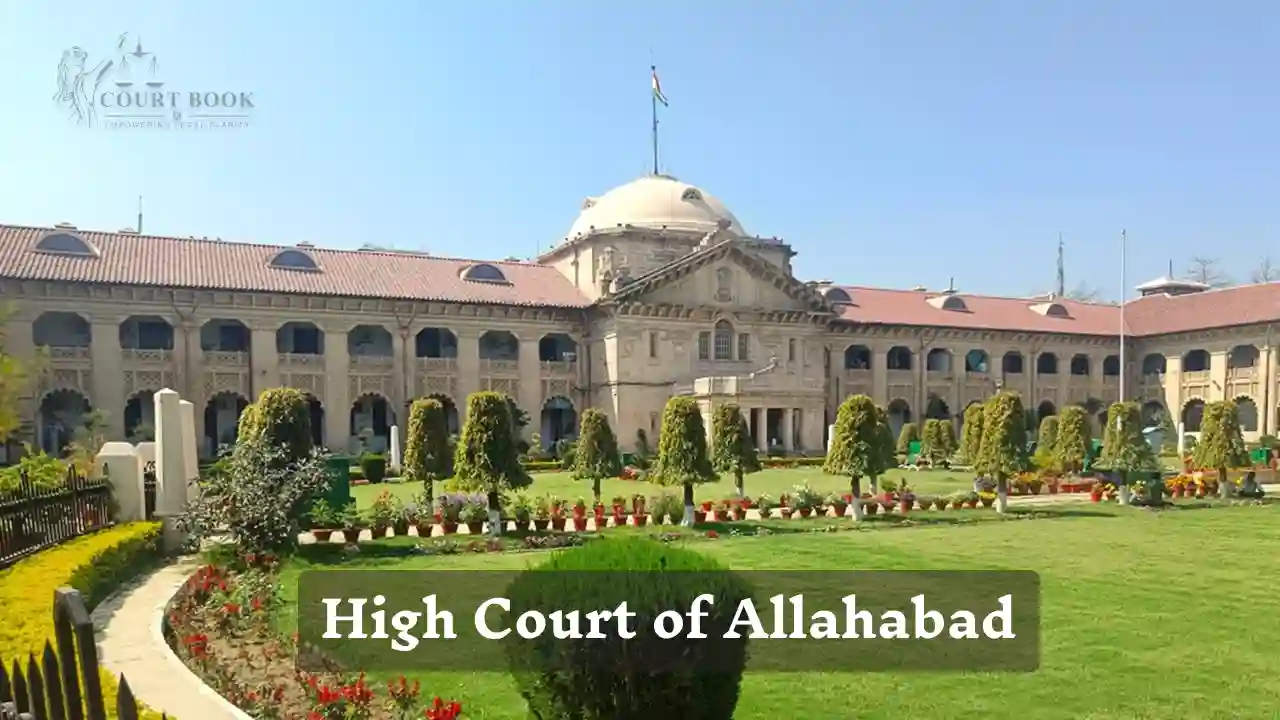
The Allahabad High Court has acquitted five persons in a criminal appeal arising from the death of a married woman, holding that the prosecution failed to prove its case beyond reasonable doubt. Setting aside the trial court's conviction, the Division Bench ruled that the dying declaration, which formed the foundation of the prosecution case, was unreliable and could not by itself sustain a conviction.
Background of the Case
The appeals challenged a Sessions Court judgment dated September 6, 2021, by which the accused had been convicted under Section 302 read with Section 149 of the Indian Penal Code and sentenced to life imprisonment.
According to the prosecution, the deceased had been married for about four years. It was alleged that she was subjected to harassment over an alleged demand for ₹1 lakh and a motorcycle. The prosecution further alleged that she suffered burn injuries inside her matrimonial home on February 19, 2017, after which she was taken to the District Hospital, Shahjahanpur, and later referred to Civil Hospital, Lucknow. She died on March 7, 2017, due to septicemia following burn injuries.
Court Examines the Evidence
The Division Bench of Justice Ajay Bhanot and Justice Divesh Chandra Samant noted that almost the entire prosecution case rested on a single dying declaration recorded shortly after the incident.
The Court found significant gaps in the prosecution evidence. It observed that crucial medical records, including treatment papers, bed-head tickets and medical case sheets from both hospitals, were never produced. Doctors who treated the victim after her admission were also not examined during trial. As a result, the Court held that the prosecution failed to establish the medical condition of the victim at the time the statement was recorded or whether she was under the expectation of imminent death.
Dying Declaration Found Unreliable
While discussing the evidentiary value of dying declarations, the Bench reiterated that such statements can form the sole basis of conviction only when they inspire complete confidence and are found to be voluntary and truthful.
"The prosecution case turns entirely on the credibility of the dying declaration," the Bench observed while examining the evidence.
The Court found several reasons to doubt its reliability. It noted that the declaration contained broad allegations against every member of the family without assigning specific roles. It also found contradictions between the dying declaration and the FIR, particularly regarding the persons allegedly involved in the incident.
"The generalized description of the incident given in the dying declaration makes it unsafe for the Court to rely on the same to convict the appellants," the Bench observed.
The Court further noticed that a second statement of the deceased had been recorded by the Investigating Officer but was never produced before the trial court. Since no satisfactory explanation was offered for withholding this material evidence, the Bench drew an adverse inference against the prosecution.
Material Witnesses Did Not Support the Prosecution
Another significant factor considered by the High Court was that the principal prosecution witnesses, including close family members of the deceased, did not support the prosecution case during trial and were declared hostile.
Their testimony did not substantiate the allegations of dowry-related harassment. The Court also observed that their evidence did not rule out the possibility of suicide or an accidental burn incident. Additionally, in view of the absence of complete medical records, the Bench noted that the possibility of death resulting from inadequate medical treatment after the burn injuries also could not be ruled out.
Conduct of the Accused Considered Relevant
The High Court also attached significance to the conduct of the accused immediately after the incident.
The Bench noted that it was an admitted fact in the FIR as well as in the testimony of prosecution witnesses that the victim was immediately taken to the hospital by her husband and family members. The husband had also promptly informed the victim's family about the incident. According to the Court, this conduct appeared to be bona fide and was an important circumstance while evaluating the prosecution case.
Alternative Charges Also Not Proved
The High Court further held that the prosecution failed to establish the essential ingredients required to sustain the alternative charges under Sections 304-B and 498-A IPC read with Sections 3 and 4 of the Dowry Prohibition Act.
The Bench observed that there was no reliable evidence proving that the deceased was subjected to dowry-related cruelty soon before her death. Since these foundational facts were absent, the statutory presumption relating to dowry death could not be invoked.
Court's Decision
Allowing all four connected criminal appeals, the Allahabad High Court set aside the Sessions Court judgment dated September 6, 2021. The Court held that the prosecution had failed to prove the charges beyond reasonable doubt and honourably acquitted all the appellants.
Their bail bonds and sureties were discharged, and the Court directed that a Hindi translation of the judgment be supplied to the appellants through the District Legal Services Authority.
Case Details
Case Title: Mahnaz and Another v. State of Uttar Pradesh along with connected criminal appeals
Judge: Justice Ajay Bhanot and Justice Divesh Chandra Samant
Decision Date: July 3, 2026