

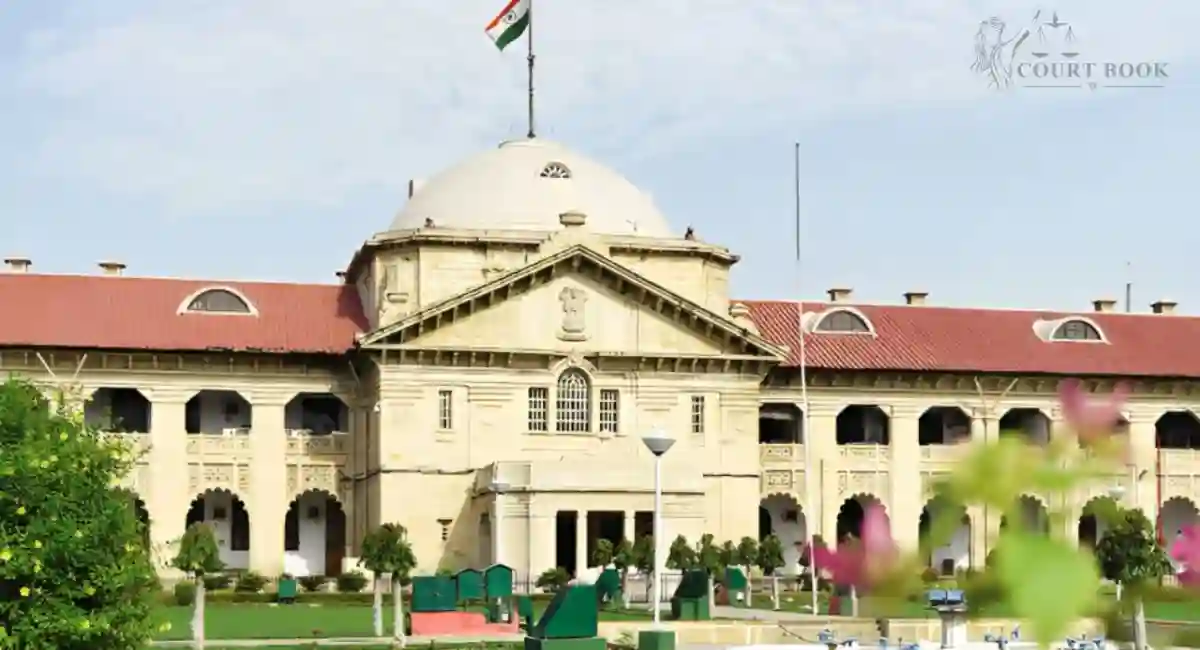
Nearly four decades after a woman died under suspicious circumstances in Kanpur Nagar, the Allahabad High Court has overturned the conviction of her husband, father-in-law and brother-in-law, holding that the prosecution failed to prove its case beyond reasonable doubt. The Court ruled that the viscera report, which formed the foundation of the murder case, could not be relied upon because it was not put to the accused during their examination under Section 313 of the Code of Criminal Procedure and the chain of custody of the sample remained doubtful.
Background of the Case
The criminal appeal challenged a judgment dated December 7, 1989, by the First Additional District and Sessions Judge, Kanpur Nagar, which had convicted Ram Autar, Rakesh Kumar Misra alias Doctor, Laddan Misra alias Mahesh and Rajdei under Sections 498A, 302 and 323 of the Indian Penal Code.
According to the prosecution, Vijay Laxmi, who married Rakesh Kumar Misra in 1984, was allegedly subjected to cruelty by her in-laws over demands for financial assistance. Her brother lodged an FIR on January 13, 1986, alleging that she had been assaulted and forced to consume something at her matrimonial home. She died the same evening while being taken to Kanpur for treatment. A subsequent forensic examination reported the presence of zinc phosphide in the viscera.
During the pendency of the appeal, appellant Rajdei died and the proceedings against her stood abated.
Court Examines Contradictions in Evidence
The Division Bench of Justice Siddhartha Varma and Justice Jai Krishna Upadhyay closely examined the testimony of the deceased's brother and nephew, who were the prosecution's principal witnesses.
The Court found significant inconsistencies between their versions. While one witness claimed that the deceased said she had been made to eat something, another stated that a substance had been mixed with water and forcibly administered to her. The Bench also noted that one witness had earlier stated the deceased was suffering from cholera before later alleging that poison had been given to her.
"The prosecution case has to be dealt very cautiously and when there was a definite digression in the cases taken by the prosecution witnesses then it should lean in favour of the accused," the Bench observed.
Viscera Report Found Legally Unreliable
A major issue before the Court was the reliance placed on the forensic report indicating the presence of zinc phosphide.
The Bench noted that although the prosecution relied heavily on the viscera report, neither the report nor the forensic findings were put to the accused during their examination under Section 313 CrPC, depriving them of an opportunity to explain the incriminating material.
Relying on several Supreme Court decisions, the High Court observed that any incriminating circumstance not put to an accused during such examination cannot ordinarily be used against them.
"The viscera report should therefore not be taken into account at all," the Court said.
The Court also found serious gaps in the handling of the viscera sample.
It observed that after the sample was sealed during the post-mortem, the prosecution failed to establish where it was stored, who handled it, how it was preserved, or who delivered it to the forensic laboratory. No official from the Chief Medical Officer's office or the forensic laboratory was examined to prove safe custody or proper transmission of the sample.
According to the Bench, these deficiencies made it unsafe to rely upon the forensic report as conclusive evidence of poisoning.
Court Also Questions Assault Allegation
The High Court further expressed doubt over the evidence relating to injuries allegedly suffered by the deceased's nephew, who claimed he was beaten while trying to intervene.
The Bench noted that the witness himself admitted leaving the house during the relevant period and interacting with shopkeepers, making his version less reliable. The Court observed that the injuries could not conclusively support the prosecution story.
Decision
Holding that the prosecution had failed to establish guilt beyond reasonable doubt, the Allahabad High Court allowed the appeal and set aside the conviction recorded by the trial court.
"The appeal should be allowed and the accused be acquitted," the Bench concluded.
Accordingly, Ram Autar, Rakesh Kumar Misra alias Doctor and Laddan Misra alias Mahesh were acquitted of all charges. The Court also directed that if the appellants were already on bail, they would not be required to surrender and their bail bonds and sureties would stand discharged.
Case Details:
Case Title: Ram Autar and Others v. State
Case Number: Criminal Appeal No. 2343 of 1989
Judge: Justice Siddhartha Varma and Justice Jai Krishna Upadhyay
Decision Date: 3 July 2026


