

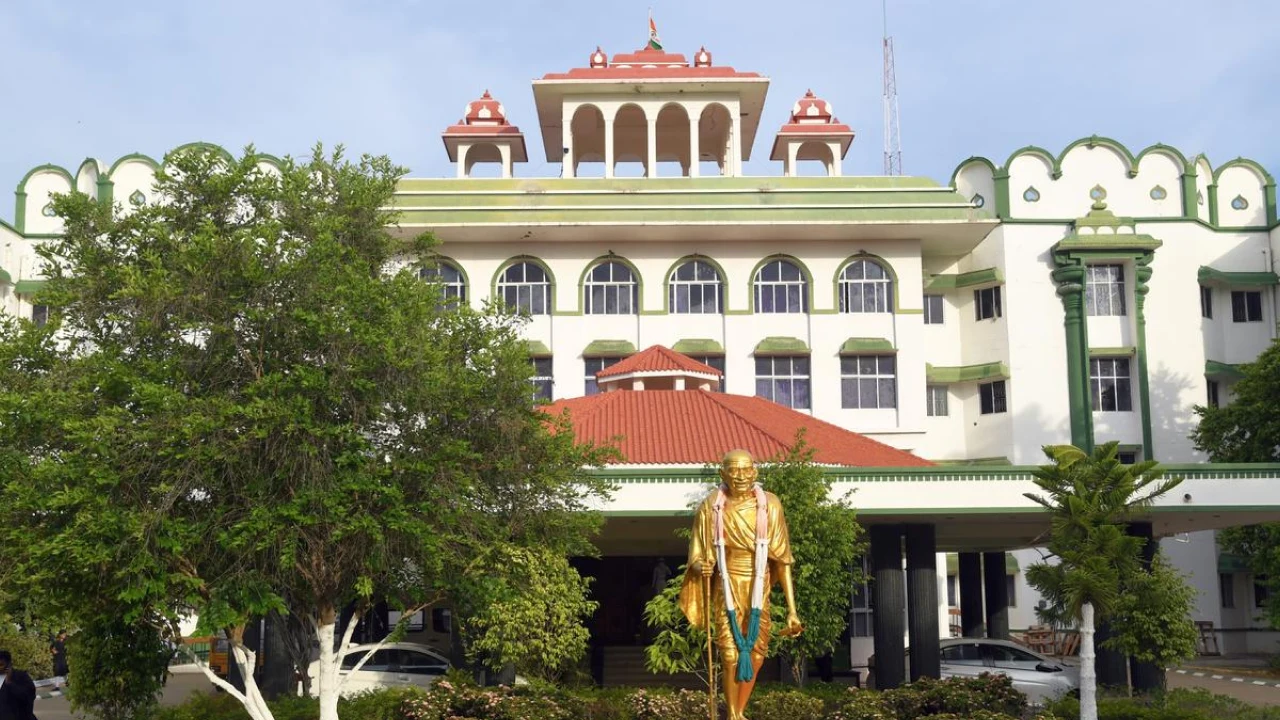
Expressing serious concern over prolonged delays in corruption-related disciplinary proceedings, the Madras High Court has said Tamil Nadu should have an independent Vigilance Commissioner dedicated exclusively to overseeing vigilance administration. The Court observed that corruption cannot be eliminated through declarations alone and called for strengthening the State Vigilance Commission and the Vigilance and Anti-Corruption Department to ensure effective governance.
Justice B. Pugalendhi was hearing a batch of petitions concerning disciplinary proceedings pending before various Tribunals for Disciplinary Proceedings across Tamil Nadu. Several government employees sought directions for early completion of enquiries, while some challenged the prolonged pendency of proceedings, claiming that the delay had affected their promotions and service benefits. The State, on the other hand, sought additional time to complete certain enquiries that had already been directed to be concluded within fixed timelines.
During the proceedings, the Court examined the functioning of the Tribunals constituted under the Tamil Nadu Civil Services (Disciplinary Proceedings Tribunal) Rules, 1955, and the role of the Vigilance Commissioner in supervising corruption-related disciplinary enquiries.
The Court noted that the Government had already prescribed strict timelines for completing vigilance investigations, Tribunal enquiries and final departmental orders. Despite these directions, disciplinary proceedings involving corruption allegations continued to remain pending for years.
The State informed the Court that 170 disciplinary cases were pending before six Tribunals. Of these, 27 enquiries had remained pending for more than five years, eight for over four years, and 34 for more than three years, prompting the Court to observe that older cases should receive immediate priority.
The High Court observed that the State Vigilance Commission, established in 1965, is expected to advise the Government on preventing corruption and addressing administrative challenges. However, it noted that Tamil Nadu currently does not have a regular, full-time Vigilance Commissioner, with the responsibility being held as an additional charge by a senior officer.
The bench observed:
“The Government, which aims for corruption free governance, in the opinion of this court, shall have an independent Vigilance Commissioner, wholly concentrating on the Vigilance Commission's functioning.”
The Court further remarked:
“Every government has been declaring that they are against corruption, however, the reality has been otherwise. Corruption is deep-rooted everywhere, which can be eradicated by dedicated and consistent action. That can be achieved only by strengthening the Vigilance Commission and the Vigilance and Anti Corruption Department.”
The Court directed the Vigilance Commissioner to closely monitor the daily functioning of the Tribunals, ensure witnesses are produced on time and that Public Prosecutors appear regularly. It also directed the Tribunals to strictly follow the timelines prescribed under the Government Orders while giving priority to long-pending disciplinary cases.
Disposing of the batch of petitions, the High Court granted three months to complete the disciplinary proceedings in the cases concerning M. Rathinam and Akila. It further directed the concerned Tribunals to conclude the remaining disciplinary proceedings within four months from the date of receipt of the order.
The Court also instructed that no further extension should be sought in the specified matters.
Case Details
Case Title: The Commissioner and Others v. M. Rathinam and Others
Case Number: WP(MD) Nos. 35029, 35450, 36599 of 2025, 280 and 4802 of 2026
Judge: Justice B. Pugalendhi
Decision Date: 29 June 2026


