

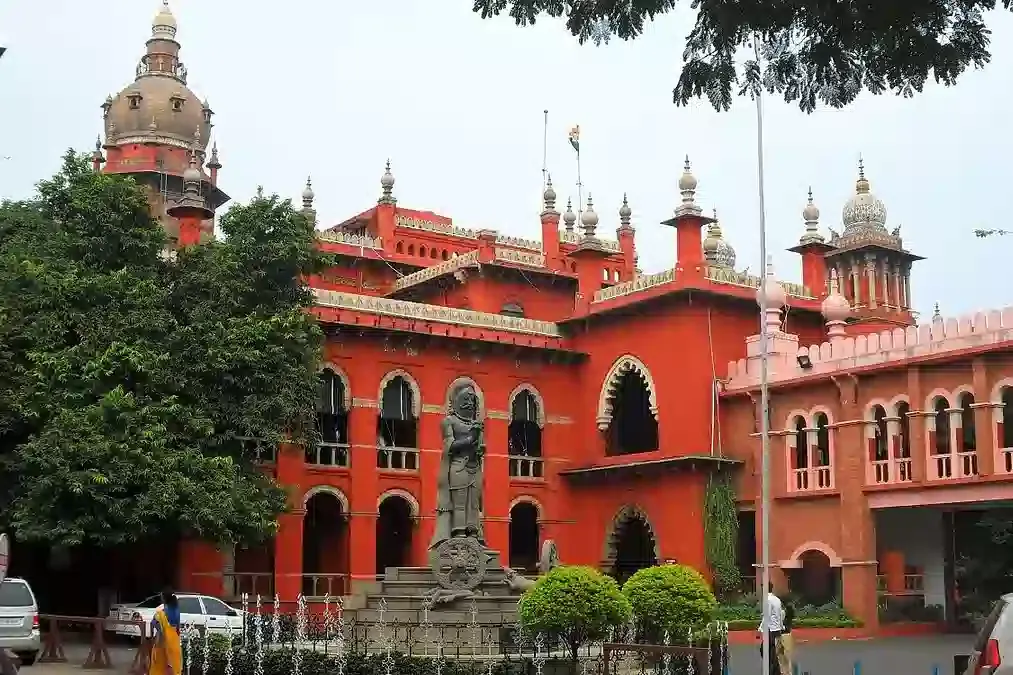
In an important interim ruling on prisoners' rights, the Madras High Court has held that the mere pendency of an appeal against conviction should not automatically prevent a convict from seeking ordinary or emergency leave under the Tamil Nadu Suspension of Sentence Rules, 1982. A five-judge Larger Bench clarified that prison authorities must continue considering such applications until the Supreme Court settles the larger legal issue.
The court also suspended an earlier direction that had stopped the Registry from entertaining leave petitions, allowing such applications to be processed once again.
Background of the Case
The Larger Bench was constituted to resolve conflicting decisions delivered by two Full Benches of the Madras High Court regarding whether prisoners whose appeals are pending before the High Court or the Supreme Court can be granted temporary leave under the 1982 Rules.
The reference arose because one line of decisions suggested that leave could not be granted while an appeal remained pending, whereas a later Full Bench judgment in T. Ramalakshmi v. State took a different view. The court was therefore asked to clarify the legal position until the Supreme Court decides the broader issue concerning parole and furlough policies across the country.
Court's Observations
The Bench observed that a prisoner does not lose fundamental rights merely because of incarceration. Referring to Supreme Court precedents, it emphasized that the right to life and human dignity under Article 21 of the Constitution continues to protect prisoners, subject to reasonable prison regulations.
The court noted that the 1982 Rules expressly prohibit leave only for prisoners facing pending trials and do not similarly exclude convicts whose appeals are awaiting disposal. It found that once a person has been convicted, the individual ceases to be an undertrial, even if the conviction is under challenge before an appellate court.
The Bench observed,
'Leave and temporary release are facets of human dignity that cannot be suspended indefinitely merely due to the pendency of a judicial appeal.'
The judges also distinguished the Constitution Bench decision in K.M. Nanavati v. State of Bombay. According to the court, that judgment dealt with suspension of sentence through executive action during pending judicial proceedings and did not consider statutory leave available under the Tamil Nadu Suspension of Sentence Rules.
The Bench further clarified that granting temporary leave for a limited period does not interfere with the appellate court's power to suspend or refuse suspension of sentence during the pendency of an appeal.
Interim Directions Issued
Pending the Supreme Court's decision in Mukesh Kumar v. State (Govt. of NCT of Delhi), the High Court directed that the Full Bench ruling in T. Ramalakshmi v. State would continue to govern the field.
It also kept in abeyance the earlier direction restraining the Registry from entertaining petitions seeking ordinary or emergency leave. As a result, such petitions can now be filed and processed again.
The Bench directed competent prison authorities to examine each leave application on its own merits under the 1982 Rules and the principles laid down in T. Ramalakshmi. It also clarified that the K.M. Nanavati decision should not be treated as an automatic bar to considering such applications during this interim period.
Decision
The Madras High Court held that, until the Supreme Court finally decides the broader legal questions relating to prison leave policies, applications for ordinary and emergency leave under the Tamil Nadu Suspension of Sentence Rules, 1982, should continue to be entertained and decided in accordance with the Full Bench decision in T. Ramalakshmi v. State.
The connected writ petitions were directed to be placed before the appropriate Division Bench for further proceedings in light of these observations.
Case Details
Case Title: Sheefa Rani v. Secretary to Government of Tamil Nadu & Others (along with connected matters)
Case Number: W.P. (Crl.) Nos. 722, 1167, 1244 & 1321 of 2025
Judge: Chief Justice Sushrut Arvind Dharmadhikari, Justice C.V. Karthikeyan, Justice A.D. Jagadish Chandira, Justice M. Nirmal Kumar and Justice Sunder Mohan
Decision Date: 19 June 2026


