The Kerala High Court has ruled that matrimonial courts cannot assume that a wife entrusted her gold ornaments to her husband or in-laws merely because such practices may have been common in the past. The Court stressed that findings must rest on evidence and not on speculation or general social assumptions.
Partly allowing a matrimonial appeal, the Division Bench modified a Family Court judgment by reducing the quantity of gold to be returned to the wife while upholding the direction to repay ₹5 lakh received in connection with the marriage.
Background of the Case
The appeal arose from a judgment of the Family Court, Muvattupuzha, in a dispute between husband Vinu K.S., his father Sasindran, and wife Veena Viswan.
Following their marriage in June 2019, the wife approached the Family Court seeking the return of her gold ornaments, ₹5 lakh allegedly paid at the time of engagement, reimbursement of marriage expenses, and compensation. She claimed that cash and gold entrusted during the marriage were retained by the husband and his family and were not returned.
The Family Court had directed the husband and his father to return ₹5 lakh with interest, 80 sovereigns of gold or its market value, and ₹6,89,350 towards marriage expenses. The claim for compensation and alimony, however, was rejected. Dissatisfied with the order, the husband and his father challenged the decision before the High Court.
Court's Observations
The Bench of Justice A.K. Jayasankaran Nambiar and Justice Preeta A.K. examined the principles governing matrimonial disputes and reiterated that such cases are decided on the "preponderance of probabilities" rather than the stricter criminal standard of proof beyond reasonable doubt.
The Court observed that while judges may consider surrounding circumstances, any conclusion regarding the entrustment or misappropriation of gold or money must be supported by proven facts.
The Bench observed,
“The court cannot and must not embark upon a speculative exercise of drawing an inference based on its own perspective of what might have happened.”
The judges further cautioned against relying solely on earlier assumptions that a bride ordinarily hands over her jewellery to her husband or mother-in-law for safekeeping.
The judgment noted that social realities have changed and many educated and financially independent women continue to retain control over their own property after marriage. Therefore, courts must insist on evidence instead of treating older customs as universally applicable.
Findings on the Monetary Claim
After examining the oral testimony and documentary evidence, the High Court found no reason to interfere with the Family Court's conclusion regarding the ₹5 lakh allegedly handed over during the engagement ceremony.
The Court held that the testimony of the wife, her father, and another witness consistently established that the amount had been paid in connection with the marriage. Accordingly, the direction for repayment of ₹5 lakh with 6% interest was affirmed.
Gold Claim Modified
The High Court, however, took a different view on the claim relating to gold ornaments.
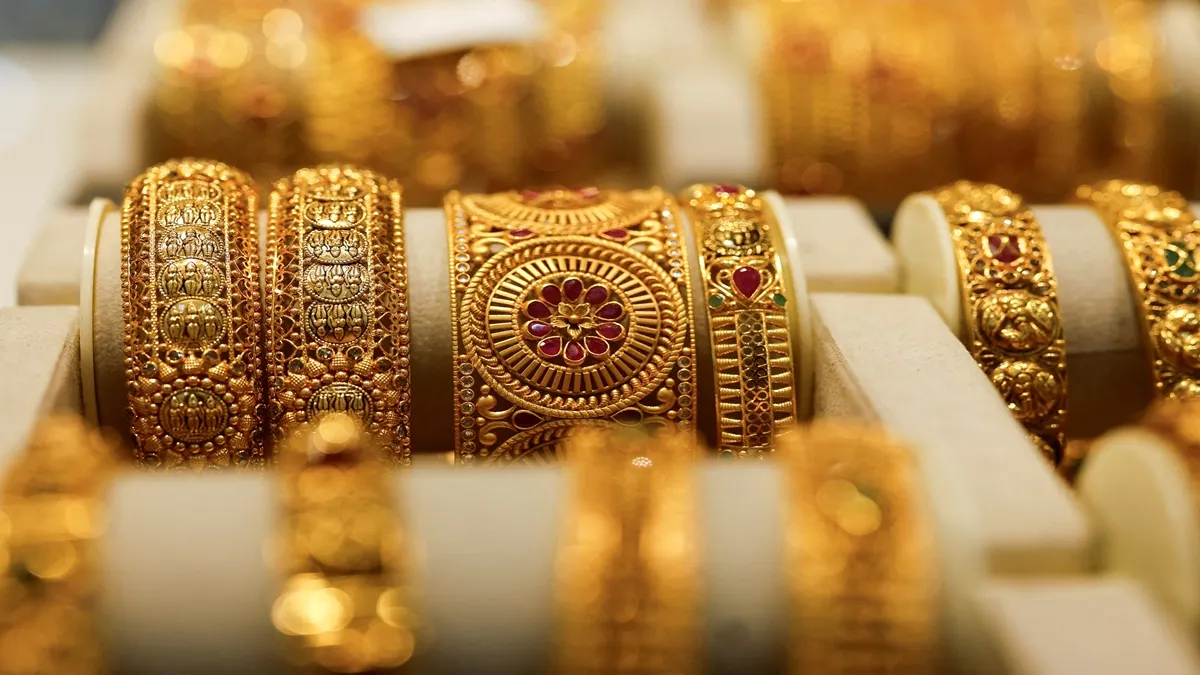
Although records showed that the bride had worn 80 sovereigns of gold at the time of marriage, the Bench held that there was insufficient evidence to conclude that the entire quantity had been entrusted to the husband or his family.
The Court found reliable evidence only regarding gold ornaments weighing 242.9 grams, which had been pledged shortly after the marriage. The Bench concluded that this portion alone was supported by evidence of entrustment and misappropriation.
Accordingly, it modified the Family Court's direction and limited the wife's entitlement to 242.9 grams of gold, equivalent to approximately 30 sovereigns, or its market value at the time of payment.
Marriage Expenses Disallowed
The High Court also set aside the Family Court's order directing payment of ₹6,89,350 towards marriage expenses.
The Bench observed that marriage expenses are ordinarily incurred by both families and each side decides the scale of celebrations according to its own choice. Since the marriage was valid and not declared void, the Court found no legal basis to compel one side to reimburse the other's wedding expenses.
The judges held that saddling the appellants with those expenses was unjustified in the facts of the case.
Decision
Partly allowing the appeal, the Kerala High Court modified the Family Court's decree. It directed the appellants to return ₹5 lakh with 6% interest from the date of filing of the original petition, along with 30 sovereigns (242.9 grams) of gold or its market value.
The direction to reimburse marriage expenses was set aside. The Court also clarified that if the payments are not made, the respondent would be entitled to recover the amount and the value of the gold through legal execution proceedings.
Case Details
Case Title: Vinu K.S. & Another v. Veena Viswan
Case Number: Mat. Appeal No. 1095 of 2024
Judges: Justice A.K. Jayasankaran Nambiar and Justice Preeta A.K.
Decision Date: 13 July 2026