

In a significant ruling on the constitutional safeguards available to arrested persons, the Kerala High Court has held that although police are not permanently barred from re-arresting an accused whose earlier arrest was declared illegal due to procedural violations, they cannot do so without first obtaining permission from the competent court or securing cancellation of bail, as the case may be.
Delivering a common judgment in a batch of connected bail applications, the Court emphasized that constitutional protections under Articles 21 and 22 cannot be bypassed through immediate re-arrest after an accused is released because of an illegal arrest.
Background of the Case
The batch of petitions arose from cases registered under the Narcotic Drugs and Psychotropic Substances (NDPS) Act. The applicants had earlier been released because investigating agencies failed to comply with constitutional requirements, including informing them of the grounds of arrest or producing them before a Magistrate within 24 hours.
However, immediately after their release either inside or just outside the jail premises the police arrested them again in connection with the same offences and obtained fresh remand orders. The applicants challenged these subsequent arrests, arguing that they violated their fundamental rights and lacked legal authority.
Court's Observations
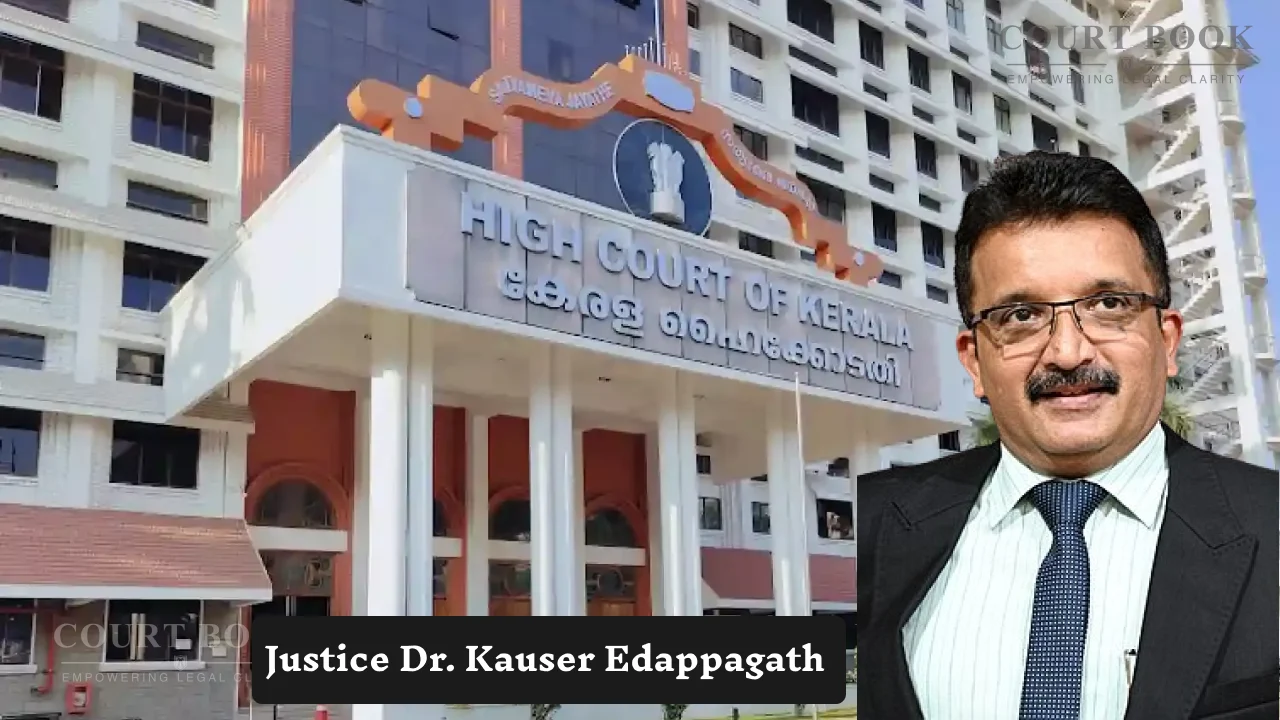
Justice Dr. Kauser Edappagath examined whether an accused released due to violations of Article 22(1) or Article 22(2) of the Constitution could be arrested again for the same offence after procedural defects were corrected.
The Court clarified that neither the Constitution nor the Bharatiya Nagarik Suraksha Sanhita (BNSS) creates an absolute bar against a subsequent arrest. At the same time, it held that the investigating agency cannot exercise such power mechanically or without judicial oversight.
The Court observed:
“Neither the constitutional safeguards embodied in Article 22(1) and (2) nor the provisions of the BNSS/Cr.P.C. impose an absolute fetter on the power to subsequently arrest a person who has been released on account of an infraction of Article 22(1) and (2).”
The judgment noted that allowing unrestricted re-arrest would undermine constitutional protections, while treating procedural lapses as granting permanent immunity from arrest would also defeat the administration of criminal justice.
The Court further explained that where a person has been released on bail due to constitutional violations, the investigating agency must first seek cancellation of that bail before making another arrest. Similarly, even where the accused was released without being granted bail, prior permission of the Magistrate or court is necessary before any fresh arrest or remand.
The bench observed:
“Any subsequent arrest must be preceded by judicial approval, upon due consideration of the necessity for such arrest and detention.”
Application to the Present Cases
Applying these principles, the Court found that all the applicants had been re-arrested immediately after their release in the very same cases without obtaining prior permission from the court that had ordered their release.
The Court also noted that, in several cases involving failure to communicate the grounds of arrest, there was nothing on record to show that the defect had even been rectified before the subsequent arrests were made.
Since the investigating agencies proceeded with the re-arrests without judicial authorization, the Court held that the arrests were legally unsustainable and liable to be set aside.
Decision
Allowing all the connected bail applications, the Kerala High Court held that the applicants were entitled to be released on bail because their subsequent arrests had been carried out without obtaining the necessary permission from the competent court.
The Court directed their release subject to conditions, including execution of bail bonds, cooperation with the investigation, regular appearance before the investigating officer, non-interference with witnesses or evidence, and restriction on leaving the State of Kerala without prior permission of the trial court.
Case Details
Case Title: Ramjith Nayak v. State of Kerala and connected bail applications
Case Number: Bail Application No. 13215 of 2025 & connected cases
Judge: Justice Dr. Kauser Edappagath
Decision Date: 2 July 2026


