In a significant ruling on the scope of the Non-Creamy Layer (NCL) criteria, the Kerala High Court has held that the salary earned by parents working in the private sector cannot be ignored while deciding whether their children are entitled to reservation benefits under the Other Backward Classes (OBC) category. The Court ruled that interpreting the law to exclude salary income would defeat the constitutional objective of ensuring reservation benefits reach genuinely backward sections.
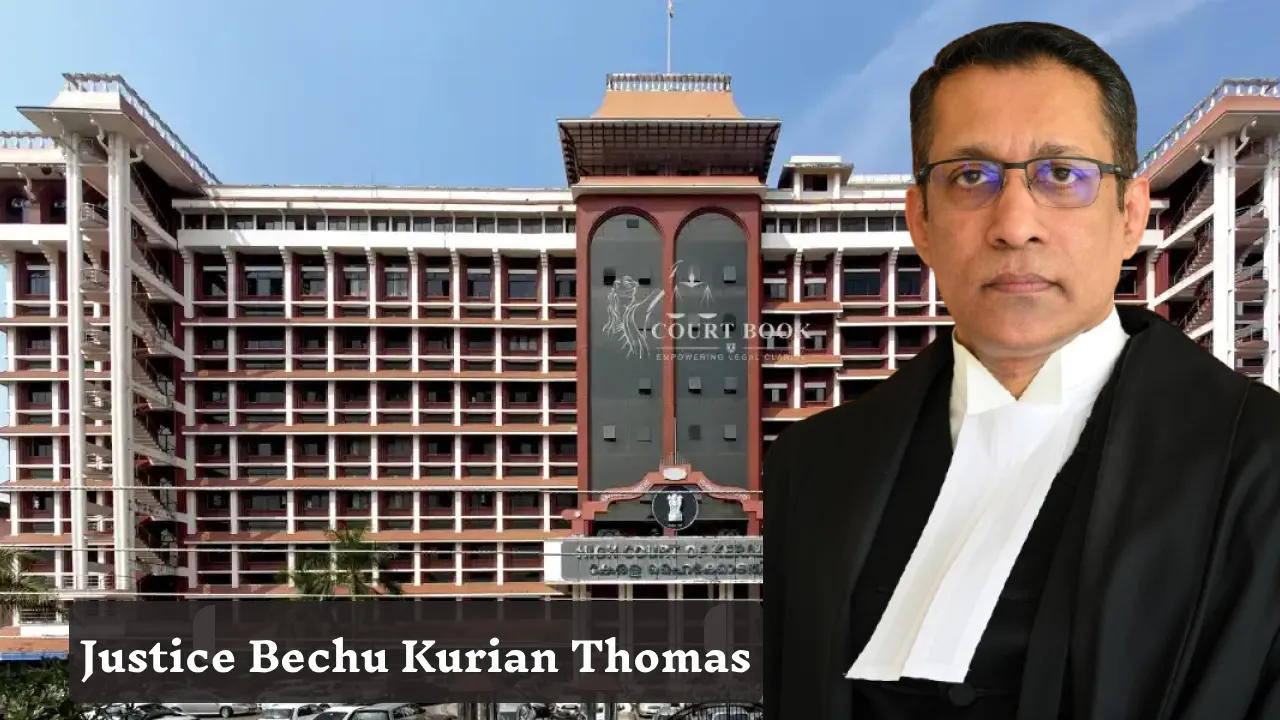
Justice Bechu Kurian Thomas dismissed two writ petitions filed by students seeking Non-Creamy Layer certificates for admission through NEET-UG 2026 and KEAM 2026, concluding that both petitioners belonged to families whose income and wealth exceeded the prescribed limits.
Background of the Case
The petitions were filed by Naman Ajay and Karthika Sivaji, both minor students seeking Non-Creamy Layer certificates for professional course admissions.
Naman Ajay sought the certificate for NEET-UG 2026. His father was employed in the United Kingdom as a Lead Solution Architect at Barclays UK Consumer Bank and was earning around ₹33 lakh annually through salary. Karthika Sivaji applied for the certificate for KEAM 2026. Her father worked as a Senior Vice President in a private company with an annual salary exceeding ₹1.12 crore and also owned multiple assets.
Both students argued that since their parents' income from sources other than salary was below the prescribed income ceiling, they should be treated as belonging to the Non-Creamy Layer. They relied heavily on a recent Supreme Court decision to contend that salary income should be excluded while calculating eligibility.
The State authorities opposed the petitions, arguing that accepting such an interpretation would permit affluent families employed in the private sector to obtain reservation benefits contrary to the purpose of the Creamy Layer principle.
Court's Observations
Justice Bechu Kurian Thomas examined the constitutional history behind the Creamy Layer principle, beginning with the landmark Indra Sawhney decisions of the Supreme Court. The Court noted that reservation is intended for socially and educationally backward sections and not for economically advanced members of backward communities.
The judgment observed that if high-income private sector employees were allowed to exclude their salary income altogether, there would effectively be no meaningful Creamy Layer test for many affluent families working outside government service.
Interpreting the Government Order governing Non-Creamy Layer certificates, the Court held that the expression stating that "income from salaries or agricultural land shall not be clubbed" does not mean salary income should be ignored. Instead, it merely prevents salary income from being combined with agricultural income while applying the income test.
The bench observed:
"It cannot be deciphered either from the scheme of the Government Order or from the principles relating to exclusion of Creamy Layer... that while calculating the annual income, the income from salary should be excluded."
The Court further explained that excluding salary income altogether would create "absurd and anomalous situations" and would allow financially affluent families to claim reservation benefits meant for genuinely disadvantaged communities.
Supreme Court Judgment Distinguished
The petitioners had relied upon the Supreme Court's decision in Union of India v. Rohith Nathan (2026).
However, the Kerala High Court clarified that the Supreme Court had never ruled that salary income should be completely ignored while applying the income or wealth test. Instead, the Supreme Court had emphasised that excluding the Creamy Layer is a constitutional requirement intended to ensure reservation reaches those who are genuinely socially and educationally backward.
Quoting the underlying principle, the High Court noted that the objective of the Creamy Layer doctrine is to prevent relatively advanced sections within OBC communities from appropriating benefits intended for deserving candidates.
Court Applies the Principle to the Present Cases
Applying these principles, the Court observed that one petitioner's father earned over ₹1.12 crore annually while possessing valuable assets, including apartments and luxury cars. The other petitioner's father, employed abroad in a multinational bank, also earned a substantial salary.
The bench stated that accepting the petitioners' interpretation would enable such affluent families to obtain Non-Creamy Layer status merely because they had little income from other sources, which would run contrary to the very concept of excluding the Creamy Layer.
The Court observed:
"Such an interpretation goes against the very scheme of creating the Creamy Layer category."
Decision
Finding that both petitioners' families possessed income and wealth well beyond the prescribed limits, the Kerala High Court held that they were not entitled to Non-Creamy Layer certificates.
Accordingly, Justice Bechu Kurian Thomas dismissed both writ petitions and upheld the rejection of their applications for Non-Creamy Layer status.
Case Details
Case Title: Naman Ajay v. Union of India & Others along with Karthika Sivaji (Minor) v. State of Kerala & Others
Case Number: W.P.(C) Nos. 10146 of 2026 & 4672 of 2026
Judge: Justice Bechu Kurian Thomas
Decision Date: 29 July 2026