

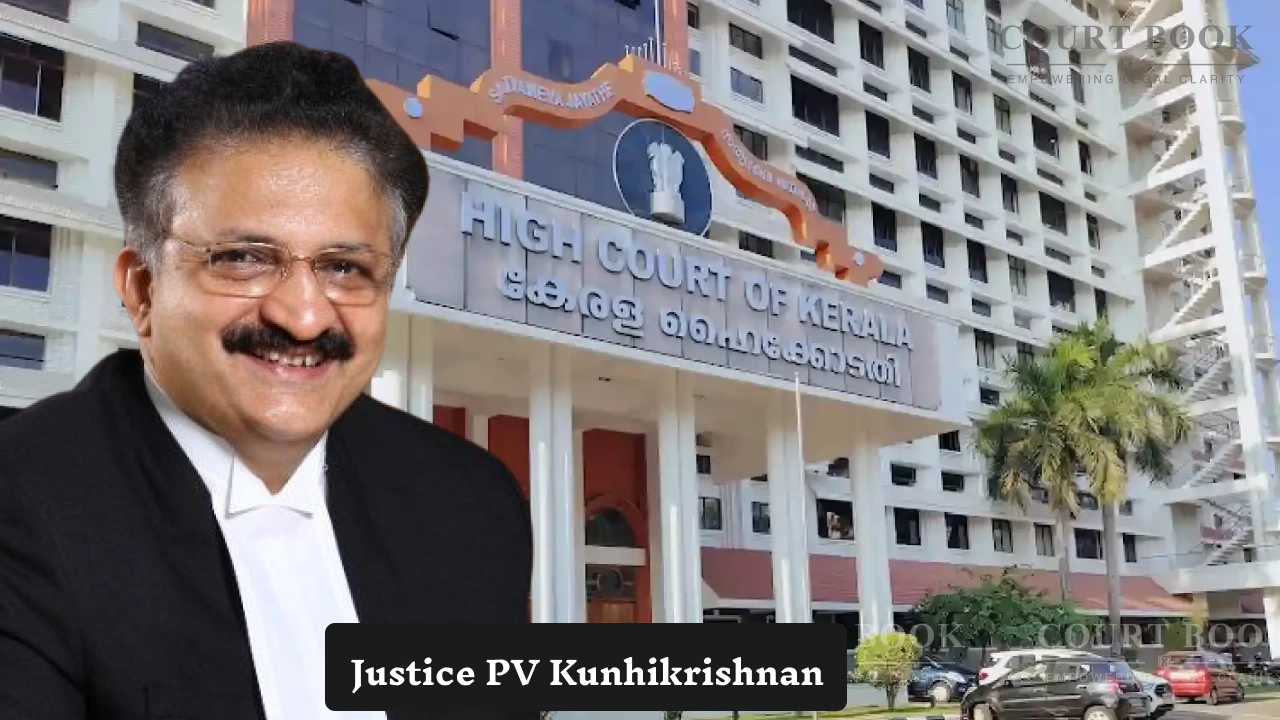
The Kerala High Court has ruled that elected representatives of local self-government institutions must take their oath strictly in the form prescribed by law and cannot alter it based on personal beliefs or political affiliations.
In a significant judgment delivered on June 24, Justice P.V. Kunhikrishnan declared invalid the oaths taken by several Thiruvananthapuram Corporation councillors and a Vadakkencherry Grama Panchayat member because they were not administered in the manner required under the Kerala Municipality Act and the Kerala Panchayat Raj Act.
Background of the Case
The dispute arose after a group of newly elected councillors of the Thiruvananthapuram Municipal Corporation took oath in the names of various deities, “Mother India,” political martyrs, and social reformer Gurudeva instead of using the statutory form prescribed under law. In a separate but connected matter, an elected member of the Vadakkencherry Grama Panchayat took oath stating that he did so “by God's blessing in the name of Oommen Chandy,” the late former Chief Minister of Kerala.
Petitioners challenged the validity of these oaths, arguing that the governing statutes permit only two options: swearing “in the name of God” or making a “solemn affirmation.” They contended that any deviation from the prescribed format rendered the oath legally defective.
Court's Observations
Justice Kunhikrishnan closely examined the oath provisions contained in the Kerala Municipality Act, 1994 and the Kerala Panchayat Raj Act, 1994. The court noted that both statutes prescribe a specific form of oath and leave no room for modification.
Referring to earlier judicial precedents, the court emphasized the settled legal principle that when a statute requires an act to be performed in a particular manner, it must be done in that manner alone.
The court observed:
“The oath is to be taken either in the name of God or as a solemn affirmation.”
The judge further noted that permitting elected representatives to substitute the statutory wording with names of political leaders, political martyrs, organizations, or personal figures would create limitless variations and undermine the uniformity intended by the law.
At the same time, the court clarified that the judgment was not questioning anyone's personal faith or constitutional right to believe in any deity or individual. The issue before the court was limited to whether the statutory oath had been administered in the form mandated by law.
Decision
Allowing both writ petitions, the High Court held that the oaths taken by the concerned councillors of the Thiruvananthapuram Corporation and the Panchayat member in Vadakkencherry were invalid because they did not conform to the statutory format.
However, the court stopped short of disturbing their election. It observed that these representatives had been elected through a democratic process and should be given an opportunity to rectify the defect by taking a fresh oath in accordance with law.
Accordingly, the court directed the competent authorities to arrange fresh oath-taking for the affected councillors and the Panchayat member within four weeks from receipt of the judgment. The court also protected past actions of the Thiruvananthapuram Corporation councillors under the saving provision contained in the Municipality Act.
The judgment concluded with the formal declaration that the impugned oaths were invalid and fresh oaths must be administered within the time granted by the court.
Case Details:
Case Title: Adv. S.P. Deepak v. The Kerala State Election Commission & Ors. and connected case
Case Number: WP(C) No. 1502 of 2026 and WP(C) No. 48425 of 2025
Judge: Justice P.V. Kunhikrishnan
Decision Date: June 24, 2026


