

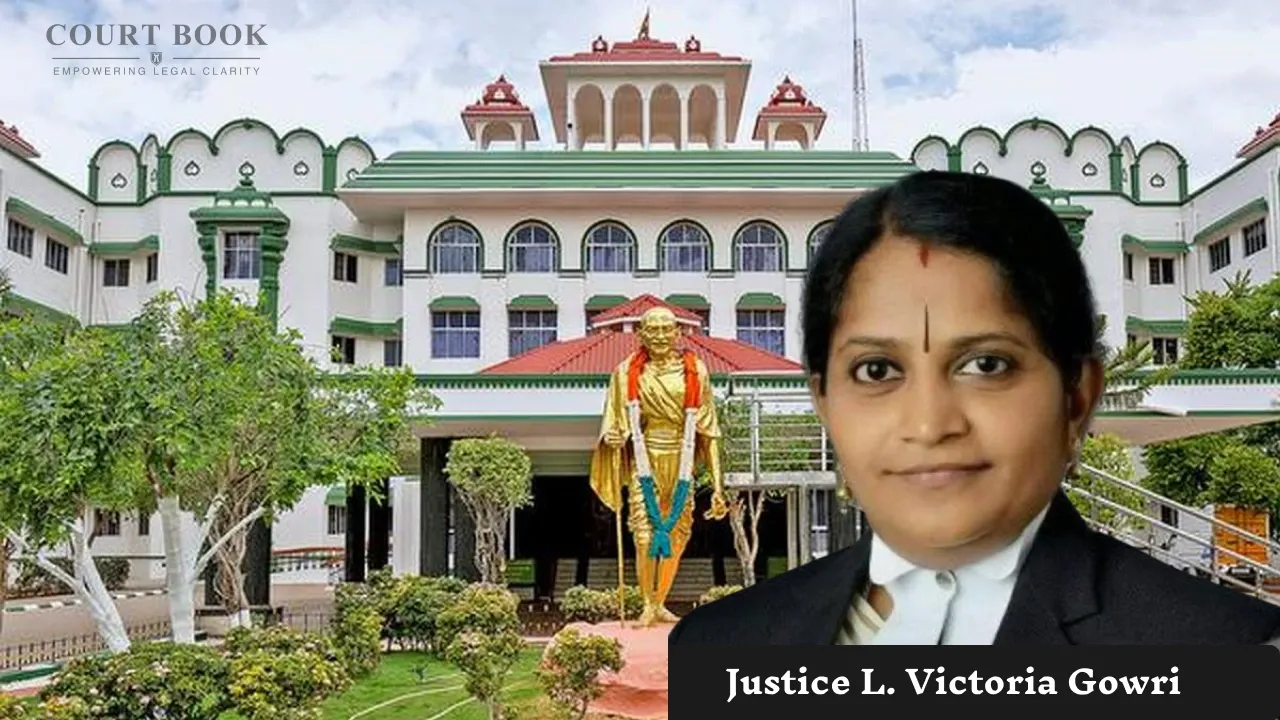
The Madurai Bench of the Madras High Court has directed the Dindigul police to immediately examine a complaint alleging that a woman’s photographs were morphed into obscene images and circulated on social media, with money allegedly demanded for their removal. The Court stressed that such allegations, if found true, involve serious cyber offences affecting a woman's privacy, dignity, and reputation.
Background of the Case
The petition was filed by R. Ramesh Kumar, whose sister is employed as a housekeeper in Singapore. He alleged that unknown persons had created morphed obscene photographs and videos using her images and circulated them through Instagram and other social media platforms.
According to the petition, the family later discovered the alleged involvement of private individuals. It was further claimed that one of them demanded money to delete the morphed content and continued circulating it after the demand was refused.
The petitioner stated that despite submitting a complaint on March 20, 2026, to the police authorities, no effective action had been taken, prompting him to approach the High Court seeking directions for investigation.
Justice L. Victoria Gowri observed that cyber offences involving morphed images and online sexual humiliation cannot be dismissed as ordinary personal disputes.
The Court noted,
“A morphed image is not a harmless digital prank. It is a calculated assault on privacy, reputation and emotional security.”
The bench also highlighted the importance of swift action in cybercrime investigations, observing that digital evidence can disappear quickly if authorities fail to act in time.
It further remarked,
“In cyber offences, delay is often fatal to evidence. Digital footprints are fragile. URLs may disappear. Accounts may be deleted. IP logs may be overwritten.”
The Court clarified that while it was not examining the truth of the allegations, the complaint disclosed allegations that required prompt consideration under the law. It added that the victim's employment outside India could not reduce the responsibility of Indian law enforcement agencies where part of the alleged cause of action arose within their jurisdiction.
Disposing of the writ petition, the High Court directed the Deputy Superintendent of Police to immediately verify the complaint and examine all digital material submitted by the petitioner, including screenshots, URLs, account details, messages, call records and other electronic evidence.
The Court ordered that if the material disclosed any cognizable offence, an FIR should be registered under the appropriate provisions of the Information Technology Act, 2000 and the Bharatiya Nyaya Sanhita, 2023.
It further instructed the police to preserve electronic evidence, obtain subscriber information and IP logs from social media platforms, and initiate steps for removal or blocking of any offending content found online in accordance with law.
The Court also directed that the victim's statement be recorded through an appropriate lawful method, including video conferencing if necessary, and asked the Superintendent of Police to monitor the progress of the investigation. The entire exercise has been directed to be completed, as far as possible, within four weeks.
At the same time, the Court made it clear that it had expressed no opinion on the merits of the allegations and that the investigation must proceed independently, fairly, and strictly in accordance with law.
Case Details
Case Title: R. Ramesh Kumar v. The Superintendent of Police & Others
Case Number: W.P.Crl.(MD) No. 2027 of 2026
Judge: Justice L. Victoria Gowri
Decision Date: 08 June 2026


