

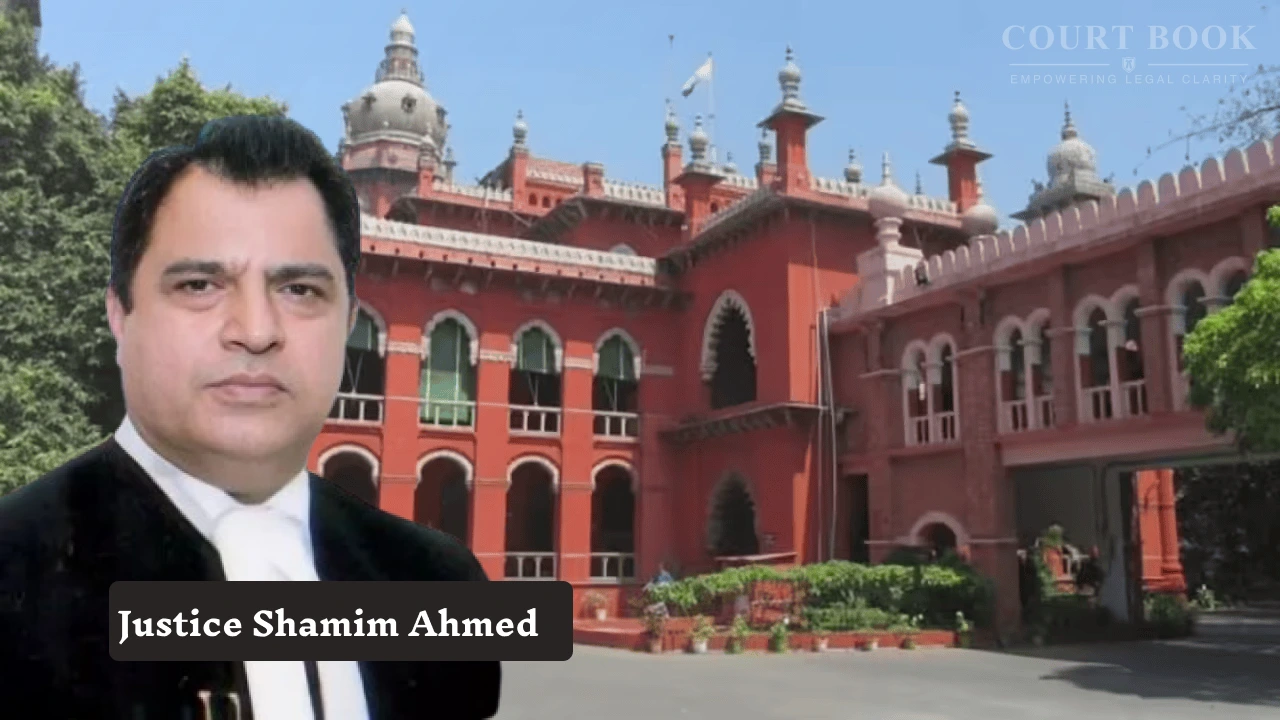
The Madras High Court has ruled that a Judicial Magistrate cannot sit in appeal over eligibility certificates issued under the Surrogacy (Regulation) Act, 2021, while deciding applications relating to the parentage and custody of a child to be born through surrogacy. The Court set aside a Namakkal Magistrate's order that had rejected a couple's plea on technical grounds and directed the matter to be reconsidered afresh.
Background of the Case
The petition was filed by Sri Nandhini Devi, her husband Saravanan, and a relative who had agreed to act as the surrogate mother. The couple had lost their only son in 2024 and later decided to pursue altruistic surrogacy after the first petitioner underwent a hysterectomy and was medically unable to carry a pregnancy.
The appropriate authorities issued eligibility certificates to both the intending couple and the proposed surrogate mother. They then approached the Judicial Magistrate seeking an order regarding the parentage and custody of the child, as required under the Surrogacy (Regulation) Act. However, the Magistrate rejected the application, holding that the intending mother had crossed the upper age limit and observing that the surrogate mother's husband had not been examined.
Court's Observations
Justice Shamim Ahmed found that the Magistrate had travelled beyond the limited role assigned under the Surrogacy Act.
The Court observed,
"The Magistrate shall not function as an appellate authority over the District Medical Board, Appropriate Authority, Insurance Authority or Registered ART/Surrogacy Clinics.”
It held that certificates issued by the competent authorities carry a presumption of validity unless they are set aside by a competent forum or shown to be illegal, fraudulent, or issued without jurisdiction.
On the age issue, the Court held that a woman remains within the statutory age bracket of 23 to 50 years until she attains the age of 51 years. Since the first petitioner had not completed 51 years when the eligibility certificate was issued, the Court found that the certificate had been validly granted.
The High Court also rejected the Magistrate's view that the surrogate mother's husband had to be examined.
The bench observed,
“The Act does not mandate examination of the surrogate mother's husband.”
It noted that the law only requires the intending couple and the surrogate mother to move the application, while the husband's consent is already considered by the appropriate authority during the certification process.
The Court further described proceedings under Section 4(iii)(a)(II) of the Act as “beneficial, facilitative and child-centric proceedings and not adversarial litigation,” emphasizing that the welfare of the child remains the paramount consideration.
Decision
Allowing the criminal revision petition, the High Court set aside the Magistrate's order dated 18 March 2026 and remanded the matter for fresh consideration. It directed the petitioners to apply for an extension of their eligibility certificate, instructed the appropriate authority to issue the renewed certificate within two weeks, and asked the Trial Court to decide the application within four weeks after receiving the renewed certificate.
The Court also requested the Registrar General to circulate the judgment to all Principal District Judges for guidance in handling similar surrogacy matters.
Case Details
Case Title: Sri Nandhini Devi @ Srinandhini Devi Saravanan & Others v. State of Tamil Nadu & Others
Case Number: CRL RC No. 950 of 2026
Judge: Justice Shamim Ahmed
Decision Date: 25 June 2026


