

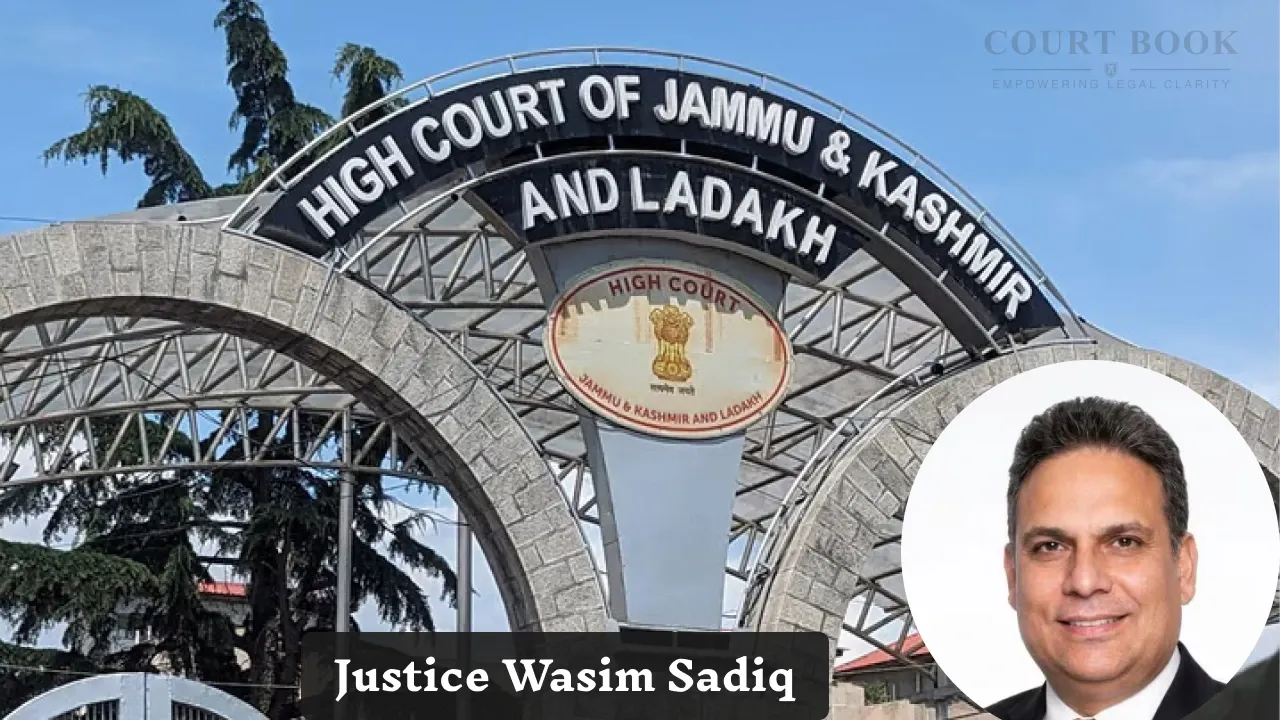
The High Court of Jammu & Kashmir and Ladakh has directed the Commissioner of the Jammu Municipal Corporation (JMC) to file a detailed affidavit explaining the action taken against commercial establishments allegedly violating building and parking regulations. The Court also ordered a comprehensive survey across Jammu to identify hotels, coaching centres, banquet halls and other establishments operating without mandatory approvals or safety compliance.
Background of the Case
The matter arose from a writ petition filed by the Administrator, Jammu Municipality and another, challenging a June 18, 2001 order passed by the Jammu and Kashmir Special Tribunal. During the proceedings, respondent Surat Singh argued that municipal authorities had unfairly singled out his hotel while allowing several similarly placed commercial establishments to continue functioning despite allegedly having comparable or even more serious violations.
To support this claim, the respondent relied on information obtained under the Right to Information Act, 2005. According to the material placed before the Court, several hotels, banquet halls, coaching centres and other commercial establishments were allegedly operating without sanctioned building plans or mandatory parking facilities, yet no effective enforcement action had been taken against many of them.
Court's Observations
Justice Wasim Sadiq Nargal noted that the issues raised were not limited to the dispute between the parties but extended to the broader question of uniform enforcement of municipal laws.
The Court observed that the respondent had filed a detailed supplementary affidavit containing area-wise particulars of establishments allegedly lacking sanctioned building plans or parking facilities. However, instead of responding to those details individually, the petitioners submitted only a brief reply stating that common notices had been issued to the concerned establishments.
The bench remarked,
“It was incumbent on the part of the petitioners to have filed a detailed reply… column-wise giving details of action taken vis-à-vis each business/commercial establishment.”
The Court further noted that although notices had reportedly been issued on 20 May 2024, there was nothing on record to show what action had followed. Merely issuing notices, the Court said, could not be treated as compliance with its earlier directions.
Directions Issued by the High Court
The High Court directed the Commissioner, Jammu Municipal Corporation, to file a comprehensive affidavit within two weeks.
The affidavit must disclose, among other things, the total number of hotels and commercial establishments within JMC limits, how many possess valid building permissions and occupancy certificates, how many lack sanctioned plans, mandatory parking or fire safety clearances, and what enforcement action has already been taken against defaulting establishments.
The Court also ordered the Commissioner to conduct a citywide survey to identify establishments operating without sanctioned building plans, required parking, fire safety clearances or other mandatory statutory approvals. It directed the authorities to initiate proceedings against every defaulting establishment in accordance with law and without discrimination. Coordination with the Fire and Emergency Services Department, Jammu Development Authority and Traffic Police was also directed to ensure effective enforcement.
Court's Decision
The High Court directed the Commissioner of the Jammu Municipal Corporation to submit the required affidavit within two weeks and listed the matter for further hearing on 30 July 2026. The Court also made it clear that if its directions are not complied with within the stipulated period, the Commissioner must remain personally present before the Court along with the relevant records.
Case Details:
Case Title: Administrator, Jammu Municipality & Anr. v. Surat Singh & Anr.
Case Number: OWP No. 122/2002
Judge: Justice Wasim Sadiq Nargal
Decision Date: 02 July 2026


