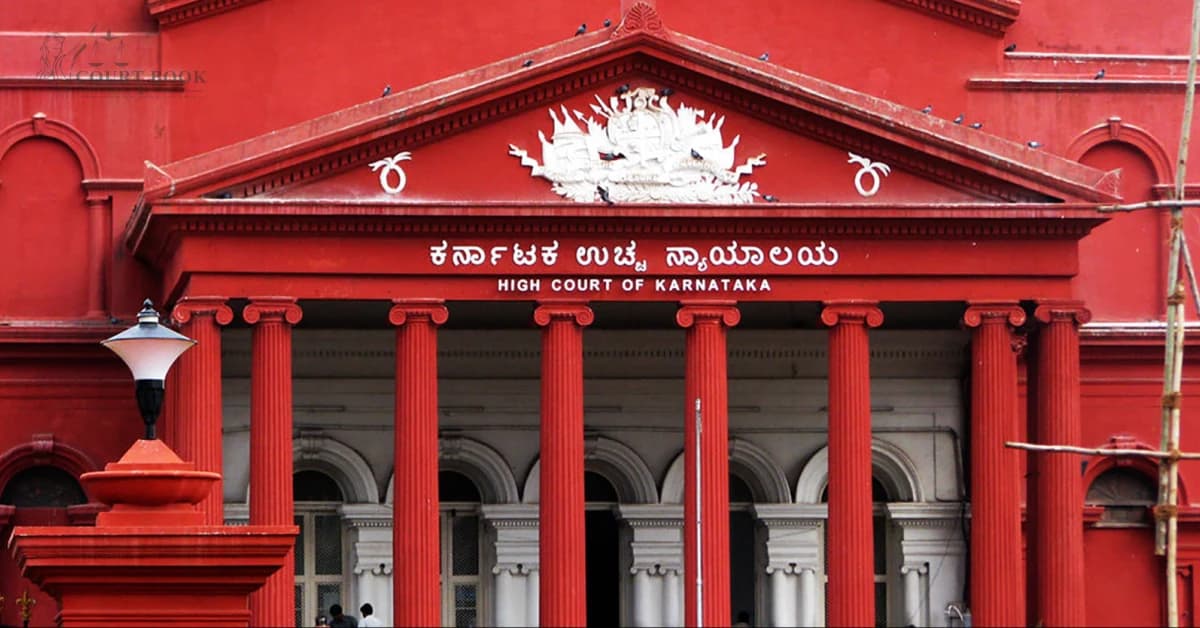
Justice Sachin Shankar Magadum, in a detailed judgment running into 149 pages, held that civil courts retain limited discretion to accept a written statement filed beyond 120 days where refusal would result in grave miscarriage of justice.
The Court, however, declined to strike down Section 4 of the Karnataka Amendment Act, 2024. Instead, it used the doctrine of “reading down” - meaning the provision was given a narrower interpretation so that it remains constitutionally valid while operating consistently with the rest of the CPC and Supreme Court precedent.
Background of the Case
The petitions were filed by Shri Basavaraj S. and Johar Abbas against the State of Karnataka. They challenged Section 4 of the Code of Civil Procedure (Karnataka Amendment) Act, 2024, particularly the provisions introducing a 120-day outer limit for filing written statements.
Under the amended provisions, a defendant who failed to file a written statement within 30 days could be permitted to file it later, but not beyond 120 days from service of summons. After that period, the amendment stated that the defendant would forfeit the right to file the written statement and that the court could not take it on record.
The petitioners argued that this went beyond merely introducing a stricter timeline. According to them, it effectively removed the limited judicial discretion recognised by the Supreme Court in cases such as Kailash v. Nanhku and Salem Advocate Bar Association v. Union of India.
The State defended the amendment, maintaining that the Karnataka Legislature was competent to amend procedural law and that the 120-day limit was intended to reduce delays and ensure faster disposal of civil disputes.
Court’s Observation
The High Court drew a distinction between the 120-day timeline itself and the consequence attached to crossing it.
The Court held that prescribing 120 days was not, by itself, constitutionally problematic. The difficulty arose from treating the forfeiture of the right to file a written statement as completely absolute. Such an interpretation, the Court noted, would eliminate the limited discretion preserved under Order VIII Rule 10 of the CPC and recognised in a long line of Supreme Court decisions.
The Court also noted the practical difficulties that can arise in ordinary civil disputes, particularly property cases. Delays may sometimes involve circumstances beyond a litigant’s control, including difficulty obtaining essential public records.
"The constitutional promise is not merely of speedy justice, but of speedy and fair justice. Both objectives must coexist. One cannot eclipse the other."
Directions to Trial Courts
The Court directed trial courts to strictly follow the 120-day timeline. Applications seeking acceptance of written statements after 120 days can be entertained only in exceptional circumstances.
Trial courts must record detailed reasons, examine whether the defendant acted bona fide and diligently, and determine whether there was an intention to delay the proceedings. Realistic and deterrent costs should ordinarily accompany an extension. Routine negligence, inaction or oversight will not be sufficient.
The Court also held that the amended provisions would operate prospectively and apply only to suits instituted on or after the commencement of the Amendment Act. Suits instituted earlier will continue to be governed by the unamended CPC.
Decision
The Karnataka High Court partly allowed the writ petitions. It read down the relevant provisions of Section 4 so that the 120-day period remains the ordinary rule, while preserving a narrow judicial discretion in exceptionally rare cases where refusal to accept the written statement would cause grave miscarriage of justice.
The Court also read down Section 158A, holding that it cannot override the High Court’s rule-making powers, its constitutional jurisdiction, or binding Supreme Court law under Article 141 of the Constitution.