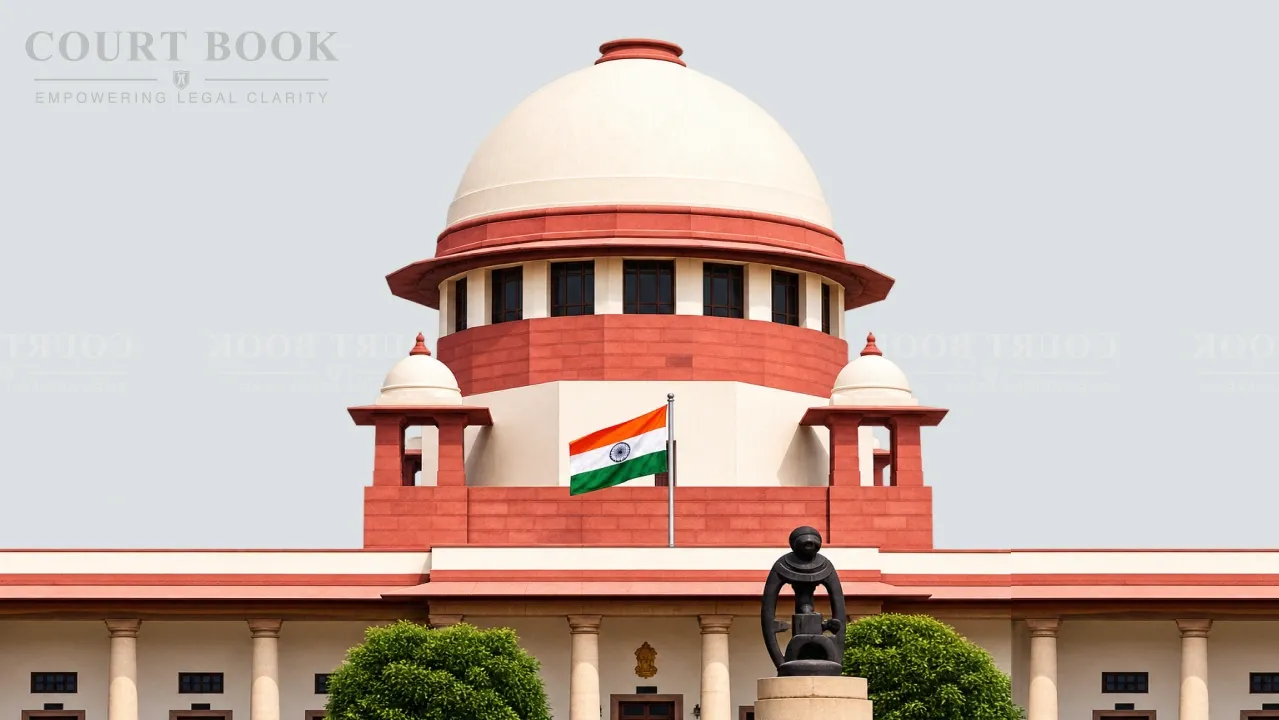
The Supreme Court has dismissed an appeal concerning ownership and possession of agricultural land in Muktsar, Punjab, holding that long and uninterrupted possession by itself does not establish adverse possession.
A Bench comprising Justice Prashant Kumar Mishra and Justice Shree Chandrashekhar upheld the Punjab and Haryana High Court's decision in favour of the plaintiffs. The Court also clarified that revenue records may help establish the nature of possession but cannot, by themselves, create or extinguish ownership.
Background of the Case
The dispute concerned 4 Kanals 18 Marlas of agricultural land in the revenue estate of Muktsar. The plaintiffs claimed ownership on the basis of a registered sale deed dated May 13, 1965, and sought protection against interference with their possession.
The defendants, representing Dera Bhai Mastan Singh, disputed the claim. They argued that the land had already been dedicated to the Dera for religious and charitable purposes and had remained in its possession through successive Mahants for several decades.
Revenue records contained the expression “gair marusi bila lagan bawaja Dharam Arth”, indicating possession without payment of rent for religious purposes. The Trial Court and First Appellate Court relied heavily on these records and dismissed the plaintiffs' suit.
The High Court later reversed those findings in 2011, holding that the defendants had failed to establish the legal requirements for adverse possession.
Supreme Court's Observation
The Supreme Court found that the lower courts had treated long possession and the revenue entries as sufficient to establish ownership. The Court said this approach could not be sustained.
“Revenue records, including Jamabandis and Khasra Girdawaris, are undoubtedly relevant pieces of evidence for determining the nature and continuity of possession. They neither create nor extinguish title, nor can they, by themselves, constitute conclusive evidence of ownership.”
The Court further held that a party claiming dedication must show a clear and unequivocal intention by the owner to permanently give up ownership in favour of the religious or charitable institution. Mere possession by a Mahant or a revenue entry referring to Dharam-Arth purposes was not enough.
The Court separately examined the claim of adverse possession. It explained that adverse possession requires possession that is hostile to the true owner's title. Simply remaining in possession for many years does not satisfy that requirement.
The judgment noted that the defendants had not identified when their possession allegedly became hostile to the recorded owners. There was also no evidence of an overt act by which the alleged hostile claim was brought to the owners' knowledge.
The Court also pointed out an important inconsistency in the defendants' case. They claimed both that the property had already been dedicated to the Dera and, alternatively, that the Dera had acquired title through adverse possession. The Court observed that these are based on different legal premises.
The Supreme Court acknowledged that the vendors of the 1965 sale deed appeared to own only one-half share in the property. Therefore, they could not transfer a larger interest than what they themselves legally possessed.
However, that issue did not establish ownership in favour of the defendants. The Court reiterated that each party must succeed on the strength of its own title, rather than merely pointing out weaknesses in the opposing claim.
Decision
The Supreme Court held that the defendants failed to prove either a completed dedication of the property to Dera Bhai Mastan Singh or acquisition of title through adverse possession.
It further held that the High Court was justified in interfering under Section 100 of the Code of Civil Procedure because the lower courts had applied settled legal principles incorrectly, rather than merely because another view of the evidence was possible.
The Court accordingly affirmed the High Court's judgment dated March 22, 2011, and dismissed the appeal.
Case Details
Case Title: Bhag Singh (D) Thr. Mahant Kashmir Singh v. Basant Kaur (D) Thr. LRs. and Others
Case Number: Civil Appeal No. 1718 of 2016
Judge: Justice Prashant Kumar Mishra and Justice Shree Chandrashekhar
Decision Date: September 10, 2026





-300x169.webp)
-300x169.webp)