The Allahabad High Court has dismissed three connected writ petitions challenging orders that declared certain land transfers void under the statutory restrictions protecting land belonging to members of Scheduled Tribes.
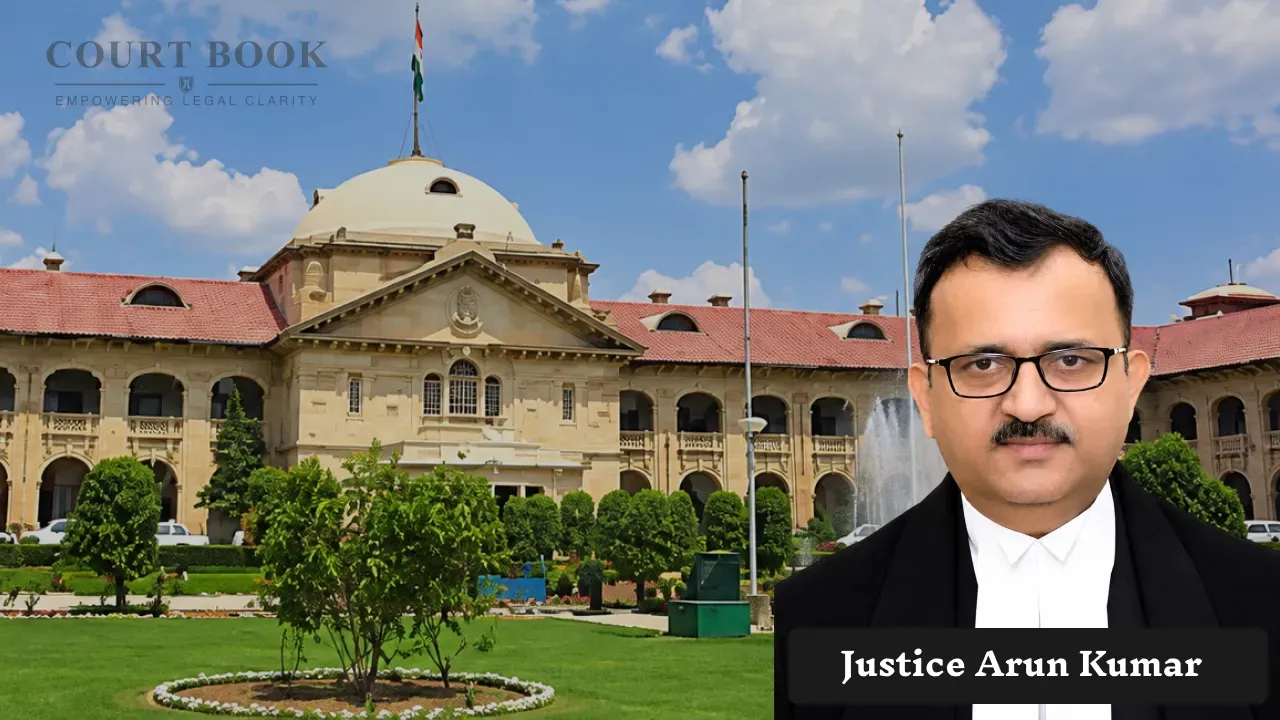
Justice Arun Kumar held that the petitioner failed to establish that she continued to possess the status of a member of the Bhuiyan Scheduled Tribe on the dates when the disputed properties were purchased. The Court clarified that a change of religion, by itself, does not automatically end Scheduled Tribe status, but continuing tribal identity must be examined on the facts and evidence of each case.
Background
The dispute arose from three agricultural land transactions involving properties situated in Village Bagharu, Tehsil Duddhi, District Sonbhadra. The petitioner claimed to have been born into the Bhuiyan Scheduled Tribe and relied upon a Scheduled Tribe certificate issued by the Tehsildar, Duddhi. She also claimed that the vendors belonged to the Gour Scheduled Tribe. The three registered sale deeds were executed on November 4, 2011, July 25, 2017 and November 26, 2018.
The dispute later centred on whether the petitioner continued to possess her Scheduled Tribe status. The State relied upon material alleging that the petitioner, who had earlier been known by another name, married a man according to Islamic rites and subsequently used a different name. The State further relied upon records showing that she lived with her husband for several decades, had two children, and that the family register recorded her religion as Muslim. These circumstances were relied upon as evidence of a prolonged change in her religious and social identity.
The petitioner disputed the allegation of conversion and maintained that she continued to belong to the Bhuiyan Scheduled Tribe. She argued that marriage according to Islamic rites or documents describing her as Muslim could not, by itself, establish that she had ceased to be a member of the Scheduled Tribe. She also relied upon her Scheduled Tribe certificate, the registered sale deeds and revenue records, and maintained that there had been no concealment or violation of the statutory provisions.
Revenue proceedings were subsequently initiated under Sections 104 and 105 of the Uttar Pradesh Revenue Code, 2006. After receiving notice dated December 12, 2025, the petitioner submitted her reply on January 7, 2026. The Deputy Collector, Duddhi, thereafter passed separate orders on January 22, 2026, holding the disputed transfers void under the applicable statutory restrictions. The petitioner challenged those orders before the Allahabad High Court under Article 226 of the Constitution.
Court Examines Scheduled Tribe Status
One of the principal issues before the Court was whether the petitioner continued to retain her tribal identity despite the circumstances relied upon by the State concerning her marriage, religion and subsequent social identity.
The Court rejected the argument that conversion alone automatically terminates Scheduled Tribe status. Referring to Supreme Court decisions, it observed that the question depends upon facts such as continued tribal customs, traditions, community life and acceptance by the concerned tribal community.
“Conversion, considered in isolation, cannot be treated as an inflexible rule resulting in extinction of Scheduled Tribe status,” the Court observed.
However, the Court found that the petitioner had not produced convincing material showing that she continued to follow Bhuiyan customs and traditions or remained connected with and recognised by the community.
Registration and Revenue Entries Not Enough
The Court also considered the petitioner’s reliance on the Scheduled Tribe certificate, registered sale deeds and subsequent revenue entries.
It held that a certificate is relevant evidence but cannot prevent examination of the underlying question of continuing tribal status when later material raises that issue. Similarly, registration of a sale deed does not validate a transaction prohibited by law.
The Court noted that the disputed transactions took place between November 4, 2011 and November 26, 2018. Since these transactions predated the commencement of the relevant substantive provisions of the Uttar Pradesh Revenue Code, 2006, their validity had to be examined under the earlier statutory regime, particularly Section 157-B read with Sections 166 and 167 of the Uttar Pradesh Zamindari Abolition and Land Reforms Act, 1950.
Delay Plea Rejected
The petitioner had also argued that the proceedings were initiated after several years and that the delay should invalidate the revenue action.
The High Court rejected the contention. It held that where a transfer is prohibited by statute, mere passage of time, mutation in revenue records or continued possession cannot by themselves make the transaction legally valid.
The Court further found that the petitioner had received notice and submitted her reply before the revenue authority. Therefore, her allegation that she had been denied a meaningful opportunity was not sufficient to warrant interference.
Court’s Decision
After considering the material on record, the High Court concluded that the petitioner had failed to establish continuing Scheduled Tribe status on the respective dates of the disputed transactions.
The Court consequently held that the transfers were hit by the statutory prohibition and were void under the applicable provisions of the 1950 Act. It found no jurisdictional error, perversity or violation of natural justice warranting interference under Article 226.
The three writ petitions were dismissed. The orders dated January 22, 2026 passed by the Deputy Collector, Duddhi, Sonbhadra, were affirmed. Any interim order in favour of the petitioner was vacated, and the competent authority was permitted to give effect to the orders in accordance with law. There was no order as to costs.
Case Title: Nanhki @ Naimunnisha v. State of U.P. and 3 Others
Case Number: Writ-C No. 17043 of 2026, along with Writ-C Nos. 17171 of 2026 and 17214 of 2026
Judge: Hon’ble Arun Kumar, J.
Decision Date: September 14, 2026