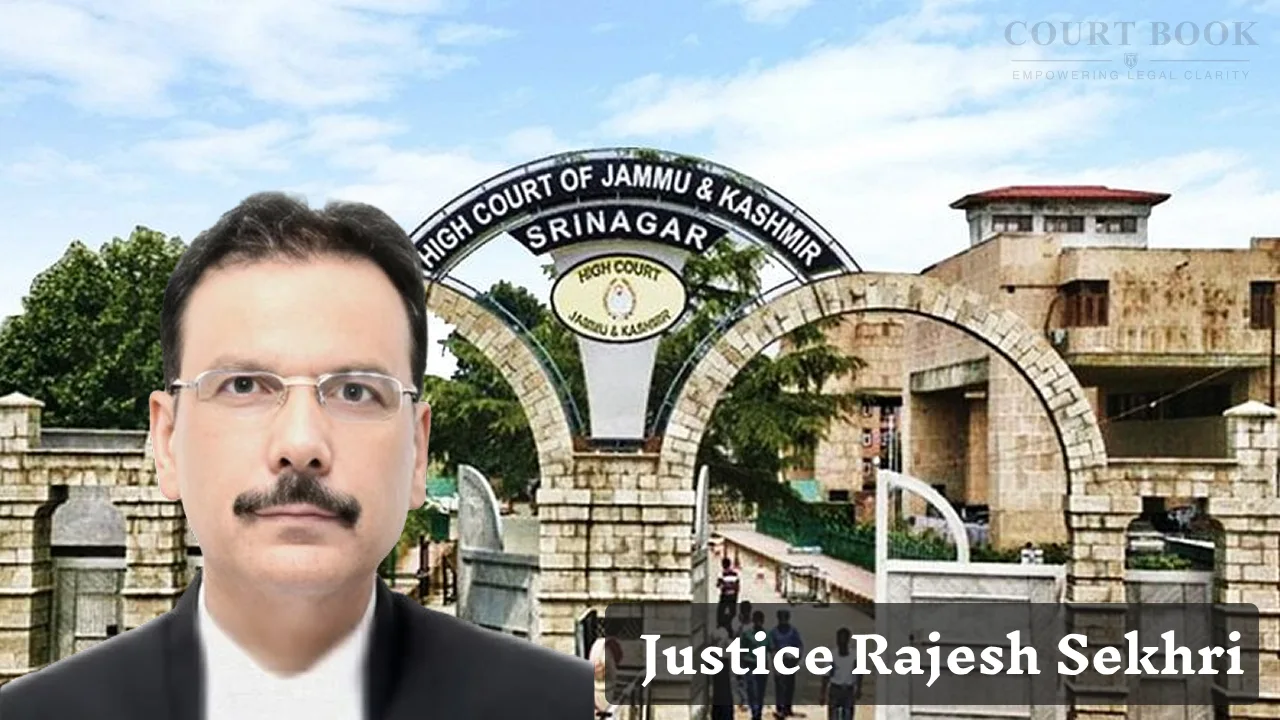
The Jammu & Kashmir and Ladakh High Court has partly allowed a petition challenging the framing of charges against Dawood in connection with a 2024 Srinagar shooting case. Justice Rajesh Sekhri set aside the charge under Section 20 of the Unlawful Activities (Prevention) Act, 1967 (UAPA), but upheld charges under Section 13 UAPA and Section 201 of the Indian Penal Code (IPC).
Background
According to the prosecution case recorded in the judgment, Police Station Shaheed Gunj, Srinagar, registered an FIR after two non-local persons were fired upon on February 7, 2024. One died at the spot and the injured person later succumbed to his injuries. The FIR invoked provisions of the IPC, Arms Act and UAPA. The investigation was subsequently taken over by the National Investigation Agency (NIA).
The prosecution alleged that Dawood was associated with two co-accused persons and that he later collected and disposed of a polythene bag allegedly used for carrying weapons. Investigators also relied on digital material recovered from his mobile phone and statements of a protected witness.
The trial court discharged him from charges including murder-related offences and certain UAPA provisions, but framed charges under Sections 13 and 20 UAPA and Section 201 IPC. Dawood challenged that order before the High Court.
Justice Rajesh Sekhri examined the Supreme Court’s decision in Vernon v. State of Maharashtra, which had approved the interpretation that mere membership of a terrorist organisation is not, by itself, sufficient for Section 20 UAPA.
The High Court observed:
“To invoke Section 20 of the Act, prosecution is obliged to prove that accused was a member of a terrorist gang or an organization that carries on or indulges in terrorist acts as defined in Section 15 of the Act.”
Applying that principle, the Court found that no terrorist act as defined under Section 15 UAPA had been attributed to Dawood. It therefore held that the necessary ingredients for Section 20 were absent and set aside that charge.
The Court rejected the argument that the trial court could not frame a Section 13 charge because the investigating agency had not included that provision in its charge sheet.
It held that framing of charges is a judicial function and that a court can add or alter charges when the investigation material supports a different offence.
The Court also considered the alleged recovery of the polythene bag, digital material, video footage and the statement of protected witness PW-48. It concluded that these materials disclosed a prima facie case for Section 13 UAPA.
On the allegation of destruction of evidence, the Court noted that the polythene bag was sent for forensic comparison with its photograph and that the forensic report was positive.
The Court held that the material was sufficient at the charge stage to disclose a prima facie offence under Section 201 IPC.
The High Court partly allowed the petition. It set aside the trial court’s order insofar as it framed the charge under Section 20 UAPA. However, the charges under Section 13 UAPA and Section 201 IPC were upheld.
The trial court was directed to proceed with the trial in accordance with law. The High Court clarified that its observations would not affect the merits of the case and that the trial court would proceed independently.
Case Details
Case Title: Dawood v. Union Territory of Jammu & Kashmir Through National Investigation Agency
Case Number: CRM(M) No. 889/2025
Judge: Justice Rajesh Sekhri
Decision Date: September 17, 2026