

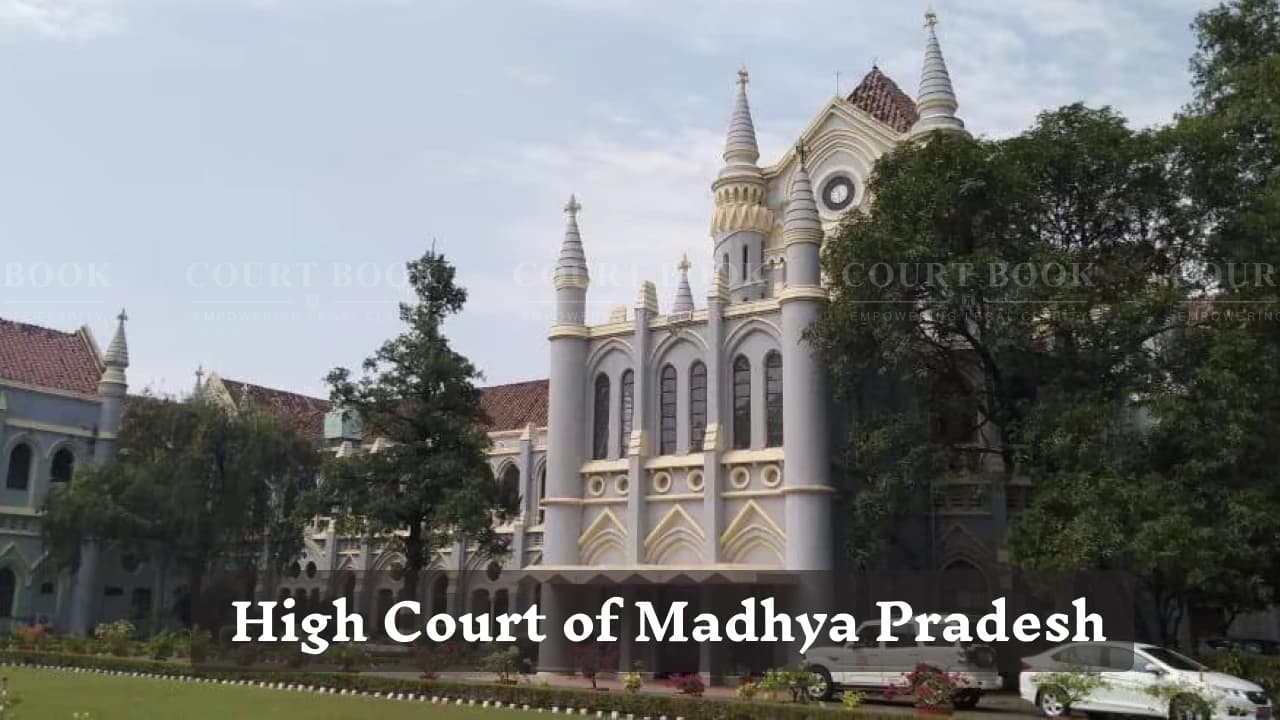
The Madhya Pradesh High Court has dismissed a criminal revision petition filed by Parth Kumar Tiwari, refusing to interfere with a trial court order that framed charges against him under Sections 69 and 296 of the Bharatiya Nyaya Sanhita (BNS). The Court held that the accused had no statutory right to insist that his protest petition be decided separately before the framing of charges and found no legal error in the trial court’s approach.
Background of the Case
The case arises out of FIR No. 628/2025 registered at Police Station Rau, Indore, on October 30, 2025. According to the prosecution, the complainant alleged that she came into contact with the accused during her employment at Pithampur. She claimed that he proposed marriage and, relying on that assurance, she entered into a physical relationship with him. She further alleged that he later avoided discussions regarding marriage with her family and ultimately refused to marry her.
After investigation, the police filed a charge sheet on December 27, 2025, stating that prima facie material existed for prosecution under Section 69 of the BNS. The Judicial Magistrate took cognizance on February 12, 2026.
Before the Sessions Court framed charges, the accused filed what he described as a protest petition, challenging both the investigation and the cognizance order. However, on May 6, 2026, the trial court proceeded to frame charges under Sections 69 and 296 of the BNS.


Aggrieved by that order, the accused approached the High Court through a criminal revision petition.
Arguments Before the High Court
The petitioner argued that the FIR was based on false allegations and that the investigation was conducted in a biased manner. He also claimed that one of the witnesses had denied giving the statement attributed to him by the police.
His principal objection, however, was procedural. He contended that since his protest petition had already been filed and argued before the trial court, it should have been decided on merits before any order framing charges was passed.
The petitioner also argued that the charge under Section 296 of the BNS was added without any supporting allegations in the FIR or charge sheet.
The State opposed the revision, submitting that the material collected during investigation disclosed a prima facie case and that the trial court had acted within its jurisdiction while framing charges.
Court’s Observation
Justice Jai Kumar Pillai reiterated that the High Court’s revisional jurisdiction is supervisory and is meant only to correct jurisdictional errors, patent illegality or serious procedural irregularities. The Court emphasized that it does not function as an appellate court at the stage of framing charges.
Referring to the trial court’s order, the High Court noted that the defence had been heard before charges were framed.
“The impugned order explicitly records the arguments of the defense counsel,”
the Court observed while rejecting the allegation that the accused had been denied an opportunity of hearing.
On the issue of the protest petition, the Court clarified that such petitions are primarily relevant where the police submit a closure report and the Magistrate proposes to accept it.
The Court observed,
“When the investigating agency files a positive charge-sheet, the accused does not have a statutory right to file a ‘Protest Petition’ demanding a mini-trial before the framing of charges.”
According to the Court, the submissions contained in the petitioner’s protest petition were, in substance, arguments seeking discharge. Once the trial court found sufficient prima facie material and framed charges, those contentions stood impliedly rejected.
The High Court also rejected the challenge to the additional charge under Section 296 of the BNS. It held that a trial court is not confined to the penal provisions mentioned in the FIR or police report and may frame additional charges if the material collected during investigation discloses the ingredients of another offence.
Decision
Finding no jurisdictional error, illegality or procedural irregularity in the trial court’s order, the High Court dismissed the criminal revision petition. It affirmed the order dated May 6, 2026, passed by the Special Judge (OAW) and 8th Additional Sessions Judge, Indore, and directed that the trial proceed in accordance with law without being influenced by any observations made in the revision order.
Case Details:
Case Title: Parth Kumar Tiwari v. State of M.P. & Another
Case Number: Criminal Revision No. 2569 of 2026
Judge: Justice Jai Kumar Pillai
Decision Date: July 7, 2026



