

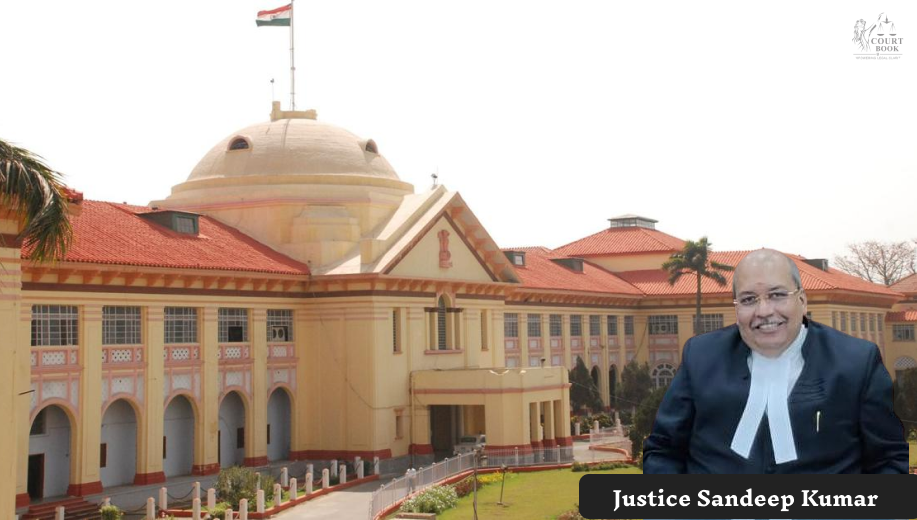
The Patna High Court has partly allowed an appeal filed by a man convicted in a 2010 case, setting aside his conviction for attempted rape while holding that the proved acts attracted the offence of assault or criminal force against a woman with intent to outrage her modesty under Section 354 of the Indian Penal Code (IPC). Justice Sandeep Kumar held that the evidence did not establish an overt act towards penetration, a necessary element in determining whether the conduct amounted to an attempt to commit rape.
The Court, however, upheld the conviction for house-trespass under Section 448 IPC. It reduced the substantive sentences for both offences to the period already undergone and directed the appellant to pay ₹25,000 as a fine, with the entire amount to be paid to the woman as compensation.
Background
According to the prosecution, the complainant, a widow who lived with her children and earned her livelihood through labour work, was sleeping in her thatched house on the night of February 8, 2010, when the appellant allegedly entered the house, extinguished a lamp, lay upon her and pressed her mouth to suppress her cries.
Her alarm reportedly brought villagers to the spot, where they apprehended the appellant. After alleging that the local police had not registered her complaint and that an attempt to resolve the matter through a village panchayat had failed, she approached the court.
The trial court convicted the appellant under Sections 376/511 IPC for attempted rape and Section 448 IPC for house-trespass. It sentenced him to four years of rigorous imprisonment for attempted rape and six months for house-trespass, with both sentences running concurrently. He challenged the conviction before the High Court.
Justice Sandeep Kumar distinguished between the evidence establishing the appellant’s presence inside the woman’s house and the evidence required to prove an attempt to commit rape. The Court found the woman’s testimony and the evidence of a neighbouring witness sufficient to establish that the appellant had entered her house at night. It also rejected the argument that the two-day delay in filing the complaint was fatal to the prosecution case.
However, the Court noted inconsistencies regarding the precise nature of the alleged act. The woman had stated that the appellant lay upon her and attempted to rape her, but the evidence did not indicate that either person had been undressed or that any act towards penetration had occurred. She also stated that her clothes were not torn, there were no injuries on her body or bed, and she had not undergone a medical examination.
The Court observed:
“Applying the aforesaid principles to the evidence on record, the act of the appellant in entering, late at night, in the dwelling house of a widow who was sleeping, extinguishing the lamp, lying upon her person and pressing her mouth is an act which is unquestionably capable of shocking the sense of decency of a woman, and the culpable intention of the appellant is manifest from the act itself and from his antecedent conduct deposed to by the prosecutrix.”
The judgment further explained that an attempt to commit rape requires evidence of an act going beyond preparation towards the commission of rape. Relying on Supreme Court precedents, including Aman Kumar v. State of Haryana and Tarkeshwar Sahu v. State of Bihar, the High Court concluded that the evidence did not establish this essential element.
Nevertheless, the Court held that the conduct proved against the appellant satisfied the ingredients of Section 354 IPC. It also found that the facts supporting this offence had been examined during the trial, allowing the conviction to be altered to the lesser offence without causing prejudice to the appellant.
On October 8, 2026, the High Court partly allowed the appeal, set aside the conviction and sentence under Sections 376/511 IPC, and convicted the appellant under Section 354 IPC as applicable before its 2013 amendment. The conviction under Section 448 IPC was affirmed.
Considering the appellant’s age, lack of criminal antecedents, period already spent in custody and more than 13 years on bail, the Court reduced the substantive sentences for both offences to the period already undergone.
It imposed a fine of ₹25,000 under Section 354 IPC, payable as compensation to the complainant, with six months of simple imprisonment in default of payment.
The fine must be deposited within eight weeks, and the appellant’s bail bonds will stand discharged upon deposit.
Case Details
- Case Title: Md. Ainul Haque v. State of Bihar
- Case Number: Criminal Appeal (SJ) No. 579 of 2013
- Judge: Justice Sandeep Kumar
- Decision Date: October 8, 2026


