

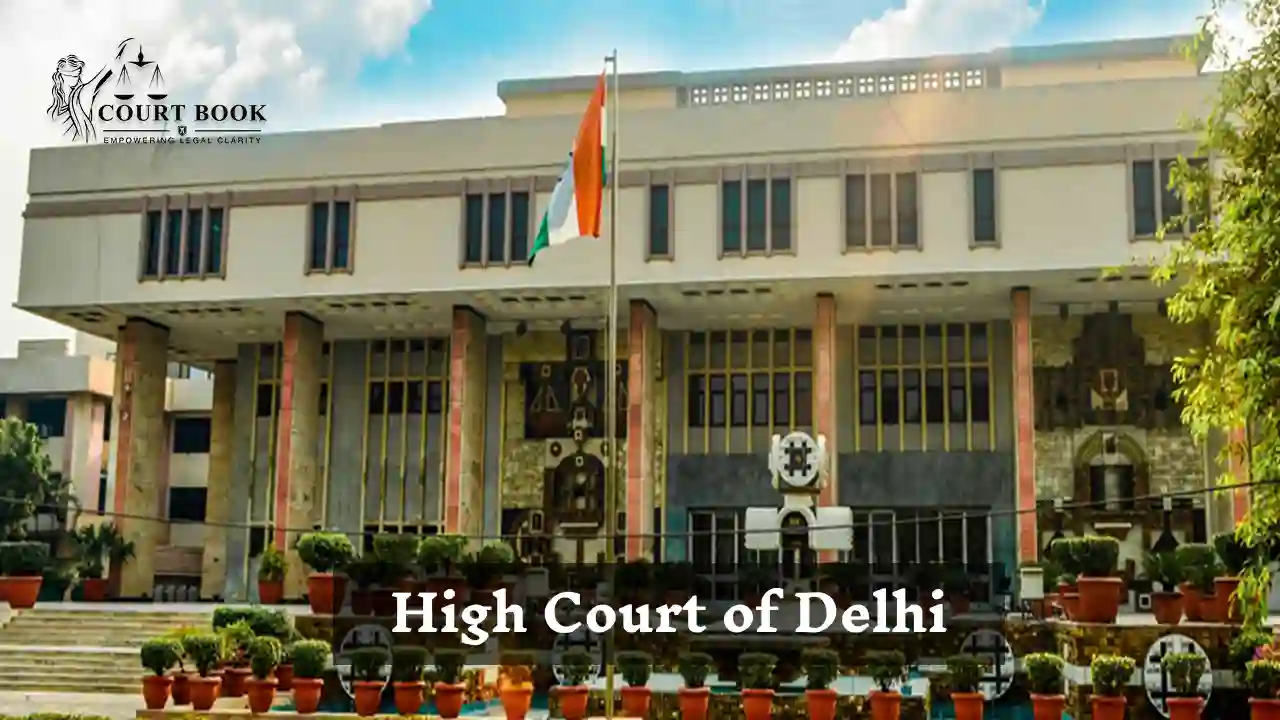
The Delhi High Court has upheld the rejection of an interim maintenance application filed by a retired Central Government employee, holding that her pension, recurring investment income and overall financial resources were sufficient for her reasonable support during pending matrimonial proceedings.
A Division Bench of Justice Vivek Chaudhary and Justice Renu Bhatnagar dismissed the appeal on October 8, 2026. However, the Court clarified that retirement savings cannot automatically be treated as monthly income while deciding a maintenance claim under Section 24 of the Hindu Marriage Act, 1955.
Background
The dispute arose from a Family Court order dated April 5, 2022, which rejected the wife's application for interim maintenance during divorce proceedings. Both spouses were retired Central Government employees, and their two children were adults and financially independent.
The wife challenged the order, arguing that the Family Court had incorrectly relied on her retirement benefits and savings while assessing her financial position. She also contended that the husband's higher pension, investments and alleged business income had not been properly considered.
During the appeal, the High Court directed both parties to submit fresh affidavits disclosing their income, assets, expenses and liabilities.
The Bench emphasised that interim maintenance must be determined by examining the parties' actual financial circumstances, reasonable needs and ability to pay. A difference in income between spouses does not automatically entitle the lower-earning spouse to maintenance.
The Court made an important distinction between accumulated retirement savings and income generated from investments.
It observed:
"The retirement corpus is accumulated capital. It cannot, merely because it is substantial, be treated as if it were a monthly income. A retired person cannot be expected to consume his or her retirement savings merely for the reason that such savings exist. At the same time, where the retirement savings are invested and generate interest or other returns, such recurring returns are income and have to be considered."
The wife's fresh affidavit disclosed a monthly pension of approximately ₹35,329 and investment interest of around ₹34,000, taking her recurring monthly income to approximately ₹69,000. She also had accumulated retirement benefits and other investments. Her claimed monthly expenditure was approximately ₹1,16,150, apart from litigation expenses.
The husband disclosed a monthly pension of approximately ₹1.09 lakh, investments worth around ₹73 lakh in shares, mutual funds and bonds, and approximately ₹16.50 lakh in PPF. He also stated that his elderly mother, aged about 87, was dependent on him for maintenance and medical expenses. The Court considered these circumstances while assessing the wife's entitlement to interim maintenance.
The Bench also declined to presume that the husband's former training establishment continued to generate income, as the record did not sufficiently establish any current earnings from that source.
The Court clarified that savings alone cannot disqualify a person from claiming maintenance, just as a higher income of the other spouse cannot independently establish entitlement.
The High Court held that the wife had sufficient independent income and resources for her reasonable support during the pending matrimonial proceedings. Although it did not endorse the Family Court's reasoning in its entirety, it found no ground to interfere with the ultimate decision.
Accordingly, the appeal was dismissed, pending applications were disposed of, and no order as to costs was made.


