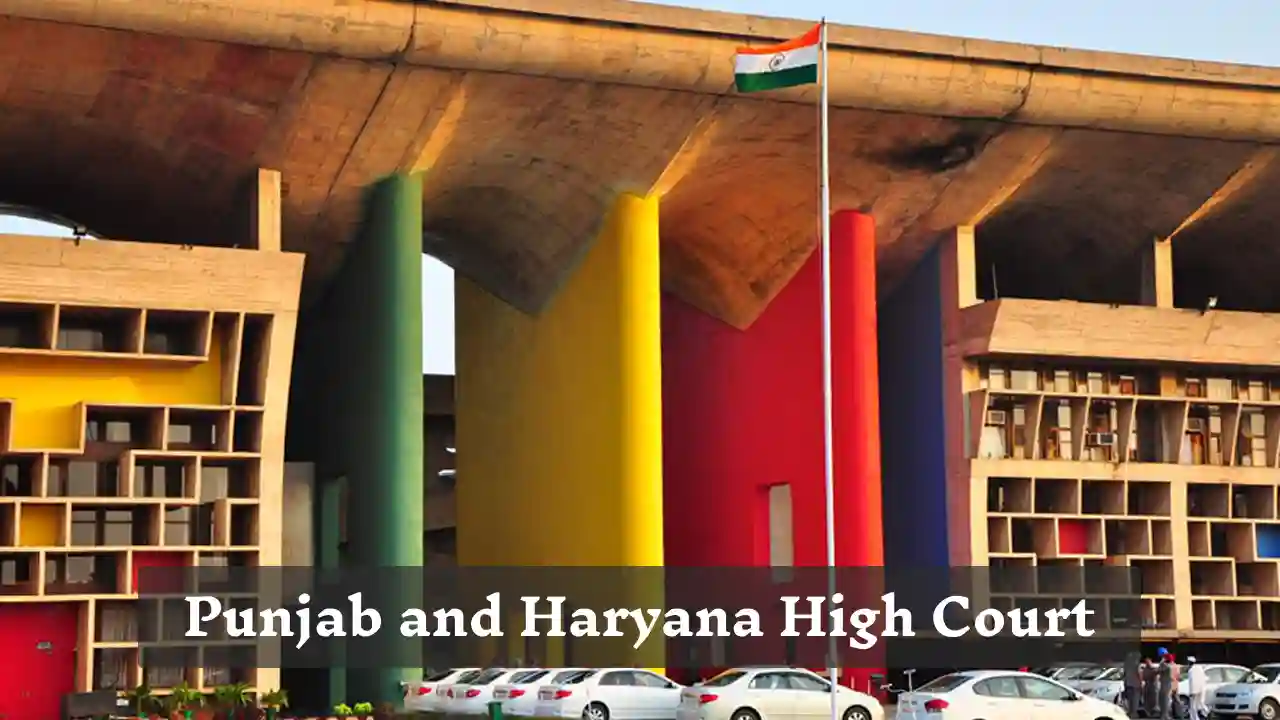
The Punjab and Haryana High Court has directed the Haryana government to reconsider a batch of medical reimbursement claims filed by employees and pensioners, emphasizing that healthcare benefits should not be denied merely because treatment was taken in non-empanelled private hospitals during emergencies.
Delivering a common judgment in multiple connected petitions, Justice Sandeep Moudgil observed that the right to health forms an essential part of the right to life guaranteed under Article 21 of the Constitution.
Background of the Case
The petitions raised common grievances regarding reimbursement of medical expenses incurred for treatment obtained from private hospitals that were not included in the government's approved panel.
The petitioners questioned whether reimbursement could be denied or drastically reduced solely because treatment was taken at a non-empanelled hospital. They also challenged policy provisions that allegedly restricted reimbursement to PGI rates and imposed conditions affecting dependent family members with incomes above a prescribed limit.
The matters were heard together as they involved similar legal and factual issues concerning Haryana's medical reimbursement policy.
While examining the dispute, the High Court underscored the constitutional importance of healthcare and medical assistance.
Justice Moudgil noted that reimbursement policies are intended to provide social security and protect employees from financial hardship during illness. The Court observed that such schemes should not be interpreted through "arid technicalities" when questions of health and survival are involved.
The bench pointed out that although premier government institutions such as PGI provide excellent medical facilities, practical realities often compel patients to seek immediate treatment elsewhere.
“The Court observed that accessibility to government hospitals remains a challenge in emergencies, and rejecting reimbursement solely on the ground of non-empanelment would place policy procedure above human survival.”
The judgment also referred to Supreme Court precedents holding that genuine medical reimbursement claims should not be rejected merely because treatment was obtained from a non-recognised hospital when the circumstances were emergent and bona fide.
During the hearing, counsel appearing for the State informed the Court that the government had agreed to examine grievances relating to medical reimbursement claims of a similar nature.
The State further stated that various provisions of the existing reimbursement policy were already under reconsideration so that the framework could better reflect present-day medical realities and effectively serve employees and pensioners.
Taking the State's statement on record, the High Court disposed of all the petitions with directions for a fresh examination of each claim.
The Court ordered the respondents to assess every petitioner's case independently and sympathetically, keeping in view the principles laid down by the Supreme Court and earlier High Court decisions on medical reimbursement.
It also noted that the State had constituted a committee headed by the Additional Director Health Services for this purpose. The committee has been directed to pass a conscious and well-reasoned decision in each matter within four weeks of receiving a certified copy of the order.
The Court further directed that if any amount is found payable, it shall carry interest at the rate of 6% per annum from the date it became due until actual payment. With these directions, the batch of petitions was disposed of.
Case Details
Case Title: Swati Yadav v. State of Haryana and Others & Connected Matters
Case Number: CWP-16778-2024 and connected petitions
Judge: Justice Sandeep Moudgil
Decision Date: 29 May 2026