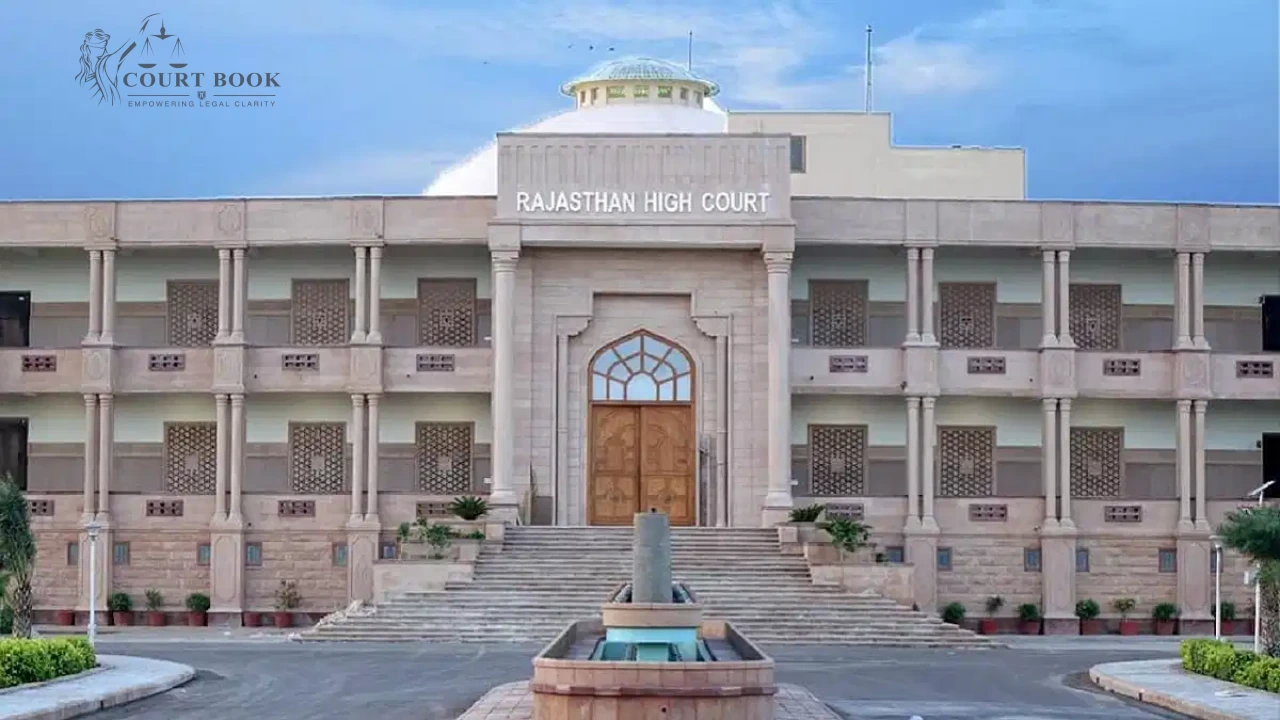
The Rajasthan High Court at Jaipur has dismissed a writ petition filed by an Ayurved doctor challenging disciplinary proceedings that ultimately resulted in his compulsory retirement. The Court found no procedural illegality or violation of natural justice in the departmental enquiry and declined to reassess the evidence in writ jurisdiction.
Background
The petitioner, Makhan Lal Mishra, was serving as an Ayurved Chikitsak Grade-II and was In-charge of the Government Ayurved Dispensary at Kishanpur, Berath. A charge-sheet issued in June 1994 alleged that he had issued 24 irregular sickness and fitness certificates in favour of an employee, covering a period from October 1989 to September 1991.
Mishra denied the allegations. An enquiry was conducted, during which three prosecution witnesses were produced. The Enquiry Officer submitted his report in January 1996, following which the petitioner was given an opportunity to submit his representation. The Disciplinary Authority thereafter imposed compulsory retirement with proportionate pension in February 1997. His review petition was subsequently rejected in June 1998.
The petitioner argued, among other things, that maintaining entries of the certificates in the dispensary register was the responsibility of the compounder and that the original certificates were not produced during the enquiry. He also claimed that one witness’s statement had been recorded behind his back and that he was not given an opportunity to cross-examine the witness.
The respondents disputed this contention, submitting that the petitioner had himself abstained from appearing before the Enquiry Officer on the date fixed for recording the statement of PW3 and had not subsequently sought another opportunity to cross-examine the witness.
Justice Anand Sharma held that the departmental proceedings had followed the procedure prescribed under the Rajasthan Civil Services (Classification, Control and Appeal) Rules, 1958. The Court noted that the petitioner had been given opportunities to reply to the charge-sheet, participate in the enquiry and respond to the enquiry report.
The Court also rejected the argument that responsibility for the dispensary records rested only with the subordinate employee. It observed that the petitioner, being In-charge, was responsible for the dispensary records and had not shown that he had taken action against the subordinate for failing to perform the relevant duties.
It is settled proposition of law that this Court while exercising the writ jurisdiction under Article 226 of the Constitution of India this Court can not re-appreciate the evidence, nor can sit as an Appellate Authority against the findings of Enquiry Officer or Disciplinary Authority. While exercising the writ jurisdiction, this Court is required to examine the decision making process.
The Court further held that the findings of the Enquiry Officer were supported by evidence and that the punishment could not be considered outrageously disproportionate.
The Rajasthan High Court found no procedural impropriety, violation of statutory rules, or breach of natural justice warranting interference under Article 226 of the Constitution. It therefore dismissed the writ petition and also dismissed any pending applications.
Case Title: Makhan Lal Mishra v. State of Rajasthan & Another
Case Number: S.B. Civil Writ Petition No. 2063/2002
Judge: Hon’ble Mr. Justice Anand Sharma
Decision Date: 1 September 2026