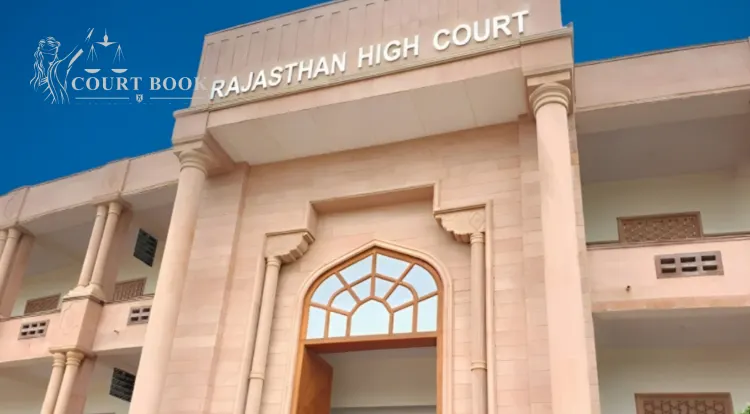
The Rajasthan High Court has initiated suo motu public interest litigation after taking note of a newspaper report alleging that several public, institutional, religious and residential properties in Jodhpur, including the official residences of two judges, schools, colleges, Geeta Bhawan and temples, were recorded as Waqf properties in official records. A Division Bench of Justice Dr. Pushpendra Singh Bhati and Justice Praveer Bhatnagar observed that the allegations raised questions affecting public records, property rights and statutory compliance, warranting judicial scrutiny.
Background of the Case
The Court acted on a report published in the Jodhpur edition of Dainik Bhaskar on July 27, 2026. The report referred to revenue records, Waqf Gazette entries and the Umeed Portal, alleging that Khasra Nos. 482, 485 and 490, along with several schools, colleges, temples, Geeta Bhawan and other properties, had been shown as Waqf assets despite revenue records reflecting a different legal position.
The Bench clarified that governance under the Constitution requires any change in the legal character of property to follow the procedure established by law. It noted that public records cannot be altered merely through administrative or digital entries unsupported by lawful authority.
Court's Observations
Examining the material placed before it, the Court found that the allegations disclosed prima facie issues requiring investigation. It noted that the properties mentioned included educational institutions, places of worship, residential and commercial properties, as well as official judicial residences.
The Bench observed,
“The issue bears upon the sanctity and reliability of public records, the lawful administration of Waqf properties... and the protection of public as well as private property from alteration of its legal character except through a procedure sanctioned by law.”
The Court also recorded concerns that certain entries appeared to have been made without the appointment of a Mutawalli and that the process of uploading information on the Umeed Portal allegedly lacked transparency. However, it made clear that these were prima facie observations and that it was not expressing any final opinion on ownership or title.
Court's Decision
Considering the public importance of the issues raised, the High Court directed that the matter be registered as a Suo Motu Public Interest Litigation under Article 226 of the Constitution.
Pending further consideration, the Bench ordered maintenance of status quo regarding the ownership and legal status of the properties in question. It restrained any mutation, transfer, lease, licence, construction or demolition based on the disputed entries. The Court further directed the District Collector, Jodhpur, to preserve and produce revenue records, conduct a physical verification of the land, and submit a factual report.
It also directed the Rajasthan Board of Muslim Waqf to place the original records relating to the disputed entries before the Court and explain the statutory basis for recording them.
The matter has been listed for August 11, 2026.



-300x169.webp)