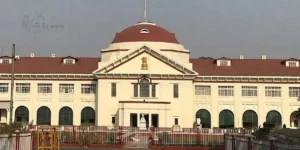
The Patna High Court has granted bail to two children in conflict with law (CICL) who were apprehended in a case involving the recovery of 63.760 kg of ganja, holding that the seriousness of the allegation by itself could not justify denying them bail under the Juvenile Justice Act.
Justice Arun Kumar Jha delivered the judgment on September 15, 2026, allowing two criminal revision petitions arising from the same DRI case.
Background
The Directorate of Revenue Intelligence (DRI), Patna, intercepted a Mahindra TUV vehicle after receiving information about the transportation of ganja from Guwahati to Didarganj in Bihar. According to the case record, 65.940 kg of ganja by gross weight and 63.760 kg by net weight were recovered from 109 plastic packets concealed in a cavity of the vehicle.
The two petitioners were initially recorded by the DRI as being 25 and 21 years old. Following proceedings before the Juvenile Justice Board, however, their ages were assessed differently and both were declared children in conflict with law. One was assessed to be 15 years and nine months old, while the other was assessed to be 16 years old at the time of the occurrence.
Their bail applications were rejected by the Juvenile Justice Board and subsequently by the appellate court, leading them to approach the High Court.
The High Court examined Section 12 of the Juvenile Justice (Care and Protection of Children) Act, 2015, which provides the circumstances in which bail may be refused to a child in conflict with law.
The Court observed:
"If these grounds are not present, the bail could not be denied to a CICL."
Justice Arun Kumar Jha further noted that the juvenile justice law is child-friendly and places the best interests of the child at the centre of decisions. The Court said institutional care should be a measure of last resort and that the law focuses on the reformation and rehabilitation of children.
The Court found that there was no cogent material showing that releasing the petitioners would bring them into contact with criminal elements, expose them to moral, physical or psychological danger, or defeat the ends of justice. It also held that the seriousness of the allegation or the commercial quantity of ganja could not, by itself, determine the question of bail for the CICLs.
While allowing bail, the High Court also raised concerns over how the two petitioners, later declared juveniles, had travelled from Guwahati to Patna without identification documents, registration papers or driving licences.
The Court directed the SSP, Patna, to conduct an inquiry into whether the petitioners were juveniles as claimed, whether they had genuinely never attended school or received relevant government benefits, and whether there were security lapses during their journey with the seized contraband. The inquiry was ordered to be completed within three months and placed before the High Court.
The High Court set aside the orders refusing bail passed by the Juvenile Justice Board and the appellate courts. Both petitioners were directed to be released on bail on furnishing a bond of Rs.10,000 each with two sureties of the same amount, subject to conditions including parental and relative surety and appearance before the Board on every date fixed in the case.
The Court also clarified that if the inquiry finds that the petitioners concealed material facts about their age or adopted fraudulent practices, the State and DRI would be free to seek cancellation of their bail bonds and review of the orders declaring them CICLs.