

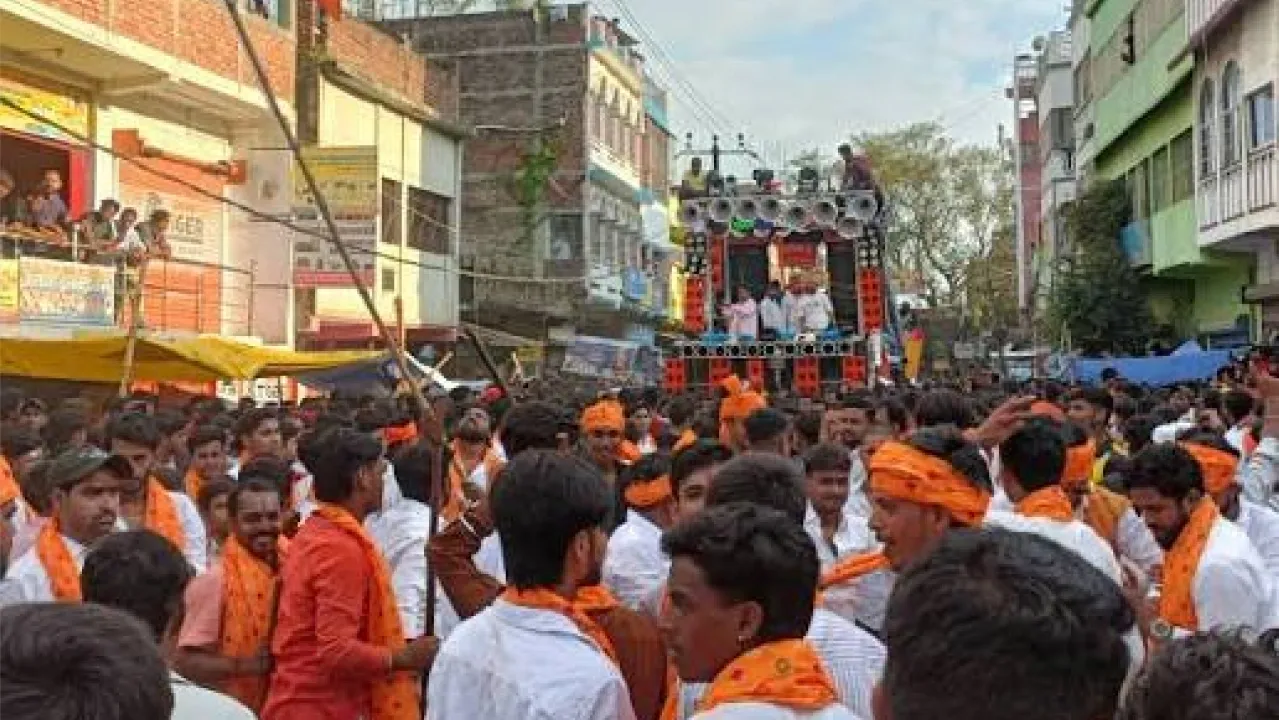
The Patna High Court has dismissed a plea seeking permission to conduct the ‘Mahabiri Julus’ through its traditional route in Siwan’s Hathaura village, holding that the constitutional right to practise religion and take out religious processions is subject to reasonable restrictions.
Justice Alok Kumar delivered the oral judgment on August 20, 2026, after considering the rival submissions and the material placed before the Court.
Background of the Case
The petitioner, a devotee of Akhara No. 1 in Hathaura village, claimed that permission for the religious procession had traditionally been granted since 1958. According to the plea, the number of permitted devotees was reduced from 200 in 2012-13 to 150 in 2014, 100 in 2015 and ultimately five from 2023 onwards. The petitioner also challenged the alteration of the traditional route.
The State, however, told the Court that the restrictions were imposed for maintaining law and order. It submitted that although only five persons were permitted, crowds of around 1,700 to 2,000 people had allegedly gathered between 2015 and 2022, leading to several cases. The State also referred to allegations concerning violence during the 2024 procession.
Court’s Observation
The High Court examined the constitutional limits on religious freedom and referred to earlier Supreme Court decisions concerning religious practices, public peace and regulation of activities.
The Court observed:
“Articles 25 and 26 guarantees the freedom of religion but are subject to public order, morality, and health constraints.”
It further held that the right to profess and practise religion, including taking out religious processions, is protected under Articles 19(1)(b) and 25, but that protection is not absolute. According to the Court, constitutional protection extends to what is essential and integral to a religious practice, and not necessarily to every manner in which it is exercised.
The Court also emphasised that secularism forms part of the Constitution’s basic structure and that the State must maintain neutrality while balancing religious freedom with public order and social welfare.
Decision
The Court rejected the petitioner’s concern that the number of devotees would necessarily remain restricted to five in future. It held that any restriction would depend upon the law-and-order situation prevailing when permission is actually sought and that a hypothetical future situation could not be adjudicated in advance.
Finding no merit in the writ petition, the Patna High Court dismissed the petition. Pending interlocutory applications, if any, were also disposed of.
Case Details
Case Title: Bhadai Chaudhary v. The State of Bihar
Case Number: Civil Writ Jurisdiction Case No. 14851 of 2024
Judge: Justice Alok Kumar
Decision Date: August 20, 2026


