

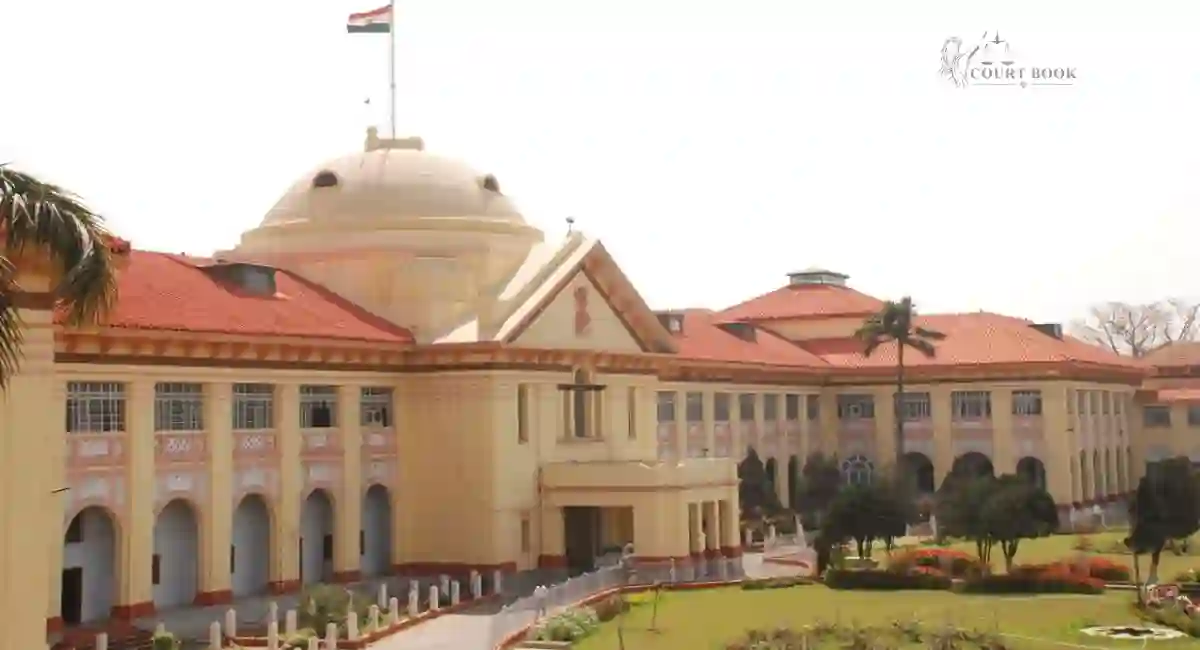
The Patna High Court has held that a writ petition challenging disciplinary action taken by a minority aided school is maintainable where the employee alleges violation of mandatory statutory provisions governing service conditions. However, the Court clarified that it has not expressed any opinion on the merits of the dispute and will examine those issues separately.
The ruling came in a petition filed by a teacher challenging her suspension and subsequent dismissal from service by a minority aided school in Khagaria.
Background of the Case
The petitioner, Abha Rani, was appointed as an Assistant Teacher in Plus 2 Arya Kanya Uchaya Vidyalaya, Khagaria, a minority aided school, in 1987 after her appointment received approval from the competent authority under the Bihar Non-Government Secondary Schools (Taking Over of Management and Control) Act, 1981.
According to her, she served the institution for decades without any dispute. She alleged that differences between rival factions of the school's managing committee eventually led to her suspension through an order dated April 5, 2024. During the pendency of the writ petition, she was also dismissed from service on January 10, 2026.
The petitioner contended that both the suspension and dismissal orders were invalid because they were issued without obtaining the approval of the Director of Secondary Education, which she claimed was mandatory under the 1981 Act as amended in 2011.
Maintainability Challenge
The minority aided school opposed the writ petition at the threshold, arguing that the dispute arose out of an ordinary contract of employment. Relying on several Supreme Court decisions, it submitted that disputes concerning private contracts of service cannot ordinarily be examined under Article 226 of the Constitution.
The petitioner, on the other hand, argued that her grievance was not merely contractual. She asserted that the disciplinary action violated mandatory statutory safeguards contained in the Bihar law regulating minority aided schools, thereby raising a public law issue that could be examined in writ jurisdiction.
Court's Observations
Justice Alok Kumar Sinha examined the principles laid down by the Supreme Court in several decisions dealing with writ jurisdiction against educational institutions.
The Court observed that where an employee merely seeks enforcement of a private contract of service, a writ petition would ordinarily not be maintainable. However, a different position emerges where the service conditions are regulated by statutory provisions and the challenge is founded on an alleged breach of those statutory requirements.
The Court noted that the petitioner's case was specifically based on the allegation that mandatory approval under the Bihar Non-Government Secondary Schools (Taking Over of Management and Control) Act, 1981, as amended in 2011, had not been obtained before disciplinary action was taken.
Explaining the distinction, the bench observed that judicial interference in such cases would be
“on the ground of breach of law and not on the ground of breach of an ordinary contract of service.”
The Court also referred to Supreme Court precedents which recognize that where removal or disciplinary action is governed by statutory provisions, non-compliance with those provisions introduces a public law element capable of judicial review under Article 226.
Decision
Rejecting the preliminary objection of the school, the Patna High Court held that the writ petition is maintainable to the limited extent that it alleges violation of statutory provisions contained in the Bihar Non-Government Secondary Schools (Taking Over of Management and Control) Act, 1981, as amended in 2011.
At the same time, the Court clarified that it has not adjudicated the legality of the suspension or dismissal. It observed that the petitioner must still establish, during the hearing on merits, that the statutory provisions were in fact violated. The matter was directed to be listed on 20 July 2026 for further consideration on the merits.
Case Details:
Case Title: Abha Rani v. State of Bihar & Ors.
Case Number: Civil Writ Jurisdiction Case No. 12439 of 2025
Judge: Justice Alok Kumar Sinha
Decision Date: 2 July 2026


