

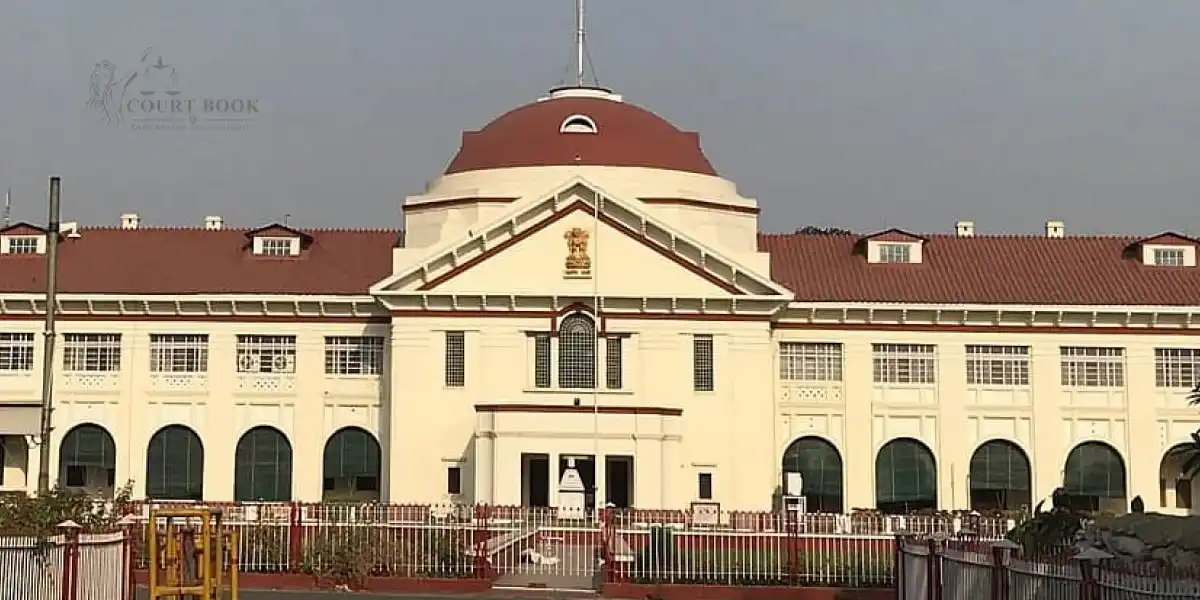
The Patna High Court has dismissed an appeal filed by Punjab National Bank (PNB), affirming an earlier decision that had set aside the removal of a bank employee from service. The Division Bench held that there was no reason to interfere with the Single Judge's findings that the departmental inquiry suffered from serious flaws and that the disciplinary authority had failed to exercise its own independent judgment before imposing the penalty of removal.
The court emphasized that judicial review is not meant to reassess evidence like an appellate authority but can intervene where disciplinary findings are unsupported by evidence or where the decision-making process is legally flawed.
Background of the Case
Sanjay Kumar Srivastava was appointed as a Clerk-cum-Cashier in Punjab National Bank in April 1994. In October 1997, the bank served him with a charge sheet containing several allegations. He denied the charges, following which a departmental inquiry was initiated.
After the inquiry concluded, the Inquiry Officer submitted a report in January 2000. A second show-cause notice proposing removal from service was issued, and despite the employee's reply, the disciplinary authority passed an order on November 6, 2000 removing him from service. His departmental appeal was rejected in August 2003.
Srivastava then approached the High Court through a writ petition. The Single Judge quashed both the removal order and the appellate order after finding serious defects in the inquiry process. The bank challenged that judgment through a Letters Patent Appeal.
Court's Observations
The Division Bench examined whether the Single Judge had wrongly interfered with the disciplinary proceedings. It noted that courts ordinarily do not re-evaluate evidence in departmental inquiries. However, they are empowered to examine whether the findings are based on evidence and whether the disciplinary authority followed a fair decision-making process.
Referring to the record, the Bench found that the Single Judge had concluded there was no conclusive material proving the charges. The court also noted that even the disciplinary authority had observed that the Inquiry Officer appeared to be biased to some extent.
"The learned Single Judge has recorded a specific finding that no material conclusively established the charges levelled against the writ petitioner," the Bench observed.
The judges further considered correspondence placed on record showing that the disciplinary authority had initially expressed the view that a lesser punishment would be appropriate. Despite this, the employee was ultimately removed from service.
According to the Bench, these records supported the conclusion that the disciplinary authority had not independently exercised its discretion while deciding the punishment.
"The records, therefore, lend credence to the conclusion that the disciplinary authority was influenced by considerations extraneous to its independent assessment of the matter," the court said.
Reliance on Supreme Court Precedents
The High Court relied on several Supreme Court decisions, including B.C. Chaturvedi v. Union of India, reiterating that judicial review focuses on the fairness of the decision-making process rather than the correctness of the conclusion itself.
The Bench also referred to Anirudhsinhji Karansinhji Jadeja v. State of Gujarat and State of Punjab v. V.K. Khanna, observing that when the law vests discretion in a disciplinary authority, that authority must exercise the power independently and not under the influence or directions of another authority.
Decision
Finding no legal error in the judgment of the Single Judge, the Division Bench held that the interference with the disciplinary action was justified because it was based on defects in the inquiry process and the absence of independent application of mind by the disciplinary authority.
"The appellants have failed to point out any patent illegality, perversity or jurisdictional error in the impugned judgment warranting interference,"
the Bench observed before dismissing the appeal. With that, the order setting aside the employee's removal from service continued to remain in force.
Case Details:
Case Title: The Punjab National Bank & Ors. v. Sanjay Kumar Srivastava
Case Number: Letters Patent Appeal No. 911 of 2018 (arising out of C.W.J.C. No. 10392 of 2003)
Judge: Justice Sudhir Singh and Justice Ranjan Kumar Jha
Decision Date: 19 June 2026


