

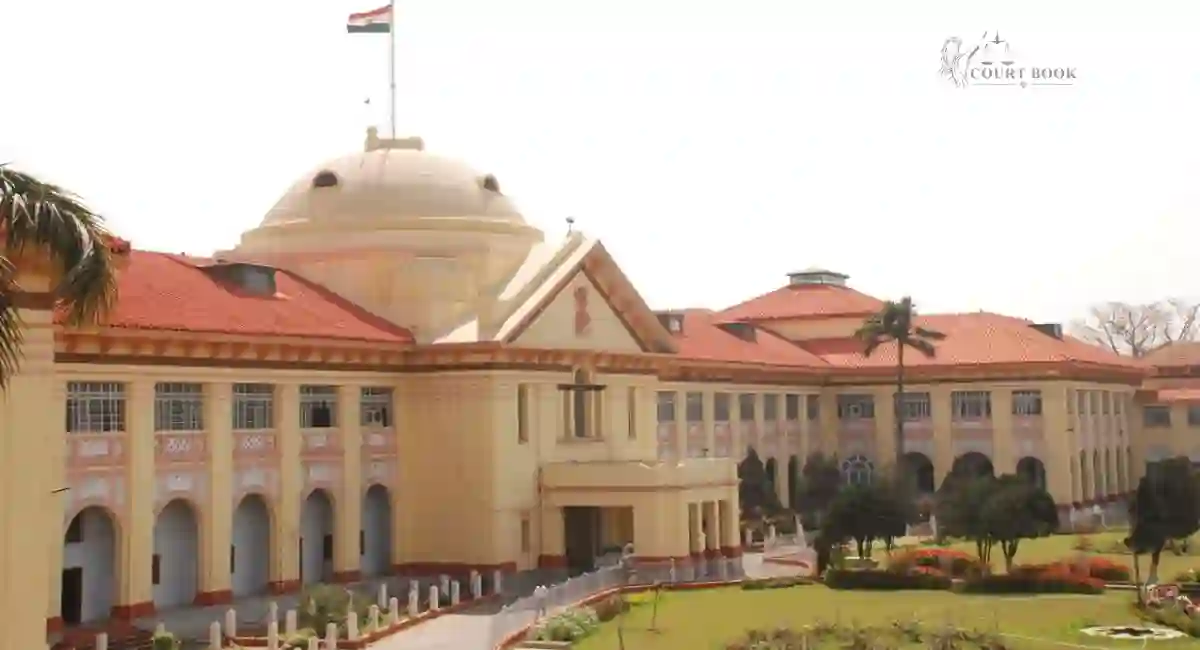
The Patna High Court has dismissed a writ petition filed by a joint venture construction company challenging its technical disqualification from multiple Public Health Engineering Department (PHED) tenders in Bihar. The court held that it would not reassess the findings of an expert tender evaluation committee unless there was clear evidence of arbitrariness, mala fide intent, or perversity.
Background of the Case
The petitioner, M/s UKS-Lokaditya Construction Pvt. Ltd. (Joint Venture), participated in PHED tenders relating to projects in Kishanganj, Forbesganj and Katihar districts. Its technical bids were rejected after the authorities concluded that the joint venture did not satisfy the eligibility requirements prescribed under the Standard Bidding Document.
The company approached the High Court, arguing that it had submitted all required documents and that its bid was rejected on hyper-technical grounds. It also contended that the experience of both joint venture partners should have been considered collectively while assessing eligibility.
Court's Observations
After hearing both sides, the Division Bench observed that determining whether a bidder meets technical eligibility conditions falls primarily within the expertise of the tender evaluation committee.
The bench said,
"Unless the decision is shown to be arbitrary, mala fide or patently perverse, the Court would be slow to substitute its own assessment for that of the Tender Evaluation Committee."
The judges noted that although an enquiry committee later found inconsistencies in the overall tender evaluation process and recommended fresh tenders for certain works, that report did not specifically conclude that the petitioner had actually fulfilled the eligibility conditions.
The court further observed that cancellation of a tender process or identification of procedural irregularities does not automatically establish that a particular bidder was wrongly disqualified.
Reliance on Supreme Court Precedents
The High Court relied on several Supreme Court decisions, including Jagdish Mandal v. State of Orissa, Silppi Constructions Contractors v. Union of India, Tata Cellular v. Union of India, and Afcons Infrastructure Ltd. v. Nagpur Metro Rail Corporation Ltd.
Referring to these rulings, the bench reiterated that courts exercising judicial review do not sit as appellate authorities over decisions taken by expert bodies in tender matters. Judicial intervention is justified only when the decision-making process is tainted by arbitrariness, bias, mala fide action, or patent irrationality.
Court's Decision
Finding no material to show that the tender evaluation committee had acted arbitrarily or with mala fide intent, the High Court declined to interfere with the petitioner's technical disqualification.
The bench concluded,
"In the absence of any material demonstrating that the decision of the Tender Evaluation Committee was actuated by mala fides, arbitrariness or patent perversity, this Court finds no reason to interfere."
Accordingly, the writ petition was dismissed, and all pending applications were also disposed of
Case Details
Case Title: M/s UKS-Lokaditya Construction Pvt. Ltd. (Joint Venture) v. State of Bihar & Others
Case Number: Civil Writ Jurisdiction Case No. 13745 of 2025
Bench: Justice Sudhir Singh and Justice Ranjan Kumar Jha
Decision Date: 16 June 2026


