

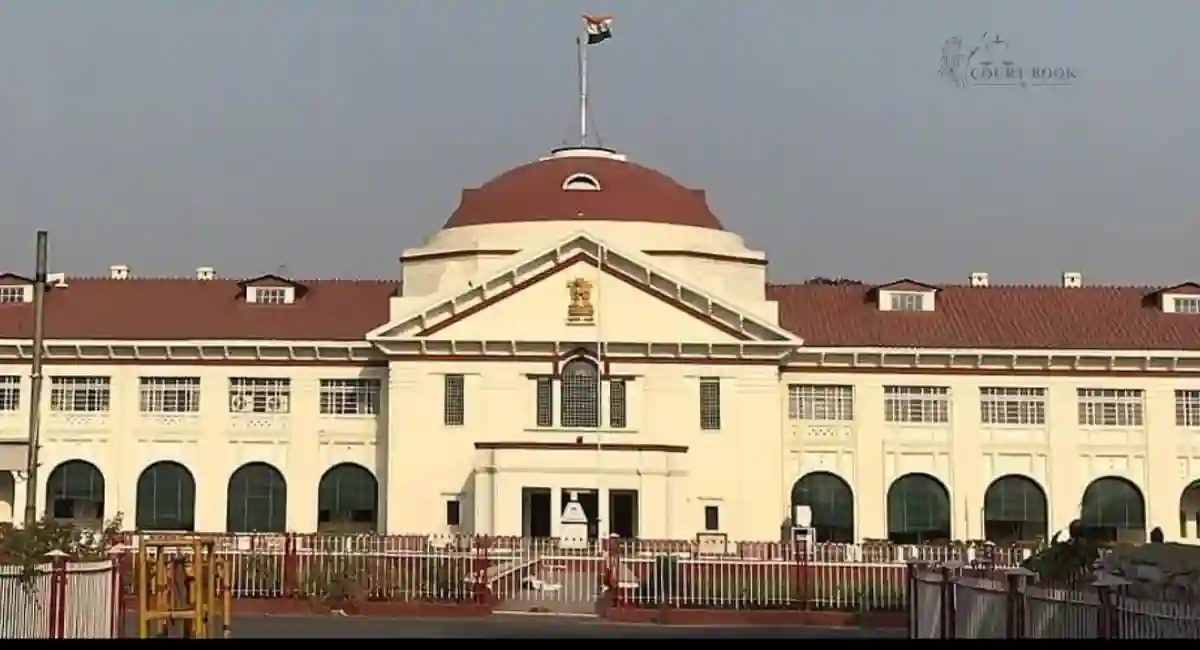
The Patna High Court has upheld the conviction of four appellants for voluntarily causing hurt in a case arising out of a long-standing land dispute in Bhojpur district. While refusing to interfere with the finding of guilt under Section 323 read with Section 34 of the Indian Penal Code (IPC), the Court modified the sentence and reduced it to the period already undergone by the appellants.
Background of the Case
The criminal appeal challenged a 2014 judgment passed by the trial court in Sessions Trial No. 84 of 2007. The prosecution case was based on an FIR alleging that on February 27, 2005, the informant was attacked while returning after attending the call of nature. He claimed that one accused assaulted him with an iron implement, while another struck him on the head with a lathi. It was further alleged that his gold chain was snatched and that his mother was also assaulted when she came to his rescue.
Following investigation, charges were framed under several provisions of the IPC, including attempt to murder and robbery. However, after trial, the accused were convicted only for the offence of voluntarily causing hurt under Section 323 read with Section 34 IPC.
Before the High Court, the appellants argued that the prosecution case was false and driven by previous enmity over a land dispute. They also pointed out that one prosecution witness had turned hostile and alleged inconsistencies in the informant's testimony.
Court's Observations
Justice Purnendu Singh examined the evidence and noted that the prosecution had relied mainly on the testimony of the injured informant after another witness failed to support the case.
The Court observed that previous hostility between parties does not automatically make the prosecution version unreliable. Instead, it may also provide a motive for the incident.
“The existence of prior enmity, by itself, cannot be a ground to discard the prosecution case, particularly when the same also furnishes a plausible motive for the occurrence,”
the bench observed.
The High Court further held that the informant's account regarding the date, place and manner of the incident remained substantially consistent. It also relied on the principle that the testimony of a hostile witness does not render the entire prosecution case unreliable if there is other trustworthy evidence on record.
At the same time, the Court found that the evidence did not establish the ingredients required for an offence of attempt to murder. Referring to Supreme Court precedents, the bench explained that a conviction for attempt to murder requires proof of intention or knowledge to cause death along with an overt act demonstrating that intention. The material on record, according to the Court, showed only simple injuries caused by hard and blunt objects.
“The evidence on record discloses an assault causing simple injuries by means of hard and blunt objects, but does not establish the requisite intention or knowledge necessary to attract the ingredients of Section 307 of the Indian Penal Code,”
the Court said.
Decision
The High Court concluded that the trial court had correctly appreciated the evidence in holding the appellants guilty of voluntarily causing hurt under Section 323 read with Section 34 IPC. Accordingly, it declined to interfere with the conviction.
However, considering the facts of the case and the period already spent by the appellants in custody, the Court modified the sentence and reduced it to the period already undergone. It directed that if the appellants had already completed the modified sentence, they should be released forthwith unless required in any other case. The appeal was, therefore, partly allowed only to the extent of modification of sentence.
Case Details:
Case Title: Binod Kumar & Ors. v. State of Bihar
Case Number: Criminal Appeal (SJ) No. 220 of 2014
Judge: Justice Purnendu Singh
Decision Date: 1 July 2026


